Views: 0 Author: Site Editor Publish Time: 2026-08-22 Origin: Site

Suction hose collapse stands out as a critical operational failure across industrial applications. When high vacuum forces crush an active line, you instantly face pump cavitation, system failure, and costly operational downtime. Equipment damage scales rapidly during these sudden disruptions.
Pumps function by creating internal pressure differentials. They generate a strong vacuum, allowing standard atmospheric pressure to force fluid into the system. External atmospheric pressure actively exploits this vacuum, instantly crushing standard discharge hoses designed only for outward pressure.
We will explore the exact technical mechanics behind negative-pressure failure. You will discover how specific structural reinforcements actively counteract these external crushing forces. Ultimately, this framework ensures you can confidently specify the right hose material and reinforcement for the most rigorous environments.
Hose collapse creates immediate cascading failures throughout your entire fluid transfer system. When a line flattens, fluid flow chokes instantly. A dry-running pump quickly overheats. Impellers sustain severe cavitation damage. Maintenance crews face unexpected delays attempting to resolve the blockage. You lose valuable production time repairing completely avoidable hardware failures. Securing a structurally sound pump suction hose remains vital for continuous, uninterrupted operation.
Prolonged negative pressure acts relentlessly on flexible materials. As a pump draws fluid, the internal pressure drops significantly below ambient levels. Standard atmospheric pressure remains steady at 14.7 psi outside the tube. This pressure imbalance creates a powerful, continuous inward crushing force. The vacuum essentially acts as a void. The surrounding atmosphere attempts to fill this void by pushing the hose walls inward.
Standard lay-flat or basic discharge hoses fail instantly under these conditions. Manufacturers design them solely to contain internal outward pressure. They rely entirely on the moving fluid itself to hold their shape. When exposed to a vacuum, they offer zero resistance to external crushing forces. They fold flat immediately upon pump activation, sealing off the intake and halting the process entirely.
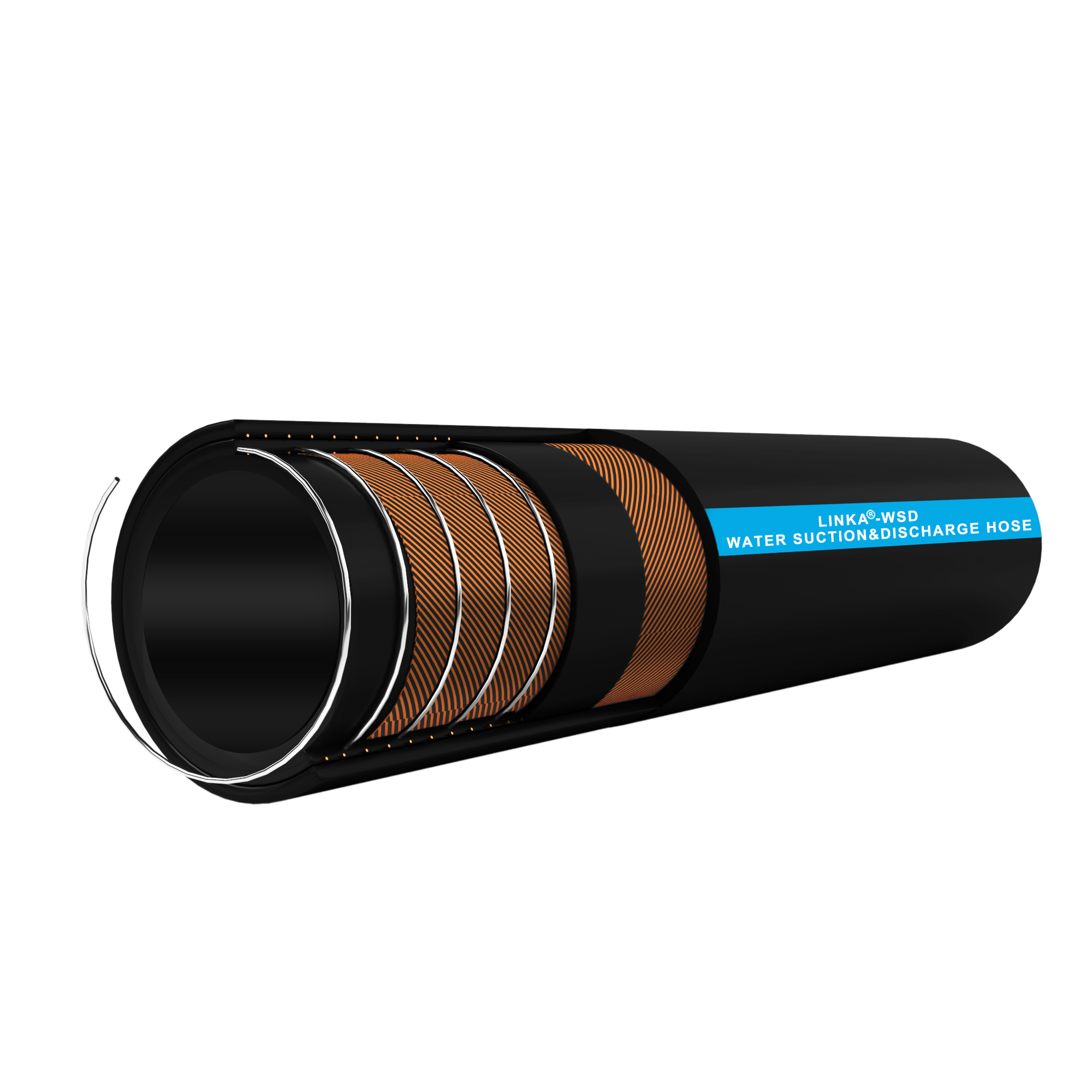
Helical reinforcement serves as a rigid internal skeleton for the assembly. It creates a continuous, strong frame along the entire length of the tube. This structure directly intercepts external atmospheric pressure. It transfers the crushing force away from the flexible wall material. By bearing the radial load, a high-quality reinforced water hose maintains a wide-open inner diameter. Fluid flow remains entirely unrestricted regardless of the suction lift.
High-tensile steel wire handles severe applications perfectly. Engineers routinely specify it for maximum vacuum scenarios. Steel provides near-absolute resistance to kinking and crushing. It handles heavy debris, agricultural sludge, and industrial waste easily. You need this extreme rigidity when pumps operate at full suction lift capabilities.
Integrated rigid PVC spirals offer highly capable alternatives for medium-duty tasks. They reduce overall assembly weight significantly. Operators favor them for mobile operations requiring constant repositioning. They also resist external dragging and rough abrasion extremely well. However, they naturally possess lower thresholds for extreme suction compared to steel reinforcements.
Choosing the correct tube compound strictly dictates long-term field performance. You must match the core material to your exact operational environment. A reliable Water Suction Hose relies on robust, chemical-resistant polymers. We evaluate two primary material categories below.
Manufacturers rate vacuum capacity very carefully. They typically use Inches of Mercury (inHg) as the standard performance metric. You must distinctly understand the difference between partial and full vacuum ratings. A full vacuum rating officially reaches 29.9 inHg. Many centrifugal pumps only require partial vacuum ratings. Always check the exact suction lift required before finalizing specifications.
Temperature impacts material performance heavily. As fluids or surrounding environments heat up, elastomers naturally soften. This softening actively lowers the effective vacuum rating of the assembly. You cannot rely strictly on ambient baseline tests. You must adjust your specifications for peak operating heat. Excessive heat makes structural collapse much more likely during operation.
Rely strongly on established engineering standards for procurement. SAE 100R4 dictates strict hydraulic and high-capacity suction guidelines. Compliance ensures verifiable, highly consistent performance across manufacturing batches. It guarantees the reinforcement helix will actually hold under rated structural stresses.
| Application Level | Typical Vacuum (inHg) | Recommended Reinforcement | Common Fluid Type |
|---|---|---|---|
| Light Duty | 10 - 15 | Rigid PVC Helix | Clear Water, Light Chemicals |
| Medium Duty | 15 - 25 | Heavy-Duty PVC or Light Wire | Agricultural Slurry, Mud |
| Heavy Duty | 25 - 29.9 (Full Vacuum) | High-Tensile Steel Wire | Thick Sludge, Industrial Waste |
Installation reality dictates the actual lifespan of your equipment. Over-bending a line causes immense structural stress. It compresses the inner helix tightly on one side. It simultaneously stretches the outer wall thin on the opposite side. This creates highly vulnerable weak points completely susceptible to sudden collapse. Always respect the manufacturer's stated minimum bend radius.
A reinforced tube relies heavily on its mechanical connections. Your dewatering hose remains only as strong as its end fittings. Air leaks at the connection point destroy suction efficiency immediately. The pump draws ambient air instead of heavy fluid. The hose body remains completely intact, but the entire system effectively fails.
Fluid-filled assemblies become incredibly heavy during active pumping. Unsupported weight strains the pump manifold severely. It slowly pulls the heavy couplings out of alignment. Use proper slings or supportive saddles. Suspend the line correctly to prevent premature mechanical wear. Keep the overall routing path as straight as physically possible.
Selecting the optimal structure requires a systematic approach. Follow these direct steps to secure the right assembly.
A: No. Even minimal negative pressure will cause unreinforced hoses to flatten. They immediately restrict fluid flow and severely risk pump damage through cavitation.
A: Heat significantly softens rubber and PVC compounds. If a hose operates near its maximum vacuum rating, elevated temperatures actively reduce its structural rigidity, directly leading to collapse.
A: Yes. Forcing a hose past its stated minimum bend radius stresses the reinforcement helix. It deforms the tube walls, creating a localized vulnerability highly prone to vacuum collapse.