Views: 0 Author: Site Editor Publish Time: 2026-08-01 Origin: Site

Catastrophic hose failure in industrial plant environments carries severe operational and financial consequences. These components act as critical, high-risk failure points across your facility, not just simple commodity items you can swap out without a second thought. Specifying the wrong hose directly leads to unplanned downtime, severe safety hazards such as high-pressure blowouts or toxic chemical spills, and premature equipment wear caused by flow restrictions or media contamination.
To ensure operational reliability, plant managers and maintenance engineers must adopt a systematic, engineering-backed approach. Selecting the exact hose for specific media, pressure, and environmental demands is an absolute requirement for safe operations. Relying on guesswork or simply reordering the same part number without verifying current operating conditions exposes the plant to unnecessary risk. This guide provides a comprehensive framework for evaluating and specifying the right fluid transfer components for your facility.
Standardize selection using the STAMPED framework (Size, Temperature, Application, Material, Pressure, Ends, Delivery) to eliminate guesswork and ensure safety compliance.
Understand the "Weakest Link" Assembly Rule: An Industrial Hose assembly is only as strong as its lowest-rated component (the hose, fitting, or attachment method).
Match the inner tube material strictly to the chemical, thermal, and abrasive properties of the conveyed media to prevent rapid degradation.
Implement a proactive, Swagelok-inspired plant-wide hose audit, tracking, and tagging system to mitigate implementation risks and prevent failures before they occur.
Hose failure triggers cascading effects across a facility. Production halts immediately when a critical line blows, leading to missed targets and disrupted supply chains. Environmental cleanup costs escalate quickly when hazardous materials spill, often resulting in OSHA compliance violations, heavy fines, and severe worker injury. Relying on "part number matching" without re-evaluating current operational conditions is a dangerous practice. Plant environments evolve, production demands increase, and the original installation parameters may no longer apply to the current workload.
When maintenance teams simply replace a failed hose with an identical unit without investigating the root cause of the failure, they guarantee a repeat occurrence. If a hose failed due to external abrasion, replacing it with the same unshielded hose solves nothing. You must analyze the failure mode—whether it is thermal degradation, chemical attack, or mechanical fatigue—and upgrade the specification accordingly.
A successful deployment requires strict adherence to baseline engineering requirements. You need adequate safety margins, typically maintaining a 4:1 burst-to-working pressure ratio for standard industrial applications, though hazardous chemicals may require higher margins. Maximum operational efficiency demands minimal pressure drop across the system, which requires precise internal diameter sizing. Predictable lifecycle longevity ensures maintenance schedules remain accurate and unexpected failures are minimized, allowing for planned changeouts during scheduled shutdowns.
Success also means achieving proper routing without inducing mechanical stress. A properly specified hose will fit the physical constraints of the machinery without violating its minimum bend radius or twisting during operation. Achieving these criteria requires moving away from purchasing based on availability and moving toward purchasing based on engineered specifications.
Internal Diameter (I.D.) determines proper flow velocity and system efficiency. An undersized I.D. causes system pressure drops, turbulent flow, and excessive heat buildup, which can damage downstream equipment and degrade the hose material from the inside out. Conversely, an oversized hose reduces system pressure below required operational levels and adds unnecessary weight and bulk to the assembly.
External Diameter (O.D.) considerations dictate how the hose routes through tight plant spaces. Accurate O.D. measurements ensure proper fitting compatibility and allow for correct support clamp selection. If you use a clamp designed for a smaller O.D., it will crush the hose reinforcement. If the clamp is too large, the hose will vibrate and chafe against the clamp, leading to cover wear and eventual failure.
You must differentiate between the temperature of the material being conveyed and the external ambient temperature. Extreme heat degrades rubber compounds rapidly, reducing pressure ratings and accelerating the aging process. When conveying hot fluids, the inner tube must withstand the thermal load without hardening or cracking.
External environmental temperatures also play a critical role. Cold environments cause elastomer dry-cracking and thermal hardening, making the hose brittle and susceptible to failure upon flexing. Radiant heat from nearby furnaces or steam lines can bake the outer cover, destroying its protective properties. You must evaluate both temperature extremes and select materials that can handle the combined thermal stress.
External conditions dictate cover material requirements. Consider UV and ozone exposure, frequent chemical washdowns, physical abrasion, and whether the hose experiences continuous or intermittent flexing. A hose dragged across a concrete floor requires a highly abrasion-resistant cover, such as UHMWPE or a thick synthetic rubber blend.
Routing constraints require strict adherence to minimum bend radius requirements. Forcing a hose to bend tighter than its engineered limit stresses the reinforcement layers, causing them to separate or kink. Preventing hose torsion during installation is critical; a hose twisted by just a few degrees during fitting installation can see its service life reduced by over 70% due to the immense stress placed on the reinforcement wires.
Evaluating the inner tube material against the specific fluid, gas, or solid being conveyed is non-negotiable. Mismatching the tube compound with the media leads to permeation, swelling, and rapid chemical degradation. Always consult chemical compatibility charts for the specific concentration and temperature of the media.
A chemical that is harmless at room temperature can become highly aggressive when heated. Furthermore, consider the cleaning agents used to flush the lines. A hose might be perfectly compatible with the primary product but rapidly degrade when exposed to the caustic solutions used during CIP (Clean-In-Place) procedures.
Maximum Allowable Working Pressure (MAWP) defines the safe operating limit of the hose. You must understand the critical difference between working pressure and burst pressure. The burst pressure is a destructive test metric, not an operational guideline. You must account for dynamic pressure spikes, hydraulic surges, and water hammer effects, which can momentarily exceed the system's static pressure by a factor of two or three.
Suction applications require specific vacuum ratings to prevent collapse. A hose designed solely for positive pressure will flatten instantly when subjected to a vacuum, blocking flow and potentially cavitating pumps. Always verify the inches of mercury (inHg) rating for any suction application.
End fittings must be compatible with both the hose material and the plant's existing infrastructure. Attachment methods, whether crimped, swaged, or banded, directly impact leak prevention and pressure retention. Crimped fittings provide the most secure and permanent connection, utilizing a ferrule that compresses the hose wall against the fitting stem.
The "Weakest Link" Assembly Rating dictates that the published maximum working pressure of the completed assembly is determined by the lowest-rated component. If you attach a 1,000 PSI hose to a 300 PSI cam-and-groove fitting, the entire assembly is rated for a maximum of 300 PSI. The hose, coupling, and attachment clamp must all meet or exceed the maximum system pressure.
Specify requirements for pre-delivery hydrostatic testing and material certifications like CRN, FDA, or USP Class VI. Hydrostatic testing involves pressurizing the completed assembly with water to a specific multiple of its working pressure (usually 1.5x or 2x) to verify fitting retention and hose integrity before it enters your facility.
Consider specific packaging needs to prevent damage during transit. Hoses should be capped to prevent internal contamination and coiled properly to avoid kinking. Factor in supply chain availability and extended lead times for custom assemblies to avoid project delays during critical plant turnarounds.
Pneumatic tools, washdown stations, and cooling lines operate under specific parameters that require flexible, durable solutions. Common materials include EPDM, PVC, and Nitrile blends. Evaluate these based on oil resistance, flexibility, and temperature tolerance. EPDM excels in weather and ozone resistance, making it ideal for outdoor water lines, but it degrades quickly when exposed to petroleum-based oils.
If the compressed air system introduces lubricating oils into the line, a Nitrile tube is required to prevent swelling and degradation. A general-purpose air and water hose handles standard shop conditions effectively, provided you match the cover material to the physical abuse it will endure on the shop floor.
Drafting water, agricultural transfer, and construction dewatering require specialized construction to handle negative pressure. A water suction hose utilizes a rigid wire helix reinforcement embedded within the rubber layers. This internal structure prevents hose collapse under negative pressure vacuum conditions during drafting operations.
When selecting a suction hose, consider the flexibility required for deployment. Corrugated covers offer tighter bend radii and easier handling compared to smooth cover hoses, which is highly beneficial when maneuvering heavy hoses around construction sites or tight plant sumps.
Sandblasting, dry bulk transfer, and slurry handling demand extreme durability to withstand constant internal scouring. An abrasive material hose uses thick, highly resilient natural rubber or specialized synthetic tubes. These materials resist internal wear by absorbing the impact of abrasive particles and bouncing back, rather than tearing.
Static electricity buildup is a massive hazard during dry material transfer. As dry particles rush through the hose, they generate a static charge that can arc and cause explosions in dusty environments. Abrasive hoses must incorporate static-dissipating tube compounds or embedded static wires connected to the end fittings to safely ground the assembly.
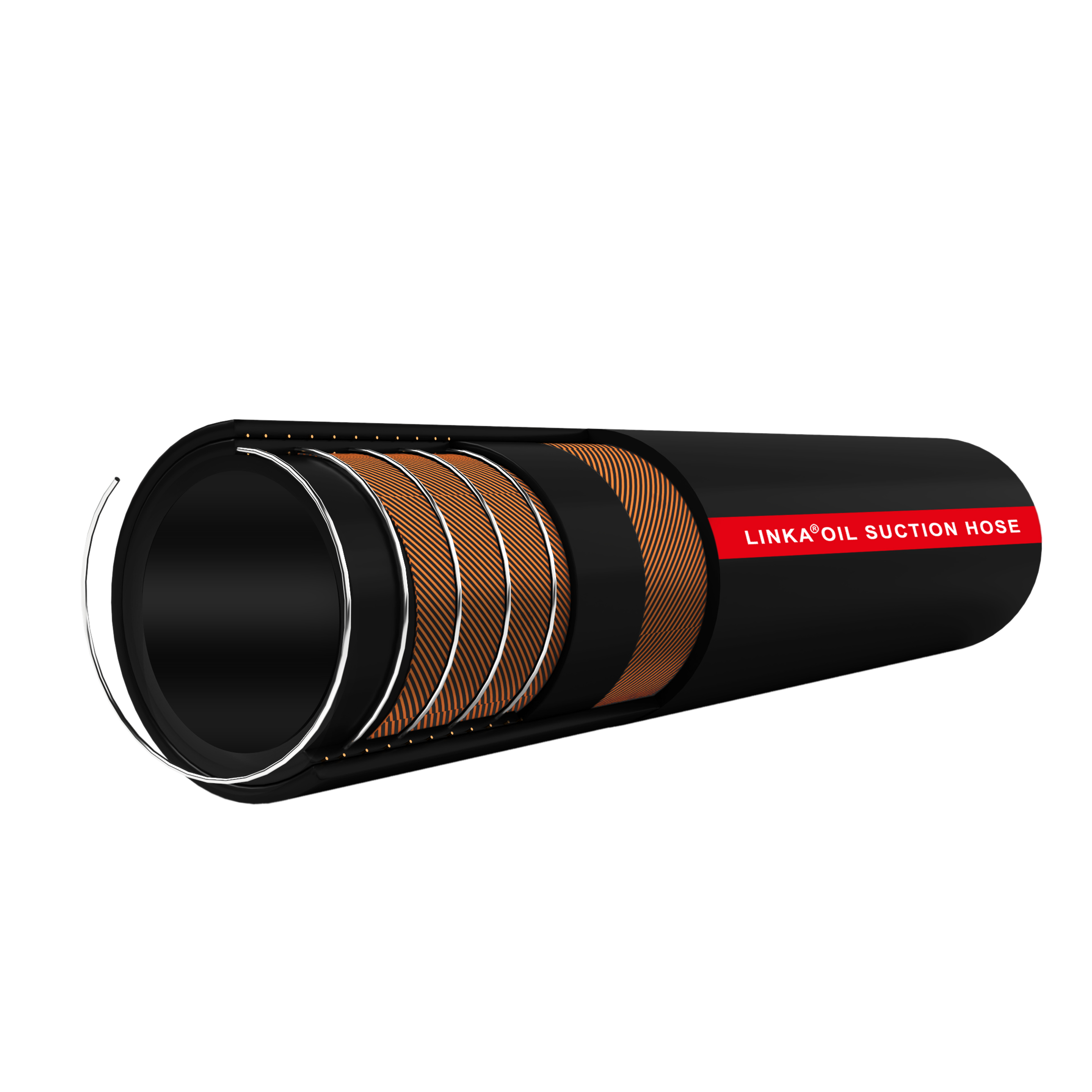
Petroleum transfer, hydraulic returns, and chemical processing present complex challenges regarding material compatibility. An industrial oil suction hose requires Nitrile (NBR), Neoprene, or other specialized compounds. These materials offer maximum resistance to oil degradation, swelling, and permeation under harsh conditions.
When transferring refined fuels, aromatics, or crude oil, the tube must not leach compounds into the fluid or absorb the fluid and swell. Swelling reduces the internal diameter, restricting flow and increasing system pressure. Always verify the specific aromatic content of the fuel or oil, as higher aromatic concentrations require more robust synthetic rubber formulations.
Regulatory and industry standards dictate compliance in specific plant environments. ISO, SAE, FDA for food grade, and NAHAD assembly guidelines establish baseline quality and safety metrics. Specifying certified hoses mitigates liability and ensures components meet rigorous testing requirements before they ever reach your loading dock.
For example, hoses used in food and beverage processing must meet FDA and 3-A Sanitary Standards, ensuring the materials will not impart taste, odor, or toxic chemicals into the product. Pharmaceutical applications require USP Class VI certifications, demanding even stricter material purity and traceability.
Specific construction features correlate directly to operational outcomes. Understanding these relationships allows you to specify the exact physical traits needed for your application.
| Construction Feature | Primary Operational Outcome | Best Application Environment |
|---|---|---|
| Braided Textile Reinforcement | High flexibility, expansion resistance | Pneumatic tools, water discharge |
| Spiral Wire Reinforcement | High pressure capacity, impulse resistance | Hydraulic systems, high-pressure washdown |
| Helical Wire Insert | Vacuum resistance, collapse prevention | Pump suction, drafting, tank unloading |
| Corrugated Outer Cover | Extreme flexibility, tight bend radius | Tight routing spaces, manual handling |
| UHMWPE Outer Cover | Maximum abrasion resistance | Dragging across concrete, mining operations |
Engineering trade-offs are unavoidable in hose design. Increasing reinforcement layers for higher pressure capacity inherently reduces the bend radius and increases stiffness. A high-pressure hose will always be less flexible than a low-pressure variant. You must balance the need for pressure containment with the physical reality of how the hose must be routed and handled by operators.
Balance operator ergonomics with heavy-duty wear resistance. Lighter, more maneuverable hoses reduce operator fatigue, which is critical for manual tasks like washdown or sandblasting. However, reducing weight usually means sacrificing cover thickness and reinforcement density. High durability requires thicker, heavier covers and robust reinforcement, making the hose harder to handle but significantly extending its service life in abusive environments.
Strict installation rules prevent premature failure. The majority of hose failures are caused by poor installation rather than manufacturing defects. Follow these critical routing principles:
Never twist the hose during installation. Use two wrenches when tightening threaded fittings to prevent transferring torque into the hose body.
Respect the minimum bend radius at all times. Do not bend the hose immediately behind the coupling; allow a straight run of at least two times the hose O.D. before initiating a bend.
Use proper support clamps or spring guards to prevent abrasion points along the routing path. Ensure clamps are sized correctly to grip the hose without crushing the reinforcement.
Route hoses away from extreme heat sources or use protective fire sleeves if routing near exhaust manifolds or furnaces is unavoidable.
Identify, audit, and document every active hose in the facility through a full plant audit. Implement a clear asset tagging protocol utilizing physical tags, color-coding, metal bands, or RFID chips. Tags must contain critical data to ensure safe operation and replacement.
A proper tag should include the unique serial number, the date of installation, the maximum allowable working pressure, the specific media it is authorized to convey, and the scheduled replacement date. This system eliminates the guesswork for maintenance teams and ensures hoses are replaced based on a proactive schedule rather than a reactive failure.
Establish structured intervals for inspection and replacement based on service severity. High-stress applications require daily visual inspections, while static, low-pressure lines may only require monthly checks. Train your operators to identify key physical indicators that require immediate hose replacement:
Cracked, cut, or charred outer covers that expose the underlying reinforcement layers.
Exposed reinforcement wire or textile braids, which will rapidly corrode or degrade when exposed to the environment.
Fitting slippage, indicated by movement of the hose relative to the coupling or exposed bare hose behind the ferrule.
Corrosion, cracking, or severe mechanical damage to the metal end fittings.
Local kinking, bubbling, or unusual swelling of the hose body under pressure, indicating internal tube failure and fluid leaking into the reinforcement layers.
Implement routine hydrostatic testing schedules for high-risk or critical-path assemblies. Testing hoses during scheduled shutdowns identifies weakened assemblies before they fail during production runs.
Conduct a comprehensive plant-wide hose audit immediately to identify and document all existing fluid transfer assets.
Tag all existing assemblies with unique identifiers, pressure ratings, and scheduled replacement dates to establish a baseline for preventative maintenance.
Implement the STAMPED framework as a mandatory checklist for all future hose procurement and replacement requests.
Consult with a certified fluid routing specialist to finalize specifications for high-risk applications, particularly those involving hazardous chemicals or extreme pressures.
A: STAMPED stands for Size, Temperature, Application, Material, Pressure, Ends, and Delivery. It is a systematic framework used by engineers and maintenance professionals to evaluate and specify the exact hose required for specific industrial applications, ensuring safety and reliability.
A: Calculate the maximum system pressure, including potential hydraulic surges, spikes, or water hammer effects. The hose assembly's Maximum Allowable Working Pressure (MAWP) must equal or exceed this absolute peak system pressure to prevent catastrophic blowouts.
A: The maximum working pressure of a completed hose assembly is determined by its lowest-rated component. If you attach a hose rated for 500 PSI to a fitting rated for only 250 PSI, the entire completed assembly is legally and functionally rated for 250 PSI.
A: A suction hose contains a rigid internal wire helix reinforcement designed to prevent the hose from collapsing under negative pressure (vacuum). A standard discharge hose lacks this rigid helix and is only designed to handle positive pressure applications.
A: No. Standard hoses lack the specialized, thick rubber tubes required to withstand internal scouring. Using them for abrasives leads to rapid internal degradation, blowouts, and severe static electricity hazards that can cause explosions.


