Views: 0 Author: Site Editor Publish Time: 2026-08-03 Origin: Site

Deploying standard indoor-grade hoses in harsh outdoor environments introduces severe operational and safety risks. Premature failure rates skyrocket when materials face constant exposure to the elements, often culminating in catastrophic gas leaks. Ultraviolet radiation, extreme temperature fluctuations, ambient ozone, and abrasive surfaces like concrete, gravel, and steel grating rapidly degrade hose integrity. These environmental stressors compromise weld quality, force costly downtime, and create immediate hazards on the job site.
Mitigating these risks requires a technical evaluation of multi-layered hose construction materials. Project managers and field operators must match the specific polymer, reinforcement layer, and outer composite of a Twin Line Welding Hose directly to the environmental stressors of the site. Selecting the correct material formulation prevents dangerous leaks, ensures consistent gas flow, and maintains physical flexibility under heavy physical strain.
Material Dictates Lifespan: Premium synthetic rubbers (such as EPDM and Neoprene) offer the best baseline balance of thermal stability, ozone tolerance, and UV resistance for outdoor applications.
Multi-Layer Construction is Essential: A durable dual welding hose relies on a specialized division of labor: an ozone-resistant outer cover, a high-tensile textile reinforcement layer, and a gas-impervious inner tube.
Gas Compatibility is Non-Negotiable: Material selection must strictly align with safety grades (Grade T vs. Grade R/RM) when selecting an oxygen acetylene hose, especially when alternative fuel gases are present.
Kinking and Connection Fatigue: The most common mechanical failures occur at the connection fittings and through kinking during active deployment; selecting crush-resistant, high-flexibility compounds mitigates this risk.
Supplemental Protection Extends ROI: Utilizing nylon sleeves, coil covers, or specialized hose reel setups on a dual welding hose significantly reduces localized damage from slag, dragging, and spooling friction.
Ultraviolet light and ambient ozone systematically break down the polymer chains in low-grade outer covers. This chemical degradation manifests as dry rotting, micro-cracking, and structural porosity. When a hose loses its structural elasticity, the internal reinforcement layers become exposed to moisture and dirt, accelerating complete failure. The primary success metric for outdoor applications is the minimum hours of UV and ozone exposure resistance, validated through ASTM testing standards, before physical degradation occurs. Field operators often notice this degradation when the hose cover begins to leave a chalky residue on their gloves, signaling that the UV inhibitors have been depleted.
To understand the impact of UV and ozone on different materials, consider the following field observations:
| Material Type | UV Resistance Level | Ozone Tolerance | Typical Outdoor Lifespan Before Cracking |
|---|---|---|---|
| Standard PVC | Low | Low | 3 to 6 months |
| Grade R Rubber | Moderate | Moderate | 6 to 12 months |
| EPDM Blend | High | High | 24 to 36+ months |
| Neoprene (Grade T) | High | High | 24 to 36+ months |
Outdoor welding operations rarely occur in climate-controlled conditions. Sub-zero temperatures cause standard polymers to lose flexibility, leading to severe embrittlement and cracking during coiling or deployment. Conversely, high ambient heat softens the material, reducing its maximum pressure rating and making it highly susceptible to punctures. Reliable outdoor performance demands materials capable of maintaining structural integrity across operating temperature ranges from -40°F to 200°F.
When operating in extreme cold, follow these specific handling procedures to prevent material failure:
Store hoses in a heated gang box or vehicle cabin overnight before morning deployment.
Uncoil the hose slowly, allowing the internal friction of the gas flow to slightly warm the inner tube before applying full tension.
Avoid sharp bends around steel columns, as the embrittled cover is highly susceptible to snapping under acute angles.
Inspect the entire length for micro-fissures immediately after the shift, as cold weather hides structural weaknesses until the system is pressurized.
Physical abuse is a constant reality on outdoor sites. Hoses are dragged over rough terrain, run over by heavy equipment, and subjected to sharp bends around steel structures. Material memory and temperature-induced stiffness restrict gas flow when kinking occurs. This stresses the compressor and regulator while accelerating material fatigue at the crease point. The success metric here requires high tensile strength, structural memory recovery, and puncture resistance without sacrificing the operator's physical maneuverability.
A dual welding hose must survive being pulled across expanded metal grating and concrete slabs. If the outer cover lacks sufficient abrasion resistance, the steel grating acts like a cheese grater, shaving off layers of rubber until the textile reinforcement is exposed. Once the reinforcement is compromised, a blowout is imminent.
Connection points, including ferrules, brass couplings, and crimps, represent high-risk failure zones under physical tension. When operators pull hoses across a site, the mechanical strain concentrates directly behind the coupling. Robust strain relief mechanisms and highly resilient inner tube compounds are necessary to prevent the hose from splitting or detaching at these critical junctions.
Field mechanics frequently encounter hoses that look pristine in the middle but are completely shredded at the last six inches near the torch. This happens because the operator constantly twists their wrist, applying torsional strain to the crimp. Utilizing a hose with a high-quality, flexible inner tube and installing a short whip hose can absorb this localized stress.
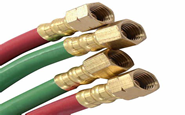
The inner lining makes direct contact with oxygen and highly reactive fuel gases such as acetylene, propane, propylene, and MAPP. Synthetic compounds formulated for the inner tube must prevent gas permeation and resist chemical breakdown. If the inner wall degrades, microscopic rubber particles can travel downstream, contaminating the torch tip and causing erratic flame performance or flashback events.
Gas permeability is a critical factor. If the inner tube is porous, fuel gas can migrate through the rubber and accumulate in the reinforcement layer. This creates a highly dangerous situation where a stray spark on the outer cover can ignite the trapped gas, causing the entire hose to rupture violently.
Situated between the inner tube and outer cover, the reinforcement layer dictates the pressure capacity of the assembly. Manufacturers integrate high-tensile synthetic yarn, spiral textile cords, or braided fibers. This middle layer maintains dimensional stability under high working pressures. It physically prevents the hose from ballooning under pressure and resists kinking when the line is pulled taut.
The angle and density of the braided fibers determine the hose's flexibility. A tighter braid increases burst pressure but makes the hose stiffer. A looser spiral wrap allows for greater flexibility but sacrifices some crush resistance. High-quality hoses use a precisely engineered spiral angle to balance these two competing requirements.
The external layer serves as the primary shield against UV rays, ozone, physical abrasion, and stray sparks. The outer cover's material composition must inherently differ from the inner tube. It prioritizes rugged environmental defense over gas compatibility, balancing heavy-duty abrasion resistance with enough flexibility to allow operators to move freely around the workpiece.
The cover must also resist hot slag. When cutting thick steel plates, molten slag frequently drops directly onto the hose. A standard rubber cover will melt and burn through to the reinforcement. A premium cover formulated with flame-retardant additives will self-extinguish and only suffer superficial charring.
Synthetic rubber remains the gold standard for outdoor welding applications. EPDM delivers unmatched weather, ozone, and UV resistance, ensuring the cover does not crack under prolonged sun exposure. Neoprene complements this by providing excellent flame-retardant and oil-resistant properties. While these compounds have a higher physical weight and can swell if exposed to certain petroleum-based solvents (if non-resistant grades are used), they excel in heavy-duty, all-weather construction and industrial demolition sites requiring high flexibility across extreme temperature spreads.
When working on a muddy construction site where diesel fuel and hydraulic fluid frequently spill, a Neoprene cover prevents the rubber from absorbing the hydrocarbons and swelling. Swollen rubber loses its tensile strength and becomes highly susceptible to tearing.
Polyurethane offers exceptional abrasion resistance, a lightweight profile, and inherent UV stability. Its high strength-to-weight ratio significantly reduces physical operator fatigue during long shifts. However, PU exhibits pronounced material stiffness in extreme cold climates and has a lower threshold resistance to sustained, direct heat, such as pooled slag or direct torch contact. PU fits best in outdoor environments characterized by severe mechanical wear, such as dragging lines across jagged concrete, metal grating, or sharp debris.
Operators working on high-rise steel erection often prefer PU because they have to pull hundreds of feet of hose up multiple stories. The weight savings of PU compared to heavy synthetic rubber makes a massive difference in physical exertion over a ten-hour shift.
PVC-based dual hoses provide initial cost-effectiveness, a lightweight nature, and high visibility. Despite these traits, standard PVC possesses severe limitations outdoors. Rapid UV-induced plasticizer migration leads to brittleness. PVC also suffers from extreme kinking and severe stiffening in freezing temperatures. These materials are generally unsuitable for heavy-duty outdoor welding and are best restricted to light-duty, climate-controlled environments as a basic fabrication shop hose.
If you take a PVC hose outside in December, it will become as rigid as a PVC pipe. Attempting to uncoil it will result in permanent kinks that restrict gas flow and create weak points in the pressure vessel.
Corrugated metal or Monel (nickel-copper alloy) outer jackets handle extreme temperatures and aggressive chemical exposure. They offer supreme durability but lack manual flexibility. Their high weight, strict bend-radius restrictions, and prohibitive costs make them impractical for manual welding operations. They serve best in fixed outdoor automated welding stations, heavy marine and offshore environments, or industrial sites with highly corrosive chemical atmospheres.
Material constraints define Grade R and RM hoses. Grade R features a non-oil resistant rubber cover and tube, while RM utilizes an oil-resistant cover with a non-resistant tube. These grades are strictly limited to acetylene gas. They remain highly vulnerable to rapid chemical breakdown if exposed to alternative fuel gases like propane or propylene, or heavy outdoor petroleum contaminants. Using them outside their specific parameters guarantees premature failure.
If an operator mistakenly connects a Grade R hose to a propane cylinder, the propane will chemically attack the non-resistant inner tube. Within a few weeks, the tube will become spongy, porous, and eventually fail, releasing explosive gas into the immediate work area.
Grade T hoses utilize premium neoprene or synthetic rubber blends featuring high flame, oil, and ozone resistance for both the tube and cover. Grade T stands as the safest, most compliant choice for a versatile outdoor oxygen acetylene hose. Regardless of whether the current setup uses acetylene, propane, or alternative fuels, Grade T prevents internal degradation and withstands exterior environmental abuse.
Standardizing on Grade T across an entire fleet eliminates the risk of an operator grabbing the wrong hose for a specific fuel gas. It simplifies inventory management and provides a massive safety buffer against accidental misuse.
Adding a tightly woven, flame-retardant nylon sleeve bundles the twin lines together. This sleeve protects the primary outer cover from direct UV rays and minor abrasions. Operators must weigh the increased physical protection against the added weight and potential moisture retention, which can lead to mold or mildew accumulation in highly humid climates.
To properly install a protective sleeve, follow these steps:
Measure the total length of the hose assembly and cut the sleeve slightly longer to account for bunching.
Melt the ends of the nylon sleeve with a hot knife to prevent fraying.
Slide the sleeve over the hose before attaching the final crimped fittings.
Secure the ends of the sleeve with heavy-duty, heat-shrink tubing to prevent it from sliding down the line during use.
Spiral coil covers or stainless steel wire braiding provide critical defense in high-impact zones, typically the first 10 feet nearest the torch handle or areas routed near heavy machinery. This physical barrier mitigates crush risks, prevents kink failures at the connection point, and absorbs severe localized abrasion that would otherwise destroy the rubber cover.
When working in a scrap yard where heavy excavators and material handlers are constantly moving, routing the hose through a heavy-duty steel coil cover prevents the tracks of the machinery from instantly severing the gas lines.
Winding and unwinding dual welding hoses on mechanical reels causes unique wear patterns. Reel tension, friction against guide rollers, and tight bend radii accelerate material fatigue. Installing guide-arm rollers and utilizing hoses with low-friction outer covers minimizes spooling wear. Proper reel management prevents the hose from flattening or stretching during storage.
Operators must ensure they do not over-tension the reel spring. Excessive tension forces the hose to stretch every time it is pulled out, weakening the textile reinforcement layer and reducing the overall burst pressure rating of the assembly.
Audit your current outdoor hose inventory immediately for signs of micro-cracking, dry rot, and severe kinking near the connection points. Verify that your current safety grades match your active fuel gases, ensuring Grade T is used for propane or propylene applications. Consult with a technical supplier to specify the correct multi-layer material formulation for your next procurement cycle, prioritizing EPDM or Neoprene blends for heavy outdoor use.
A: Grade R is formulated strictly for acetylene and lacks oil and flame resistance in its tube and cover. Grade T uses premium synthetic rubber, like Neoprene, making it chemically compatible with all fuel gases, including propane and propylene. Grade T is highly resistant to oils, flame, and outdoor ozone.
A: Indoor-grade fabrication shop hoses typically lack the heavy concentrations of UV and ozone inhibitors required for outdoor survival. Exposing them to direct sunlight and weather leads to rapid dry rot, micro-cracking, and dangerous gas leaks.
A: A high-quality hose typically lasts 1 to 3 years under active field conditions. Life expectancy depends heavily on UV exposure levels, surface abrasion severity, storage methods on reels, and overall weather protection.
A: Polyurethane offers superior abrasion resistance and lighter weight. However, rubber provides superior extreme-temperature flexibility, better flame and slag resistance, and strict adherence to standard CGA grading for gas compatibility.
A: Utilize materials with high inherent flame resistance, such as Neoprene. Supplement this with fire-retardant nylon sleeving, protective metal coil covers near the torch handle, and low-friction rollers on hose spools or reels.
A: Select a hose manufactured from EPDM or specific cold-weather synthetic rubber blends designed to maintain elasticity at sub-zero temperatures. Avoid PVC or standard polyurethane, which stiffen and hold memory in freezing conditions.


