Views: 0 Author: Site Editor Publish Time: 2025-09-08 Origin: Site

Cutting an industrial hose requires precise technique and the right equipment. Professionals recommend circular knife blades for most industrial hose types, with smooth or scalloped edges chosen based on the hose material. Bending the hose during cutting prevents blade pinching and heat buildup, which helps maintain cut quality and extends blade life. Post-cutting cleaning, such as using air guns, ensures the hose remains free of debris. Proper tool selection and careful handling support both safety and accurate results in any industrial environment.
Use the right cutting tools designed for the hose type to get clean, precise cuts and stay safe.
Always wear personal protective equipment like gloves and safety glasses to protect yourself from sharp edges and debris.
Measure and mark the hose carefully before cutting to ensure the correct length and avoid leaks or damage.
Cut the hose steadily at a 90-degree angle and smooth rough edges afterward to keep the hose strong and leak-free.
Clean and inspect the hose after cutting to remove debris and check for damage, helping the hose last longer and work better.
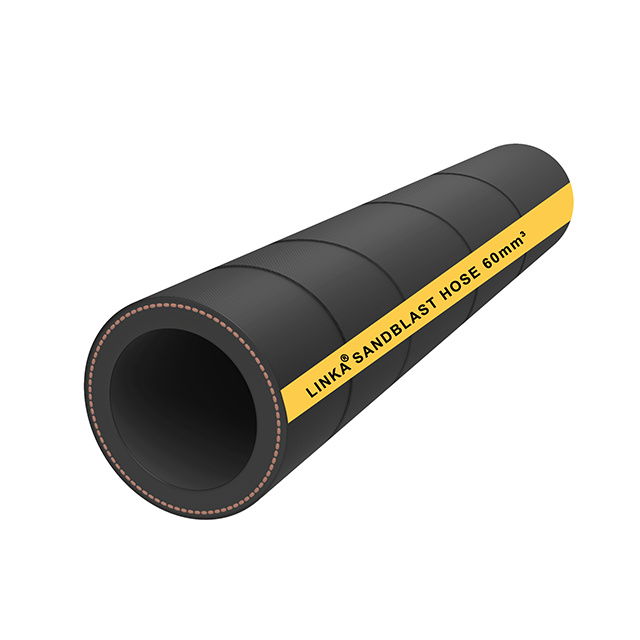
Selecting the right tools for cutting an industrial hose ensures both safety and precision. Industry standards recommend specialized hydraulic hose cutting machines for most industrial applications. These machines use blades designed for specific hose materials, including rubber, stainless steel, and hydro steel hose types. Operators should always use manufacturer-recommended blades and parts to maintain performance and safety.
The table below outlines common blade types and their best uses in industrial hose cutting:
Blade Type | Application / Hose Type | Key Features and Notes |
|---|---|---|
Advanced Scalloped | Hydraulic spiral hose up to 6 wire | Cleaner, faster cuts, no smoke, longer blade life; max 2" ID hose; not for interwoven helix wire hoses. |
Notched Scalloped | Rough duty cutting on spiral hose up to 6 wire | Designed for heavy-duty cutting. |
Micro-Slotted | Spiral hose, industrial hose, Teflon, PTFE, Kevlar, metal hose, wire helix hose | Universal blade; longer blade life; best for interwoven helix wire hoses. |
Beveled | Light duty hoses: single wire braid, textile reinforced, Poly/Nylon reinforced, Teflon | Provides best finish for light duty hose cutting. |
Diamond | Heavy 4 and 6 wire hydraulic hoses | Cuts debris by 60%, fast cuts (5-10 seconds for 2" hose), excellent finish. |
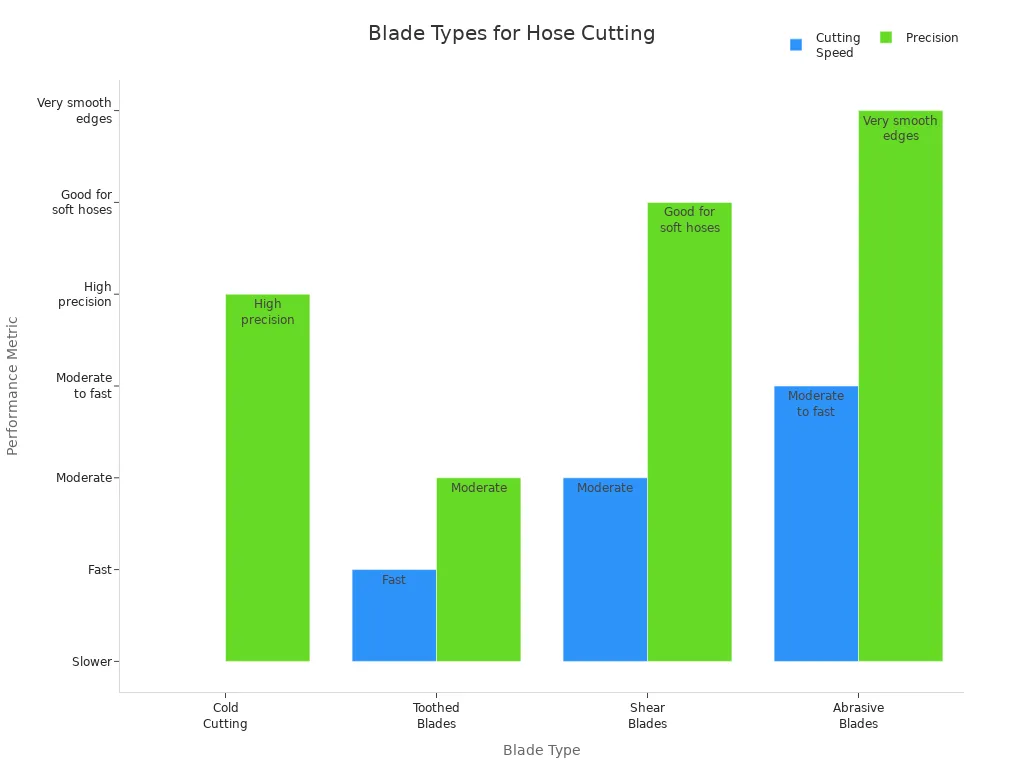
Specialized hose cutters, such as the HYDM 2200 and Clean-Cuts™ systems, offer safer and more effective alternatives to manual saws or utility knives. These machines reduce debris, minimize heat, and improve the quality of the cut. The chart below compares cutting speed and precision for different blade types:
Operators should prepare several additional supplies to ensure a clean, safe cut. Personal protective equipment (PPE) is essential in any industrial environment. Gloves, safety glasses, long sleeves, and protective clothing protect against sharp edges and flying debris, especially when cutting hoses that may have been exposed to chemicals. Clamps or vices secure the hose during cutting, preventing movement and reducing risk.
Tip: Cleaning the hose immediately after cutting removes rubber and metal particles. Using cleaning projectiles while the hose is still warm helps prevent contamination and makes hose stem insertion easier. This step is critical for high pressure and processing applications, where trapped debris can cause leaks or failures.
Tape can be wrapped around the cut area to minimize fraying, especially on textile-reinforced hoses. Maintaining a clean, well-lit workspace supports both safety and accuracy during hose selection and cutting.
A successful industrial hose cut begins with careful preparation. Operators should always maintain a clean and organized workspace. Remove debris and tripping hazards to ensure safety and efficiency. Secure the cutting or crimping machine on a stable surface to prevent shifting during operation. Proper lighting and ventilation improve visibility and reduce exposure to fumes, especially when working with hoses that may have carried chemicals or processing fluids.
Before starting, select the correct die set and adjust machine settings according to the hose size and manufacturer guidelines. Position the hose and fittings carefully to avoid kinks or uneven crimps. Emergency equipment, such as first-aid kits and fire extinguishers, should remain accessible at all times. Store hoses in a cool, dry place to prevent premature wear from exposure to chemicals or industrial environments.
Tip: Always wear personal protective equipment, including gloves, safety glasses, and protective clothing, to guard against sharp edges and potential chemical residue.
Accurate measurement and marking are essential for a precise cut. Operators should use a vernier caliper to measure both the inside diameter (ID) and outside diameter (OD) of the industrial hose. Take multiple measurements and average them for accuracy. Clean the hose before measuring to remove any dirt or chemicals that could affect results. Use only calibrated, reliable measuring tools.
For overall hose length, use a measuring tape for straight hoses, ensuring it remains taut. For curved hoses, wrap a string along the curve, then measure the string. Always measure to the fitting interface points, not just end-to-end, and consider the cutoff lengths of fittings. Double-check all measurements by taking multiple readings.
Mark the cutting point with a visible marker or tape. Accurate markings guide the alignment of cutting blades, resulting in clean, even cuts. Marking tools help prevent leaks and equipment failure by ensuring the hose is cut to the correct length. For hoses that will be crimped, mark alignment points as well.
Operators should use sharp, clean-cutting tools designed for the specific hose material. Hydraulic hose cutters or fine-toothed hose saws work best for most industrial hose types. Securely clamp the industrial hose pipe to prevent movement during cutting. Cut at a 90-degree angle to ensure a straight edge. Apply steady, controlled pressure and maintain a consistent cutting speed to avoid fraying.
For PVC hoses, rotary blade cutters provide clean, square cuts with minimal fraying. For rubber hose, guillotine blade cutters prevent deformation and produce clean edges. Ultrasonic cutting suits thin-wall or specialty hoses, offering sealed edges and minimal fraying. Laser cutting, while precise, is not recommended for standard hose cutting due to hazardous fumes and high costs.
After cutting, use a deburring tool to smooth rough edges and remove any frayed wires. This step is especially important for hoses used in processing or chemical transfer, as rough edges can trap debris or chemicals.
Note: Always follow manufacturer guidelines for cutting and crimping to maintain hose integrity and performance in industrial and processing applications.
Inspection ensures the cut meets quality standards and the hose remains safe for use. Check the cut end for straightness and smoothness. Look for frayed wires, uneven edges, or signs of damage. Use a caliper to verify the ID and OD at the cut end. Clean the hose thoroughly to remove any debris, rubber particles, or chemical residue.
If the hose will be used for processing fluids or chemicals, inspect for contamination and ensure the cut end is free of defects. For hoses that require fittings, confirm that the cut end fits properly and aligns with the fitting interface. A clean, precise cut supports long-term performance and reduces the risk of leaks or failures in industrial systems.
Tip: Document the inspection results and keep records for quality control, especially in environments where hoses carry chemicals or processing fluids.
Proper personal protective equipment (PPE) forms the foundation of safety when cutting any hose in an industrial environment. Workers must select PPE based on the specific risks present during the cutting process. The following items are essential for maintaining safety:
Gloves protect hands from sharp tools and abrasions, especially when handling rubber hose or hydro steel hose.
Safety glasses or eye protection shield eyes from flying debris or chemical splashes.
Hearing protection, such as earplugs or earmuffs, reduces noise exposure from cutting machines.
Protective clothing, including long sleeves and chemical-resistant materials, guards against physical and chemical hazards.
Hard hats provide head protection in busy industrial settings where overhead risks exist.
Always inspect PPE before use. Replace any damaged or worn items immediately to maintain a high level of safety.
Safe handling techniques reduce the risk of injury and support long-term hose performance. Workers should follow these steps for optimal safety:
Wear all required PPE, including gloves, safety goggles, and steel-toed boots, before handling or cutting any hose.
Depressurize the hydraulic system fully before starting work. This step prevents accidental fluid expulsion.
Inspect each hose for cracks, bulges, or exposed reinforcement layers. Avoid using damaged hoses, such as a worn stainless steel hose or a compromised hydraulic hose.
Select hoses rated for the correct pressure, temperature, and fluid compatibility. This practice prevents premature failure.
Route hoses away from sharp edges, hot surfaces, and moving parts. Use clamps or protective sleeves to avoid abrasion or kinking.
Use the correct fittings and tighten them properly to prevent leaks or detachment.
After cutting or installation, test the system at low pressure to check for leaks before full operation.
Schedule routine maintenance and inspections. Replace hoses proactively, especially in demanding environments.
These safety tips and handling practices help prevent accidents and ensure reliable hose operation. Always consider safety considerations as a top priority in every industrial setting.
Frayed ends often appear after cutting a multipurpose industrial hose, especially when dealing with textile or braided reinforcement. Operators can prevent fraying and maintain a professional finish by following these effective methods:
Hot knife cutting uses a heated blade to cut and seal the hose end at the same time, stopping fibers from unraveling.
Flame sealing involves briefly melting the cut end with a lighter or candle, which fuses the fibers and prevents fraying.
Heat shrink tubing can be placed over the end and shrunk with a heat gun, securing and protecting the cut edge.
Electrical tape or cable ties offer a quick solution by tightly wrapping or tying the end to hold fibers in place.
Folding the end back onto itself and securing it with lacing cord or a tie-wrap provides a durable finish without extra materials.
Tip: These techniques help maintain the durability and appearance of hoses used in high pressure, chemical, or general multipurpose hose applications.
Cutting a multipurpose industrial hose requires extra care due to the wide range of chemicals and fluids it may carry. Operators should always depressurize hydraulic hoses before cutting to avoid dangerous sprays. Secure the hose firmly to prevent movement. Use cut-resistant gloves and safety glasses to protect against sharp blades and flying debris. Inspect all tools and blades for sharpness and damage before use. Handle razor-sharp blades with caution. When cutting reinforced hoses, protect eyes from flying debris.
Use the right tool, such as a sharp utility knife or hose cutter.
Clean, measure, and secure the hose before cutting.
Cut with a single, smooth motion at a 45-degree angle to avoid tearing.
Smooth the edges with a file or sandpaper and inspect for straightness.
Always test the fit before connecting the hose to other components.
These steps ensure the multipurpose industrial hose maintains its chemical resistance and integrity in demanding chemical environments.
Proper maintenance after cutting supports long-term performance in industrial applications. Operators should avoid kinks and sharp bends by fully uncoiling hoses and respecting the minimum bend radius. Prevent abrasion by using protective sleeves and not dragging hoses over rough surfaces. Regularly inspect hoses for cracks, bulges, leaks, or frayed ends. Clean hoses after each use, especially when transferring chemicals or high pressure fluids. Store hoses in cool, dry places away from UV rays and ozone sources. Mark installation dates and rotate spare hoses to distribute wear. These practices help general multipurpose hose and industrial hose systems perform reliably in chemical environments.
Industrial hose plays a vital role in many common applications across manufacturing, processing, and heavy industry. Operators use hoses to move fluids, transport chemicals, and handle high-pressure steam in environments where safety and efficiency matter. In chemical processing plants, hoses transfer corrosive chemicals and sensitive fluids between tanks and reactors. Construction sites rely on air hose and water hose systems to power pneumatic tools and supply water for mixing concrete or dust suppression.
Manufacturing facilities use hoses for high-pressure steam cleaning, sterilization, and heating. Agriculture depends on water hose and air hose assemblies to irrigate crops and provide ventilation for livestock. Material transfer hoses move seeds, fertilizers, and production byproducts. In petroleum refining, hoses handle petroleum transfer, steam lines, and by-product removal. Steel manufacturing uses hoses for oxygen lancing, cooling, and gas delivery. Marine and shipbuilding industries require hoses for exhaust, water, and hydraulic lines. Each of these applications demands hoses cut to precise lengths to ensure compatibility and safety.
Note: Industrial hose cutting supports the safe handling of chemicals, fluids, and high-pressure steam in every sector, from utilities and power plants to pulp and paper mills.
Operators must know when to cut or replace an industrial hose to maintain system integrity. Several key indicators signal the need for action:
Cracks, abrasions, or blistering on the hose surface show structural damage.
Leaks around fittings or couplings indicate sealing failure.
Loss of pressure or inconsistent performance suggests internal deterioration.
Deformation, such as kinking or flattening, restricts fluid flow and increases risk.
Frequent leaks or visible bulges mean the hose is nearing the end of its life.
Reduced flexibility or decreased flow points to hose aging.
Hoses exposed to extreme temperatures, chemicals, or high-pressure steam degrade faster and require more frequent inspection.
Regular inspection remains essential. Operators should check hoses visually and by touch, looking for abnormal hardness or softness. Pressure testing helps detect hidden issues. Following manufacturer recommendations for inspection intervals ensures hoses in heavy-duty or chemical processing environments remain safe and reliable.
Tip: Always cut hoses to the correct length for each application. Properly sized hoses improve safety, efficiency, and the ability to transport fluids or chemicals without leaks or failures.
Operators achieve precise industrial hose cuts by following best practices. They measure hose length accurately, select high-quality cutting tools, and inspect hose ends for leaks or damage. Regular cleaning and pressure testing help maintain hose integrity and safety. Consulting professionals for troubleshooting and maintenance leads to longer hose life and reduced downtime. For ongoing reliability, workers should review maintenance tips and schedule routine inspections.
Professionals recommend using a specialized hose cutter or a circular knife blade. These tools provide clean, straight cuts on industrial hose, including rubber hose, hydro steel hose, and stainless steel hose.
Operators can wrap tape around the cut area before cutting. Using a hot knife or flame sealing also helps prevent frayed ends on rubber hose and multipurpose industrial hose.
Most hydraulic hose fittings are not reusable. Operators should always use new hydraulic hose fittings after cutting to ensure a secure, leak-free connection on any industrial hose.
Workers should wear gloves, safety glasses, and protective clothing. These items protect against sharp edges and flying debris when cutting stainless steel hose or hydro steel hose.
A utility knife does not work well for hydro steel hose. Operators should use a hose cutter or saw designed for industrial hose to achieve a safe, clean cut.