Views: 0 Author: Site Editor Publish Time: 2026-08-22 Origin: Site
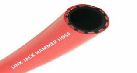
Unplanned downtime on construction sites often traces back to minor equipment failures. Hose kinking stands out as a primary culprit in reduced pneumatic tool efficiency. You might overlook a twisted line initially. However, a kinked line drops CFM (Cubic Feet per Minute) dramatically. This sudden drop stalls heavy-duty equipment. It also creates unpredictable safety hazards across the site. Whip risks and trip hazards escalate quickly when lines tangle under pressure.
This guide provides a technical breakdown of essential features. We will evaluate structural, material, and connection attributes. You will learn how to select a reliable Jack Hammer Hose for your fleet. Our goal is to help you eliminate structural failure under heavy job site stress. By understanding these technical elements, your procurement team can optimize daily operations.
Material Dictates Memory: High-grade rubber compounds resist "coil memory" and temperature-induced stiffening far better than standard PVC, preventing the most common source of kinking.
Reinforcement Layering: Multi-spiral or braided yarn reinforcements maintain internal tube integrity even when the hose is dragged over sharp rubble or twisted.
Stress-Relief Fittings: Kinking disproportionately occurs at the compressor connection; 360-degree swivel fittings and heavy-duty bend restrictors mitigate this localized stress.
Specification Matching: Selecting the right industrial compressed air hose requires balancing wall thickness (durability) with bend radius (flexibility) based on specific site demands.
Micro-kinks restrict essential airflow significantly. Jackhammers require a consistent CFM flow to maintain impact energy. A sudden kink drops this pressure instantly. The tool stalls or slows down during operation. This forces operators to work harder and longer. They spend extra time breaking the exact same volume of concrete. These performance degradations stretch out project timelines and exhaust crews prematurely.
Safety risks represent another major concern. Kinked lines cause dangerous pressure spikes behind the fold. Sudden blowouts become a real possibility. OSHA guidelines mandate strict compressed air safety protocols. A ruptured line creates severe whip hazards. Workers face serious injuries from uncontrolled, thrashing equipment. Furthermore, kinked lines coil unpredictably on the ground. They create significant trip hazards in high-traffic work zones.
Procurement teams must carefully weigh initial costs against operational reality. Cheap lines save money upfront. However, they fail constantly under heavy site stress. You buy replacements over and over again. Labor delays add massive hidden expenses. Investing in kink-resistant features yields far better lifecycle ROI. High-quality lines keep crews working safely and continuously.
Standard plastics develop a persistent problem called "coil memory." They naturally snap back into their factory-rolled shape. Job sites expose equipment to harsh elements daily. In cold weather, PVC becomes dangerously rigid. Instead of bending smoothly around corners, it folds abruptly. This stiff folding leads directly to permanent kinks. The material simply cannot adapt to dynamic movement.
Synthetic rubbers like EPDM and SBR dominate professional environments. Their chemical stability remains unmatched. Rubber lays perfectly flat across uneven terrain. It stays highly flexible even in sub-zero temperatures. It actively resists the twisting torsion responsible for kinking. Operators can drag it around corners smoothly.
We must acknowledge a practical implementation reality. A pure rubber jack hammer hose feels heavier. Operators drag more physical weight around the site. However, the operational trade-off justifies this extra bulk. Rubber offers superior abrasion tolerance against sharp concrete. It practically eliminates structural folding. The heavy-duty nature prevents constant replacements.
Material Comparison Chart: Rubber vs. PVC
| Material Feature | EPDM / SBR Rubber | Standard PVC |
|---|---|---|
| Coil Memory | Low (Lays flat easily) | High (Retains coiled shape) |
| Cold Weather Flexibility | Excellent (Stays pliable) | Poor (Becomes rigid/brittle) |
| Abrasion Resistance | High (Survives rough concrete) | Moderate (Prone to scraping) |
| Kink Susceptibility | Very Low | High |
| Weight Profile | Heavier | Lighter |
Kinking represents a fundamental failure of the structural wall. The tube literally collapses inward under pressure or torsion. We must examine the internal architecture carefully. High-quality designs use specific reinforcement layers between the inner tube and outer cover. These internal structures dictate flexibility and strength.
Manufacturers typically use two main reinforcement styles:
Braided Yarn/Textile: Interlocking fibers wrap around the core. They allow multi-directional flexibility. This interlocking web stops the inner tube from folding inward. It acts like a flexible skeleton.
Wire Braid: Used for extreme high-pressure applications. Wire offers maximum crush resistance. A heavy truck could drive over it. But wire severely limits the bend radius. It feels rigid and heavy.
For standard heavy demolition, textile braided layers provide the ideal balance. They prevent kinking while allowing necessary movement.
Wall thickness plays another huge role. A thicker wall strongly resists kinking. It adds bulk but reduces maneuverability. You must evaluate this balance carefully. Do not trust vague marketing terms like "kink-proof." Instead, look for standardized bend radius specifications. The smaller the bend radius, the tighter you can bend it safely. A well-designed construction air hose balances thick walls and tight bend capabilities.
The first 12 inches represent a massive vulnerability. We call this the compressor spigot chokepoint. It sits right where the line meets the air compressor or the tool. This specific spot handles immense physical stress. Operators constantly pull the line at sharp, unnatural angles. Kinks form here more than anywhere else on the site.
Heavy-duty swivel connections solve this localized problem effectively. These fittings rotate a full 360 degrees freely. They dissipate rotational torque instantly. When an operator twists the tool, the fitting spins. The line untwists itself naturally. Torsional stress never builds up enough to form a kink. This simple mechanical addition extends equipment life dramatically.
Bend restrictors offer vital strain relief at these joints. You often see them as rubber sleeves or spring-steel coils. They sit right over the crimp point. Restrictors physically enforce a safe minimum bend radius. They prevent operators from bending the line past its structural limit. Your pneumatic tool hose remains intact, and the fitting joint stays secure.
Procurement teams need strict, quantifiable specifications. Do not rely on generic product descriptions. Demand exact engineering numbers from your suppliers. A methodical approach prevents costly field failures.
Working Pressure/PSI: Match the rating to your heaviest pneumatic equipment. Ensure the line can handle continuous peak output.
Burst Pressure Ratio: Look for a 4:1 safety margin. If the working pressure is 300 PSI, the burst rating should be 1200 PSI.
Minimum Bend Radius: Verify how tight you can loop it. Lower numbers indicate better flexibility and higher kink resistance.
Material Composition: Specify EPDM or SBR rubber for maximum environmental durability.
Avoid obvious marketing red flags. Be highly skeptical of "100% Never-Kink" claims. True resistance comes from solid engineering and material science, not magic. Every material folds under infinite stress. Look for the phrase "kink-resistant" backed by technical specifications.
Proper rollout and storage directly impact flexibility over time. Use professional reels whenever possible. Reels maintain a natural, factory-designed bend radius. Never force unnatural, tight loops during manual storage. Improper coiling destroys internal reinforcements slowly. Teach your crews proper over-under coiling techniques to preserve structural integrity.
Kinking is a completely preventable failure mode. Procurement teams hold the power to eliminate this frustrating downtime. Focus your budgets strictly on EPDM or SBR rubber lines. Demand multi-spiral or braided yarn reinforcements. Ensure every assembly includes swivel-enabled fittings and sturdy bend restrictors.
Audit your current job site failures to plan your next steps. Find out exactly where your lines fail most often. Do they kink at the tool connection? Do they fold near the compressor? Or do they twist mid-line across the rubble? Pinpoint the exact failure location. Determine which specific feature upgrade will provide the highest immediate ROI for your crews.
A: No hose is entirely kink-proof under infinite physical stress. The industry standard terminology is "kink-resistant." Manufacturers achieve this resistance through material memory reduction, specifically using high-grade rubber. They also add braided structural reinforcement. Beware of any brand claiming a truly indestructible, kink-proof design.
A: This relates directly to the thermodynamics of polymers. PVC and low-grade blends harden significantly in cold weather. This temperature drop exacerbates coil memory. The material cannot bend smoothly, so it suffers structural folding instead. Upgrading to EPDM rubber mitigates this, as it stays pliable below freezing.
A: Once the internal reinforcement braid creases, structural integrity is permanently weakened. For safety and OSHA compliance, you should not patch high-pressure lines casually. You must cut out the damaged section and splice it using proper, rated fittings. Alternatively, replace the entire assembly entirely.
A: Reels prevent kinking during storage by maintaining a natural, safe bend radius. However, improper deployment causes issues. Hurried winding under tension can induce lateral twists. These twists eventually manifest as kinks during deployment. Always wind the line neatly and without excess tension.


