Views: 0 Author: Site Editor Publish Time: 2026-08-07 Origin: Site
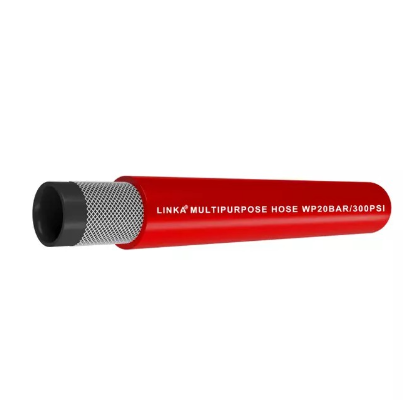
Hydraulic Hose working pressure is determined by hose construction, reinforcement type, inner diameter, material design, applicable standard, temperature range, impulse condition, fittings, assembly quality and installation environment. It should always be selected according to the maximum operating pressure of the hydraulic system, including possible pressure spikes.
Many buyers first look at hose size when selecting a hydraulic hose. Size is important, but it is not the only factor that determines pressure capacity. Two hoses with the same inner diameter may have very different pressure ratings if their reinforcement structure, material design, standard, testing method or fitting assembly is different.
For buyers comparing different pressure levels and hose structures, Linka’s Hydraulic Hose range includes SAE and DIN standard options for mobile, industrial and heavy-duty hydraulic applications.
This article explains the main hydraulic hose pressure rating factors, the difference between working pressure and burst pressure, and the details buyers should confirm before selecting a hose.
Hydraulic Hose working pressure is not decided by size alone.
Key points include:
Working pressure is the rated pressure a hose is designed to handle during normal operation.
Burst pressure is a test-related value and should not be used as the normal operating pressure.
Safety factor shows the margin between working pressure and burst pressure.
Hose construction and reinforcement type strongly affect pressure capability.
Hose inner diameter can affect pressure rating within the same hose series.
Temperature, fluid compatibility and installation stress may influence real service performance.
Impulse pressure is important in mobile and heavy-duty hydraulic systems.
Fittings and crimping can limit the pressure rating of the full hose assembly.
Applicable standards help define construction, dimensions, pressure performance and testing methods.
Buyers should provide system pressure, pressure spikes, hose size, standard, fittings and working environment before selection.
In short, the correct working pressure should be selected from the full hydraulic application, not from hose appearance or size alone.
Hydraulic hose working pressure is the maximum pressure the hose is rated to handle during normal operation under defined conditions. It is usually listed in product specifications and should be used as the main reference for hose selection.
Working pressure matters because hydraulic systems transfer power through pressurized fluid. If the selected hose cannot handle the system pressure, the hose may leak, weaken, fatigue or fail.
Working pressure should be checked against:
normal system pressure;
maximum operating pressure;
pressure spikes;
hydraulic circuit type;
equipment load;
temperature range;
hose assembly rating;
installation condition;
safety requirement.
A Hydraulic Hose should not be selected only because it physically fits the equipment. It must also match the pressure demand of the system.
Working pressure and burst pressure are often confused. They are related, but they are not the same.
| Term | Meaning | How Buyers Should Use It |
|---|---|---|
| Working pressure | Rated pressure for normal operation | Used for hose selection |
| Burst pressure | Failure pressure under test conditions | Used to understand safety margin |
| Safety factor | Ratio between burst pressure and working pressure | Helps evaluate pressure margin |
| Impulse pressure | Repeated pressure spikes during operation | Important for mobile and heavy-duty systems |
The most important rule is simple: select the hose by working pressure, not by burst pressure.
Burst pressure is not a normal operating limit. It is used in testing and standard evaluation. If a hydraulic system runs near burst pressure, the application is unsafe and the hose is incorrectly selected.
Hose size affects flow and pressure behavior, but it does not fully determine working pressure. A larger hose is not automatically stronger. A smaller hose is not automatically weaker.
Working pressure depends on several combined factors:
hose series;
reinforcement type;
number of wire layers;
inner tube material;
outer cover material;
hose diameter;
standard and test requirement;
assembly quality;
fitting pressure rating;
working temperature;
pressure cycling.
For example, a two-wire braided hose and a four-spiral hose may have very different pressure capabilities, even if they are both hydraulic hoses. The correct choice depends on the required pressure rating and application severity.
The following table summarizes the main factors that affect hydraulic hose working pressure.
| Factor | How It Affects Working Pressure |
|---|---|
| Hose construction | Determines the basic pressure class and application range |
| Reinforcement type | Wire braid or spiral wire strongly affects pressure capability |
| Hose inner diameter | Larger sizes may have different pressure limits under the same series |
| Tube and cover material | Affects durability, fluid compatibility and temperature performance |
| Temperature range | High or low temperature may affect pressure performance |
| Impulse pressure | Repeated pressure cycles may reduce service life if ignored |
| Bend radius | Tight bending can stress reinforcement and reduce performance |
| Hose fittings | The assembly is limited by the lower-rated component |
| Applicable standard | Defines construction, dimensions, pressure and testing requirements |
| Testing method | Verifies pressure resistance and performance consistency |
Hydraulic hoses are commonly manufactured according to international standards such as SAE J517, EN 853 and EN 856. These standards define requirements related to hose construction, dimensions, pressure performance and testing methods. When selecting a hose, confirming the applicable standard helps buyers verify whether the hose matches the required pressure level, reinforcement type, application conditions and safety expectations.
Hose construction is one of the basic factors that determine working pressure. A typical Hydraulic Hose may include an inner tube, reinforcement layer and outer cover.
Each layer has a function:
| Hose Layer | Function |
|---|---|
| Inner tube | Carries hydraulic fluid and resists fluid contact |
| Reinforcement layer | Provides pressure strength and structural support |
| Outer cover | Protects against abrasion, weather, oil and external damage |
The reinforcement layer is especially important for pressure capacity. However, the inner tube and cover also matter because material degradation can reduce real service performance over time.
Hydraulic hose reinforcement types directly affect working pressure. Common reinforcement structures include textile reinforcement, one-wire braid, two-wire braid, compact wire braid, four-spiral wire and multi-spiral wire.
| Reinforcement Type | Typical Pressure Role | Common Use |
|---|---|---|
| Textile reinforcement | Lower-pressure hydraulic or return applications | Light-duty circuits |
| One-wire braid | Low to medium pressure | Agricultural and mobile hydraulics |
| Two-wire braid | Medium to high pressure | Construction and industrial equipment |
| Compact wire braid | Higher flexibility in tight routing | Mobile equipment and compact machinery |
| Four-spiral wire | High pressure and strong impulse | Heavy-duty hydraulic systems |
| Multi-spiral wire | Severe high-pressure applications | Large machinery, mining and heavy equipment |
For medium and high-pressure hydraulic circuits, SAE100 R2AT Hydraulic Hose can be reviewed as a two-wire braided option when buyers need oil resistance, pressure performance and standard-based hose selection.
In severe systems with stronger impulse pressure, spiral hose may be more suitable than a standard wire braided hose.
Hose inner diameter affects flow demand, pressure drop and hydraulic efficiency. Within the same hose series, different sizes may have different pressure ratings. This is one reason buyers should not assume that all sizes in one product family have the same working pressure.
Inner diameter should be selected according to:
system flow rate;
pressure requirement;
acceptable pressure drop;
equipment function;
hose length;
pump output;
routing space;
application speed.
A hose that is too small may restrict flow and generate heat. A hose that is too large may be harder to install and route. The correct hose size should support both flow performance and pressure rating.
The inner tube must be compatible with the hydraulic fluid. If the material is not suitable, the tube may swell, crack, soften or degrade. This can affect pressure performance and service life.
The outer cover protects the hose from external damage. In applications with abrasion, sunlight, oil, dust or outdoor weather, cover durability becomes important.
Material selection should consider:
hydraulic fluid type;
oil resistance;
temperature range;
abrasion exposure;
ozone and weather resistance;
environmental condition;
application severity;
cleaning method.
Even when a hose has a correct pressure rating on paper, poor material compatibility can shorten service life in the actual application.
Temperature can affect hydraulic hose performance. High temperature may accelerate rubber aging, while low temperature may reduce flexibility. In some applications, temperature may also affect the behavior of hydraulic fluid.
Hydraulic hose temperature derating may be relevant when the application operates near temperature limits. Buyers should check both fluid temperature and ambient temperature.
Temperature-related risks include:
tube hardening;
cover cracking;
reduced flexibility;
leakage;
faster aging;
pressure performance reduction;
fitting or seal problems.
A hose should be selected according to the real operating temperature, not only room-temperature specifications.
Hydraulic fluid compatibility is another important factor. Different fluids may require different tube materials. If the inner tube is not compatible with the fluid, the hose may fail even when pressure rating appears correct.
Buyers should confirm:
hydraulic oil type;
synthetic fluid use;
water-based fluid use if applicable;
fluid temperature;
contamination risk;
maintenance interval;
equipment manufacturer requirement.
Fluid compatibility should be reviewed before selecting hose type, especially for replacement, export, industrial or OEM applications.
Hydraulic hose impulse pressure refers to repeated pressure spikes or pressure cycling during operation. This is common in mobile equipment, construction machinery, agricultural machinery and heavy-duty hydraulic systems.
Impulse pressure may occur during:
lifting;
digging;
steering;
braking;
attachment operation;
cylinder movement;
sudden load changes;
hydraulic shock.
A hose may handle steady pressure but fail early under repeated impulse conditions. Therefore, buyers should consider pressure cycling, not only static working pressure.
For severe impulse applications, higher reinforcement levels, suitable standards and proper hose assembly quality become more important.
Bend radius can affect pressure performance and hose life. If a hose is bent too tightly, the reinforcement layer may be stressed. This can reduce durability and cause early failure.
Installation stress may come from:
tight bends;
twisting;
tension;
short hose length;
rubbing against machine frames;
incorrect clamp position;
movement during operation;
poor fitting angle.
A hose should be routed so it can move naturally without being stretched or forced beyond its bend radius. This is especially important for mobile machines and compact hydraulic systems.
The pressure rating of a hose assembly is not determined by the hose alone. Fittings, crimping, thread type and assembly quality also matter.
A hose assembly is limited by the lower-rated component. If the hose has a high working pressure but the fitting or crimping method is not suitable, the full assembly may not safely reach the hose rating.
Buyers should check:
fitting pressure rating;
thread standard;
sealing method;
fitting angle;
hose compatibility;
crimping specification;
assembly length;
pressure testing requirement.
This is why hydraulic hose fittings should be selected together with the hose, not after the hose is chosen.
Applicable standards help define how a hydraulic hose is constructed, classified and tested. Common standards include SAE J517, EN 853 and EN 856. These standards help buyers compare hose types more clearly.
Standards may define:
hose dimensions;
construction requirements;
reinforcement structure;
pressure performance;
bend radius;
test methods;
marking requirements;
application suitability.
However, a standard name alone is not enough. Buyers should still confirm pressure rating, size, temperature range, fittings and application conditions.
System Pressure → Pressure Spikes → Hose Standard → Hose Construction → Reinforcement Type → Hose Size → Temperature Range → Fitting Rating → Final Working Pressure Selection
This flow shows that working pressure selection should start from the hydraulic system and end with the full hose assembly.
Braided hose and spiral hose are both used in hydraulic systems, but they are usually selected for different pressure and impulse requirements.
| Hose Type | Pressure Role | Typical Application |
|---|---|---|
| One-wire braided hose | Low to medium pressure | General hydraulic circuits |
| Two-wire braided hose | Medium to high pressure | Mobile and industrial equipment |
| Compact braided hose | Medium to high pressure with tight routing | Compact machinery |
| Four-spiral hose | High pressure and high impulse | Heavy-duty hydraulic systems |
| Multi-spiral hose | Severe pressure and impulse conditions | Mining, large machinery and severe duty |
Braided hose may offer a balance of pressure performance and flexibility. Spiral hose is often selected when pressure level and impulse severity are higher.
The final choice should be based on pressure rating, impulse load, bend radius, routing and fittings.
The following table provides a general selection reference. Actual values should always be checked from the supplier’s specification sheet.
| Hose Category | General Pressure Use | Selection Focus |
|---|---|---|
| Textile reinforced hose | Lower-pressure or return circuits | Flexibility and light-duty flow |
| One-wire braided hose | Low to medium hydraulic pressure | General equipment and moderate loads |
| Two-wire braided hose | Medium to high pressure | Pressure rating and standard compliance |
| Compact hose | Tight routing with pressure demand | Small bend radius and easy installation |
| Four-spiral hose | High pressure and impulse load | Heavy-duty performance and safety margin |
| Multi-spiral hose | Severe pressure applications | High pressure, impulse and durability |
This table should not replace technical selection. It only helps buyers understand how hose structure relates to pressure capability.
Hydraulic hose pressure selection errors can create leakage, downtime and safety risk.
| Misunderstanding | Correct Understanding |
|---|---|
| Larger hose always means higher pressure | Pressure depends on construction, reinforcement and standard |
| Burst pressure can be used as working pressure | Burst pressure is not for normal operation |
| Hose pressure alone decides assembly pressure | Fittings and crimping can limit assembly rating |
| All hoses with the same size are equal | Same ID may have different structures and ratings |
| Temperature does not affect pressure performance | Temperature can affect hose material and service life |
| Bend radius is only an installation detail | Tight bending can stress reinforcement |
| Standard name is enough for selection | Size, rating, fittings and application still need checking |
| Pressure spikes can be ignored | Impulse pressure can cause early fatigue |
| Outer cover does not affect pressure use | Cover damage can expose reinforcement and reduce life |
| Any fitting can be used with any hose | Hose and fitting compatibility is essential |
These mistakes can be avoided by reviewing the full application before selection.
Before selecting Hydraulic Hose working pressure, buyers should prepare the following details.
| Information to Provide | Why It Matters |
|---|---|
| Maximum system pressure | Main basis for hose working pressure |
| Pressure spikes | Helps judge impulse requirement |
| Hydraulic fluid | Confirms tube compatibility |
| Hose ID | Affects flow and pressure loss |
| Hose standard | Helps match SAE, EN or DIN requirements |
| Reinforcement type | Affects pressure and flexibility |
| Temperature range | Helps avoid thermal performance problems |
| Bend radius | Prevents installation stress |
| Fitting type | Determines assembly compatibility |
| Application equipment | Helps judge load and movement |
| Hose length | Affects routing and pressure behavior |
| Testing requirement | Supports quality verification |
This checklist helps the supplier recommend a hose that matches both pressure rating and real operating conditions.
When asking for a hydraulic hose pressure recommendation, buyers should provide application details rather than only asking for a high-pressure hose.
Useful information includes:
equipment type;
maximum working pressure;
possible pressure spikes;
hydraulic oil type;
hose inner diameter;
required hose length;
fitting type and thread;
operating temperature;
routing space;
bend radius requirement;
outdoor or indoor use;
abrasion exposure;
applicable standard;
replacement or OEM application;
pressure testing requirement.
The more complete the information, the more accurately the hose can be selected.
Linka provides hydraulic hoses for different pressure levels, standards and application conditions. For buyers comparing pressure ratings, hose structure and fitting requirements, Linka can help review the full system instead of only checking hose size.
Linka can help evaluate:
working pressure;
pressure spikes;
hose standard;
hose inner diameter;
reinforcement type;
temperature range;
hydraulic fluid;
bend radius;
routing condition;
fittings;
crimping requirement;
assembly length;
pressure testing requirement;
mobile, industrial or heavy-duty application.
A suitable Hydraulic Hose should match the system pressure, reinforcement requirement, fluid, fitting and working environment.
Hydraulic Hose working pressure is determined by many factors, including hose construction, reinforcement type, inner diameter, tube and cover material, temperature range, fluid compatibility, impulse pressure, bend radius, fittings, assembly quality, applicable standard and pressure testing.
Working pressure should be used as the main selection value. Burst pressure is only a test-related reference and should not be used as the normal operating pressure. Safety factor helps show the pressure margin between working pressure and burst pressure, but the hose still needs to match the real hydraulic system.
For reliable hydraulic hose selection, buyers should also check fittings and assembly rating. The complete hose assembly is only as strong as its lower-rated component.
Need help confirming the correct working pressure for your hydraulic system? Contact Linka for hydraulic hose pressure rating support based on your system pressure, pressure spikes, hose size, standard, reinforcement type, fluid, fittings and working environment.
Hydraulic Hose working pressure is determined by hose construction, reinforcement type, inner diameter, material design, standard, temperature range, impulse pressure, fittings and assembly quality.
Working pressure is the maximum rated pressure a hose is designed to handle during normal hydraulic system operation.
Working pressure is used for normal operation and hose selection. Burst pressure is a test-related failure pressure and should not be used as an operating pressure.
No. Burst pressure is not a normal operating limit. The hose should be selected according to working pressure and application conditions.
Safety factor is the ratio between burst pressure and working pressure. It helps show the pressure margin used in hose design and testing.
Yes, hose size can affect pressure rating within a hose series. However, working pressure also depends on construction, reinforcement, material, standard and testing.
Reinforcement provides pressure strength. Wire braided and spiral reinforced hoses usually have different pressure capabilities and impulse resistance.
Impulse pressure means repeated pressure spikes or cycling. It can cause hose fatigue, especially in mobile and heavy-duty hydraulic systems.
Yes. The hose assembly pressure rating can be limited by fittings, crimping or other lower-rated components.
Yes. Linka can help recommend Hydraulic Hose based on system pressure, pressure spikes, hose size, standard, reinforcement type, fluid, fittings and working environment.


