Views: 0 Author: Site Editor Publish Time: 2026-06-21 Origin: Site

Sourcing industrial components often feels like navigating a maze of technical specifications. Yet, few choices impact operational reliability more directly than your fluid transfer lines. For procurement and engineering teams, understanding the exact material composition of a PVC Hose goes far beyond basic chemistry. It is fundamentally about preventing catastrophic line failures down the road. You must ensure rigorous regulatory compliance and optimize your system's long-term performance.
This article provides an objective, transparent breakdown of the polymers, additives, and reinforcements shaping these conduits. You will learn how to evaluate supplier quality confidently. We will also help you specify the exact product formulation needed for your unique application environments. Let us dive into the core materials driving industrial fluid management today.
The foundational material of a **flexible PVC hose** is polyvinyl chloride resin, but its performance is dictated entirely by its additive package (plasticizers, stabilizers, and UV inhibitors).
Structural reinforcements (textile braids or helical wires) are the primary differentiators for pressure and vacuum ratings.
Material compliance (FDA, RoHS, REACH) hinges on the specific type of plasticizers used, making non-phthalate options critical for food and medical applications.
Evaluating a manufacturer's material transparency is the most effective way to mitigate risks like premature brittleness, delamination, or chemical leaching.
We see unplasticized PVC (uPVC) constantly in rigid plumbing pipes. It remains highly stiff and structural. However, modern fluid transfer requires dramatic flexibility. The transformation from rigid pipe material to adaptable conduit begins with raw polyvinyl chloride resin. This base polymer starts its journey as a brittle, white powder in manufacturing facilities.
Manufacturers compound this raw powder with specific chemical agents. This precise blending process creates a Flexible PVC Hose capable of extremely tight bend radii. It navigates complex equipment layouts and bends effortlessly without kinking. The purity of the base resin matters immensely during this extrusion phase.
We always advise engineering teams to prioritize virgin PVC resin. Virgin materials drastically outperform regrind or recycled plastics in critical industrial applications. Recycled PVC introduces unknown microscopic impurities into the polymer matrix. These physical inconsistencies create hidden weak points within the wall structure. As a result, operators face unpredictable burst pressures in the field. Virgin resin ensures absolute structural consistency. It delivers predictable, reliable performance under heavy mechanical loads.
The raw PVC resin acts merely as a blank canvas. The tailored additive package dictates real-world performance. You cannot properly evaluate a hose without understanding these underlying chemical agents. They determine how the material handles stress, ambient heat, and environmental exposure.
Plasticizers (Flexibility & Compliance): These agents insert themselves between polymer chains to increase flexibility. Traditional phthalate plasticizers remain highly cost-effective. They suit general industrial uses perfectly. However, non-phthalate alternatives are strictly necessary elsewhere. You must specify non-phthalate compounds for food-grade, medical, or environmentally sensitive applications to ensure regulatory safety.
Stabilizers (Heat & Degradation Resistance): Extrusion involves extreme manufacturing heat. Operational environments also expose materials to high temperatures. Calcium-zinc or barium-zinc stabilizers protect the polymer chain. They prevent the material from breaking down, yellowing, or scorching during both production and daily use.
UV Inhibitors and Antioxidants (Scalability & Lifespan): Think about heavy outdoor and agricultural applications. Solar radiation degrades standard polymers rapidly. Sun damage causes premature cracking. It leads to severe discoloration and brittleness. Proper UV additives prevent this degradation. They keep the conduit supple and reliable across multiple seasons.
| Additive Category | Primary Function | Common Chemical Agents | Field Consequence if Omitted |
|---|---|---|---|
| Plasticizers | Impart bendability and prevent kinking | Phthalates, DOTP, TOTM | Material remains rigid and shatters under impact |
| Stabilizers | Prevent thermal degradation | Calcium-zinc, Barium-zinc | Material burns during extrusion or melts in service |
| UV Inhibitors | Block solar radiation damage | Carbon black, Titanium dioxide | Material cracks, discolors, and flakes outdoors |
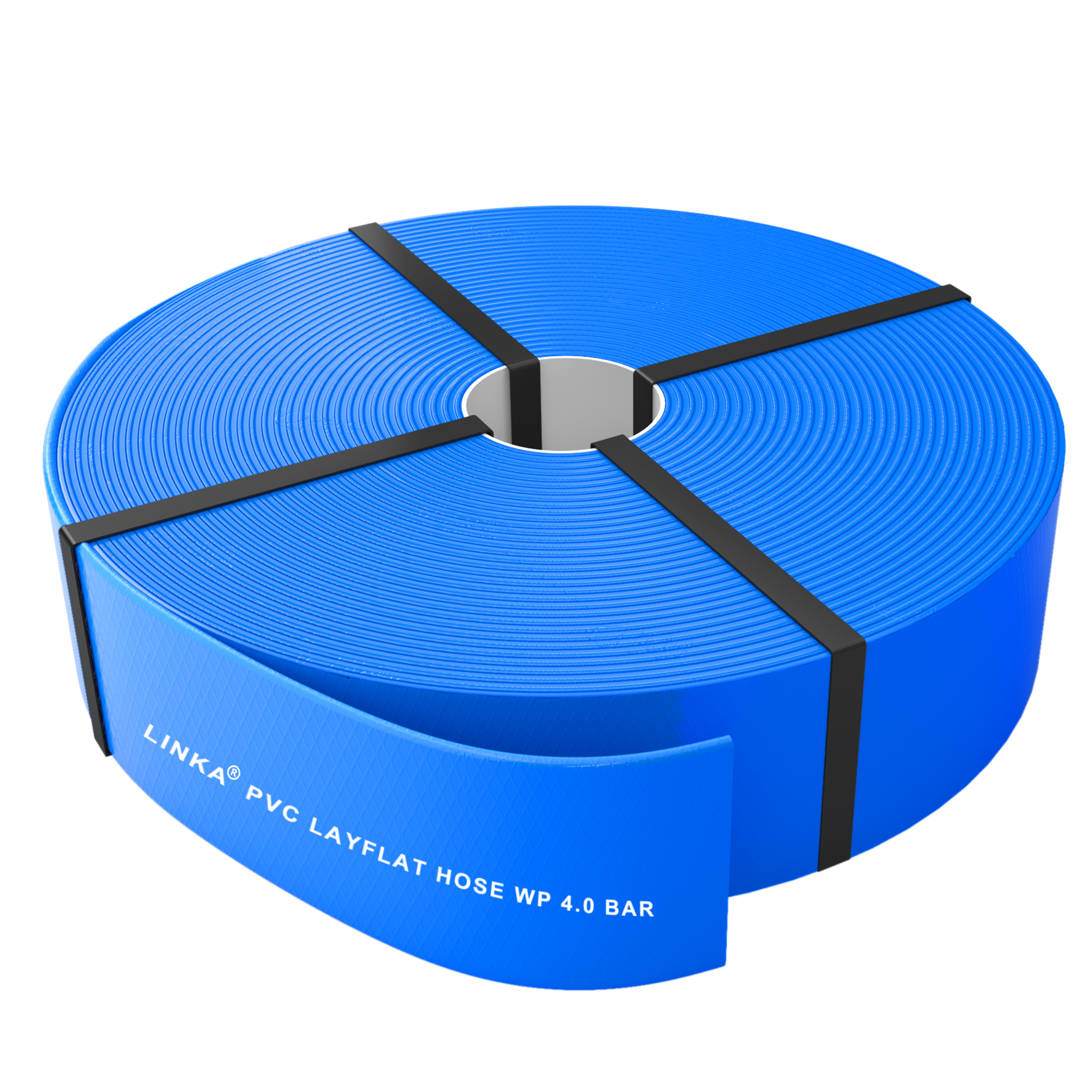
The base polymer rarely handles high operational stress alone. The reinforcement layer truly dictates working pressure capabilities. It also defines heavy vacuum ratings. Manufacturers match specific structural architectures to distinct application pressures. We categorize these reinforcements into two primary styles.
Textile and Yarn Braiding: Manufacturers utilize high-tensile polyester or nylon threads. They braid or spiral these durable yarns precisely between the inner tube and outer cover. We specify this design primarily for high positive-pressure applications. Typical use cases include heavy pneumatic lines, high-volume water discharge, and pressurized chemical delivery. The dense yarn web absorbs outward expansion forces safely.
Wire or Rigid PVC Helix: This design embeds a rigid spiral directly into the wall structure. Materials include galvanized steel wire or rigid uPVC spirals. We use helix reinforcements almost exclusively for negative pressure environments. They excel in fluid suction, heavy vacuum operations, and bulk material handling tasks. The rigid spiral physically prevents the walls from collapsing inward under severe vacuum forces.
Choosing the correct reinforcement prevents premature line ruptures. Always match the architectural design to your specific flow dynamics.
Buyers must actively verify compliance frameworks. You cannot rely on visual inspections or basic assumptions. Evaluating material data sheets mitigates substantial operational risks. Different industries mandate distinct regulatory approvals.
Consider the food and beverage sector. Processing facilities must adhere to strict FDA and NSF standards. Formulations must remain entirely odorless and tasteless. The selected compounds must be strictly non-toxic. Even trace chemical leaching from a non-compliant Flexible PVC Hose can ruin entire product batches.
Industrial operations face global standards like REACH and RoHS. These frameworks restrict hazardous substances rigorously. Sourcing non-compliant products introduces severe legal and safety risks. Unverified materials might contain restricted heavy metals. They may utilize banned toxic plasticizers.
Transparency represents your ultimate safeguard. A generic "food-grade" label printed on a box means absolutely nothing on its own. It holds no legal or technical weight. You must demand verifiable, third-party material certifications directly from the manufacturer. Trusting unverified labels often leads to catastrophic compliance failures during facility audits.
Procurement teams need an objective framework for material shortlisting. We must evaluate trade-offs between PVC, polyurethane (PU), and synthetic rubber objectively.
Let us compare PVC against Polyurethane. PVC remains significantly more cost-effective for large-scale deployments. It offers broad chemical resistance across many mild acids and alkalis. However, PU provides vastly superior abrasion resistance. PU also maintains its flexibility in extreme cold-weather conditions where standard polymers might stiffen and crack.
Next, we contrast PVC with Rubber. A PVC Hose is notably lighter to handle. Manufacturers can produce it in fully clear or transparent formats. This unique transparency allows operators to monitor material flow visually and spot blockages instantly. Rubber, conversely, provides much higher ambient temperature tolerance. It also offers better resistance to extreme, heavy-duty mechanical wear in rugged environments.
| Feature Matrix | Polyvinyl Chloride (PVC) | Polyurethane (PU) | Synthetic Rubber |
|---|---|---|---|
| Visual Transparency | Excellent (Clear options available) | Good (Translucent options) | Poor (Typically opaque black) |
| Abrasion Resistance | Moderate | Outstanding | High |
| Temperature Limits | Up to 140°F (60°C) | Up to 180°F (82°C) | Exceeds 200°F (93°C) |
| Weight/Handling | Lightweight and easy to route | Very lightweight | Heavy and bulky |
| Best Industrial Fit | Water transfer, light chemicals, food processing | Abrasive material handling, cold environments | High-heat fluids, severe mechanical stress |
Understanding material theory provides a solid foundation. However, auditing potential suppliers in reality remains crucial. Buyers must know exactly how to spot compromised manufacturing practices. Several distinct red flags indicate poor material quality.
The filler risk stands out prominently. Some unreliable manufacturers "over-fill" their compounds with calcium carbonate. This practice aggressively reduces manufacturing costs on their end. Unfortunately, it severely compromises the final product on your end. Over-filled materials feel unnaturally heavy. They lack proper flexibility. They appear chalky inside and exhibit significantly weaker burst strengths under pressure.
Delamination presents another major field risk. A reinforced conduit consists of multiple bonded layers. Poor material compatibility prevents proper adhesion. Weak bonding between the inner tube, reinforcement yarn, and outer cover leads directly to delamination. The layers physically separate under pressure. This defect always results in unpredictable and messy field failures.
You must take specific next-step actions to protect your facility. Never buy in bulk based solely on a photograph. Always request detailed technical specification sheets. Ask for official Material Safety Data Sheets (MSDS). Require physical samples from the production line. Conduct rigorous in-house testing under your actual operational parameters before approving any new supplier.
A highly reliable fluid transfer system starts at the molecular level. Your operational success links directly to raw material purity. Quality additives and precise structural reinforcements matter deeply to system integrity. Prioritize transparent material documentation over baseline pricing when selecting a supplier.
We encourage you to evaluate your current inventory against these specific material standards. Look for signs of delamination, unexpected brittleness, or chalky textures. Verify your compliance certifications for food-grade or medical applications immediately.
Take action by contacting your engineering and sales partners today. Share your precise application parameters, including expected pressure, ambient temperature, and specific transfer media. They will analyze these factors closely. You will receive tailored material recommendations and physical sample products engineered specifically for your demanding environment.
A: Standard PVC formulas generally tolerate temperatures up to 140°F (60°C). Operating above this threshold softens the polymer significantly, causing it to lose pressure resistance and potentially burst. For high-temperature liquids exceeding this limit, you should transition to industrial rubber, silicone, or PTFE alternatives engineered for extreme thermal stress.
A: No. While PVC naturally resists many mild acids, alkalis, and salt solutions, it remains highly susceptible to degradation from aggressive solvents, ketones, and certain hydrocarbons. Chemical exposure can leach plasticizers, causing the material to harden and crack. Always consult a specific chemical compatibility chart before transferring aggressive media.
A: Visual and sensory cues often reveal recycled content. Look for structural inconsistencies, tiny specks, or slight opacity in hoses that should be crystal clear. Recycled materials may also emit unusually strong or harsh chemical odors. To guarantee absolute purity, always request virgin material certifications directly from your manufacturer.


