Views: 0 Author: Site Editor Publish Time: 2026-06-20 Origin: Site

Selecting industrial materials is a critical operational decision. You cannot afford to guess when outfitting a facility. Choosing the wrong hose material leads to premature failure. It triggers severe regulatory compliance violations. It causes costly downtime across your entire production line. While heavy rubber and premium polyurethane (PU) have distinct roles, Polyvinyl Chloride (PVC) stands out for specific reasons. It delivers an optimal combination of chemical resistance, flexibility, and upfront cost-efficiency. Engineers often overlook these precise operational benefits.
This guide strictly defines which industrial, commercial, and agricultural applications demand this specific material. We will explore how to evaluate the right specifications for high-stakes environments. You will learn to navigate complex pressure ratings, verify chemical compatibilities, and confirm strict compliance standards. By the end, you can confidently match the exact hose configuration to your specific environmental realities.
Optimal Use Cases: PVC hoses are non-negotiable for applications requiring visual flow monitoring, lightweight handling, and high resistance to mild chemicals.
Suction vs. Discharge: Heavy-duty fluid and solid material handling specifically requires a rigid-helix PVC suction hose to prevent vacuum collapse.
Compliance Matters: Food, beverage, and pharmaceutical applications rely on specialized, FDA/NSF-certified clear PVC to meet strict sanitary standards.
Hard Limitations: PVC is highly effective within moderate temperature ranges; buyers must evaluate environmental factors like extreme cold or prolonged UV exposure before procurement.
Engineers and procurement teams often face a common material selection dilemma. They default to legacy rubber products out of habit. Alternatively, they overspend on expensive polyurethane without properly assessing operational realities. You must align material properties to actual job requirements to maximize efficiency.
A standard PVC Hose provides a substantially lower initial procurement cost. It maintains exceptionally high durability in non-abrasive environments. It also handles mildly abrasive conditions effectively over long periods. When you compare materials side-by-side, the financial advantages become obvious. You save capital upfront. You still receive highly reliable performance for daily operational tasks.
Weight and ergonomics matter significantly on the modern job site. PVC is considerably lighter than thick industrial rubber. This crucial weight reduction directly decreases operator fatigue. Workers navigate manual handling scenarios much faster. Think about sprawling agricultural spraying operations. Consider rigorous daily facility washdowns. Lighter equipment means better maneuverability, faster task completion, and fewer physical workplace injuries.
Visual diagnostics offer another massive operational advantage. You cannot see through dense black rubber lines. Transparent or clear formulations allow instant internal inspection. Operators easily identify blockages before pumps overheat. They monitor fluid transfer rates in real time. They prevent dangerous cross-contamination between different chemical batches. This visual transparency acts as a continuous early warning system for your entire fluid handling network.
Industrial operations require highly specific solutions to manage varying pressures. We must clearly differentiate standard lay-flat discharge lines from structurally reinforced alternatives. Standard discharge lines only push fluids outward. They collapse instantly under negative pressure. Heavy fluid and solid material handling demands a rigid-helix PVC Suction Hose.
Agricultural and slurry applications rely heavily on this distinct structural reinforcement. Farmers use it extensively to draw water from ponds into irrigation networks. Construction crews depend on it for aggressive trash pump operations. Liquid manure handling generates immense negative vacuum pressure. Without a solid helix structure embedded in the wall, the line flattens completely. The reinforced structure guarantees continuous, unrestricted flow.
Construction dewatering presents harsh environmental challenges daily. Job sites feature rough, highly unpredictable terrain. Heavy machinery drives nearby. Workers drag equipment across jagged rocks and sharp debris. The rigid helix design prevents crushing impacts. It stops catastrophic kinking around sharp concrete corners. Your dewatering pumps keep running efficiently without unexpected flow interruption.
Dry bulk transfer requires unique internal surface properties. Facilities frequently convey plastic pellets, industrial powders, or agricultural granules. The interior surface must remain completely smooth. Rough interiors cause severe material buildup. They create friction and drastically slow down transfer rates. A smooth inner wall ensures highly efficient, blockage-free pneumatic conveying across long facility distances.
Strict regulatory environments govern modern food and beverage manufacturing. You cannot use generic industrial materials here. Compliance and security require highly specialized, certified formulations. Facilities strictly follow FDA, NSF, and 3-A Sanitary Standards. These prestigious organizations mandate food-grade certifications. An improperly specified material risks massive contamination events and costly product recalls.
Non-toxic requirements are absolute in this sector. Manufacturers strictly use phthalate-free compounds in these sensitive environments. You see these specialized lines in municipal drinking water transfer systems. Dairy processing plants rely on them heavily to maintain hygiene. Commercial brewing lines use them to move beer without altering delicate flavor profiles. The material cannot leach harmful plasticizers into the consumable product.
Sanitization realities dictate daily operational maintenance protocols. Facilities clean these lines using standard CIP (Clean-in-Place) chemicals. The material resists these harsh caustic washdowns exceptionally well. However, you must observe strict maximum temperature limits. Steam sterilization often exceeds standard thermal capacities. If you apply live, high-pressure steam, the plastic will eventually melt or degrade. You must perfectly match cleaning protocols to specific material heat thresholds.
You must evaluate chemical compatibility very carefully before installation. We map specific resistance profiles to precise operational outcomes. Industrial manufacturing plants frequently transfer mild acids and alkalis. Salt solutions require highly corrosion-resistant pathways. Common operational applications include chemical dosing lines and municipal wastewater treatment plants. The material excels in these highly corrosive but moderate-concentration environments.
Trustworthiness requires openly acknowledging material limitations. We must explicitly state where this specific plastic formulation fails. You should never use standard formulations for high-concentration industrial solvents. Keep them away from highly aggressive hydrocarbons. Petroleum-based fuels easily attack and degrade the plastic structure. In these extreme chemical environments, you strictly require Nitrile or specialized synthetic rubber lines.
Review this standard evaluation chart for chemical environments:
| Fluid Category | Compatibility Status | Recommended Action |
|---|---|---|
| Mild Acids (e.g., Dilute Acetic Acid) | Excellent | Safe for continuous transfer operations. |
| Alkalis & Saltwater Brines | Excellent | Ideal for marine, agriculture, and wastewater. |
| High-Concentration Solvents | Poor | Do not use. Opt for PTFE or UHMW. |
| Petroleum & Hydrocarbon Fuels | Poor | Do not use. Opt for NBR (Nitrile) lines. |
Proper specification prevents catastrophic line failures on the factory floor. You must understand the specific technical metrics governing fluid dynamics. Engineers use exact mathematical criteria to select the right product.
Follow these required evaluation steps to specify the correct configuration:
Analyze Pressure Ratings: You must contrast Working Pressure (WP) directly against Burst Pressure. Working pressure defines the safe, continuous operating limit. Burst pressure is the ultimate failure point. Temperature spikes inversely affect maximum pressure ratings. As ambient heat increases, pressure capacity drops rapidly.
Verify Dimensional Accuracy: Exact Inside Diameter (ID) and Outside Diameter (OD) measurements are critical. Tight dimensional tolerances ensure secure fitting retention. Loose fittings cause dangerous, messy leaks. Always match the exact ID to your specific pump barbs or camlock fittings.
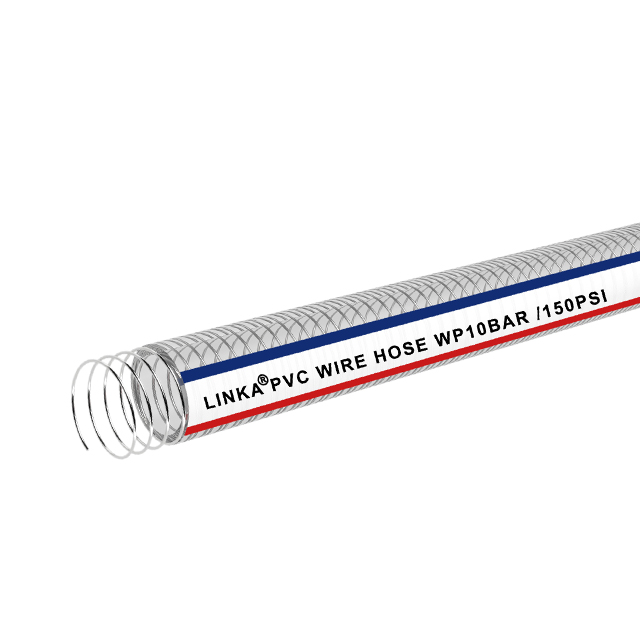
Select Reinforcement Types: Compare your structural options thoroughly. Unreinforced lines handle low pressure and offer completely clear visual flow. Yarn or braid-reinforced options manage moderate pressure liquid discharge. Wire or rigid helix-reinforced configurations handle aggressive suction and heavy vacuum forces.
Real-world industrial applications uncover specific physical vulnerabilities. Temperature sensitivity remains the biggest implementation risk. Standard formulations become stiff and brittle in sub-zero temperatures. Conversely, they soften considerably under high ambient heat. If you operate in freezing climates, we recommend specialized cold-weather blends. These customized formulas maintain high flexibility during harsh winter months.
UV degradation poses a serious long-term structural threat. Direct sunlight impacts polymer integrity over time. The internal plasticizers dry out. The walls eventually crack, fade, and leak. If you design permanent outdoor agricultural or construction setups, you need UV-stabilized variants. These treated plastics resist harsh solar radiation damage effectively.
Use this strict shortlisting logic before contacting any manufacturers:
Identify exact fluid types and chemical concentrations.
Record maximum and minimum expected operating temperatures.
Calculate maximum working pressure spikes.
Verify necessary regulatory certifications (FDA, NSF, 3-A).
This logical checklist allows you to confidently request precise quotes. You can ask for exact product samples from manufacturers to test in your facility.
Specifying a reliable industrial pipeline is an exercise in technical balance. You must carefully weigh upfront procurement costs against necessary chemical compatibility. You also must calculate exact pressure requirements for safety. This highly adaptable material provides incredible versatility across dozens of global industries.
Success ultimately depends on matching the specific compound to your exact environmental realities. A clear, food-grade line belongs safely in a commercial brewery. A heavily reinforced, abrasion-resistant suction line belongs on a rugged construction site. You cannot mix these applications safely.
Take proactive action today to secure your fluid transfer systems. Encourage your engineering teams to consult technical sales representatives. Request comprehensive chemical compatibility charts for your specific process fluids. Always ask for application-specific test samples before finalizing any large operational purchase.
A: No. Only PVC hoses explicitly manufactured with FDA/NSF-approved, non-toxic, and phthalate-free compounds should be used for potable water.
A: A suction hose features a rigid, spiraled helix (either PVC or wire) embedded in the wall to prevent the hose from collapsing inward when subjected to negative pressure.
A: PVC is thermoplastic. It loses flexibility and becomes brittle in freezing temperatures, and loses pressure-handling capacity as temperatures approach its maximum heat threshold (typically around 140°F/60°C).


