Views: 0 Author: Site Editor Publish Time: 2026-08-05 Origin: Site

Allowing fast-setting materials to cure inside industrial hoses leads to immediate financial and operational consequences. Equipment downtime, burst hazards, and the total loss of a hose assembly are common results of poor maintenance on the job site. Pumping abrasive, highly viscous materials requires specialized equipment. When a Plaster Placement Hose is not properly evacuated and cleaned immediately after a pour, residual material adheres to the inner tube. This reduces flow capacity, increases friction, and accelerates internal wear.
Implementing a standardized, multi-step cleaning protocol is necessary to maintain hose integrity. Combining mechanical and hydraulic methods ensures operator safety and maximizes the operational lifespan of the equipment. Proper cleaning prevents permanent blockages and keeps your pumping systems functioning reliably day after day.
Time is the Critical Variable: Cleaning protocols must be initiated immediately after the pump is turned off; plaster and grout compounds begin curing rapidly, permanently bonding to the hose lining.
Mechanical Purging is Mandatory: Relying solely on a water flush is insufficient for highly viscous materials; properly sized sponge balls or clean-out pigs must be used to scrape the internal tube of the plaster pumping hose.
Material Selection Impacts Maintenance: Investing in a high-quality wear resistant rubber hose with a smooth, non-porous inner tube significantly reduces material adhesion and cuts down cleaning time.
Wastewater and Residue Management: Responsible containment of dirty washdown water and plaster solids is an operational and environmental requirement to prevent site damage and pipe blockages.
Safety Precedes Maintenance: Complete pressure relief, securing of discharge lines, and proper disconnection protocols are non-negotiable prerequisites before any cleaning apparatus is introduced into the line.
A clean hose has zero residual buildup, no internal moisture retention, and fully preserved flexibility. Achieving this standard is an absolute requirement for subsequent pours. When plaster cures inside the line, it acts as an abrasive anchor point. During the next pour, fresh material grinds against this hardened residue. This action tears at the inner lining and degrades the integrity of the abrasive material placement hose. You cannot afford to leave any material behind, as even a millimeter of cured plaster will catch aggregate from the next batch, creating a snowball effect that eventually chokes the line entirely.
A narrowed internal diameter forces the pump to operate at higher pressures. This increases the risk of catastrophic hose failure, blowouts at the couplings, and severe injury to operators. The physics of blockages dictate that pressure will find the weakest point. Often, this is the coupling connection or a section of the hose that has been weakened by internal abrasion. When a blowout occurs, the sudden release of kinetic energy and heavy slurry can cause blunt force trauma to anyone standing nearby.
Uncontained plaster discharge also presents significant operational risks. High-pressure blowouts or improper flushing can ruin surrounding finished surfaces. Imagine spraying cured plaster across pool shells, newly cast architectural components, or finished landscaping. The resulting clean-up fees and rework costs easily exceed the value of the hose itself. Proper containment during the cleaning phase is just as important as the cleaning action.
To understand the full impact of improper cleaning, consider the physical changes that occur inside the hose. The inner tube loses its elasticity. It becomes rigid and difficult to maneuver on the site. Operators struggle to drag a stiff hose around corners or up scaffolding, leading to fatigue and decreased productivity. Furthermore, a rigid hose is more susceptible to kinking, which creates immediate flow restrictions and further spikes line pressure.
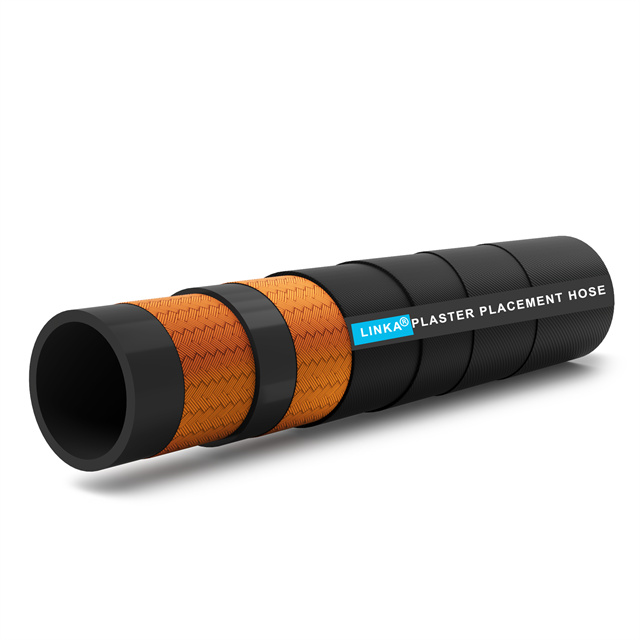
Field operators rely on specific methods to clear heavy materials from pumping lines. Understanding when and how to apply these techniques prevents equipment damage and ensures the construction pumping hose remains in optimal condition for the next job.
A high-volume water flush requires significant water pressure to move heavy slurry. You need a water source capable of matching or exceeding the volume of the material you just pumped. However, water alone only removes loose material. It fails to address the boundary layer of plaster clinging to the hose wall. The friction between the viscous plaster and the rubber tube creates a stubborn film that water simply slides over. A water flush is only the first step in a complete cleaning process. It clears the bulk of the weight, making the hose easier to handle for the mechanical cleaning phase.
Mechanical scraping is necessary for highly viscous materials. Clean-out balls, typically made of dense sponge, are sized slightly larger than the internal diameter of the hose. This ensures a tight, wiping seal as the ball travels through the line. The compression of the sponge against the rubber wall physically scrapes the plaster residue away. You must push this ball through the entire length of the assembly. Sometimes, operators use cylindrical clean-out pigs for larger diameter lines, as they provide a longer scraping surface.
Chemical retarders have limited, specific use cases. They prevent flash-setting during unexpected delays, such as a pump breakdown or a delay in material delivery. You might pump a retarder into the line to buy yourself an hour of time. However, they are not a substitute for physical cleaning. Chemical washouts present environmental compliance and disposal challenges compared to mechanical and water methods. You cannot simply dump chemically treated washout water onto the ground. It requires specialized containment and disposal, adding overhead to the operation.
| Cleaning Method | Primary Function | Limitations |
|---|---|---|
| High-Volume Water Flush | Removes bulk slurry and reduces hose weight. | Leaves a boundary layer of plaster on the tube wall. |
| Sponge Ball Purge | Mechanically scrapes the inner tube clean. | Requires correct sizing; can get stuck if oversized. |
| Chemical Retarders | Delays curing during unexpected pump stoppages. | Environmental disposal issues; does not remove material. |
A rigorous, sequential framework ensures the cleaning process is safe and effective. Skipping steps leads to retained material and eventual hose failure.
Reverse the pump to relieve line pressure before uncoupling the hose from the pump manifold. This is a critical safety step. Never open a cam-lock or heavy-duty coupling while the line is under pressure. Once the pressure is neutralized, disconnect the line. Manually scrape and wash plaster residue from the coupling gaskets and connection threads immediately. This prevents localized hardening that ruins the seal. If plaster cures in the coupling threads, you will not be able to achieve a secure connection on the next job, leading to leaks and pressure loss.
Flush the bulk of the remaining plaster out of the line using a high-capacity water source. Connect a washout adapter to the hose. Use containment buckets, filtration bags, or settling basins at the discharge end. Use hose-end diffusers or heavy deflecting cloths to soften the water's impact and protect surrounding finished work from high-pressure slurry spray. The bulk material is cleared when the water transitions from heavy slurry to cloudy. Do not stop flushing until you see this transition.
Insert a soaked sponge ball into the hose. A dry sponge ball will absorb water from the line and expand too much, potentially causing a blockage. Use water pressure to drive the ball through the entire length of the plaster pumping hose. If using compressed air, strict safety caveats apply, and whipcheck safety cables must be installed at every connection point. Air is compressible and acts like a spring; if the ball gets stuck, pressure builds rapidly and can turn the ball into a dangerous projectile when it finally breaks free. Run the ball through multiple times until the exit water is entirely clear.
Soak the sponge ball completely in water.
Insert the ball into the washout adapter.
Connect the water supply and apply steady pressure.
Catch the ball at the discharge end in a containment bucket.
Repeat the process until the discharge water runs clear.
Inspect the hose ends and couplings for residual buildup. Shine a flashlight down the bore to check for any remaining film. Elevate the hose to drain all standing water. Walking the hose from one end to the other over your shoulder is an effective way to force water out. This prevents internal degradation or winter freezing. Coil the hose properly to prevent kinking during storage. Store it flat on a pallet, out of direct sunlight, as UV exposure degrades the outer rubber cover over time.
Connecting the purchasing decision to the maintenance reality improves operational efficiency. The materials used in the construction of the hose directly dictate how much time your crew will spend cleaning it at the end of the day.
Premium, highly abrasion-resistant inner tubes maintain a smoother internal surface over time compared to lower-grade materials. Standard elastomers pit and gouge easily when exposed to sharp aggregates. These microscopic pits act as grab points for wet plaster. A smoother tube means less friction, less plaster adhesion, and a faster, more effective cleaning cycle for your wear resistant rubber hose. When the tube remains smooth, the sponge ball can wipe it completely clean in a single pass.
Harsh chemical solvents should never be used to clean rubber hoses. Non-polar solvents degrade natural and synthetic rubber liners, causing swelling, blistering, and premature structural failure. If a crew member attempts to use a solvent to dissolve cured plaster, they will likely destroy the inner tube. The rubber will soften, and during the next high-pressure pour, the tube will tear away from the reinforcement layers, causing a massive internal blockage and subsequent blowout.
Internally expanded or full-flow couplings prevent material from pooling at the connection points. Traditional couplings often have a lip or a gap between the end of the hose tube and the metal fitting. These areas are dead zones where slurry velocity drops and material settles. During cleaning, the sponge ball jumps over these gaps, leaving plaster behind. Full-flow couplings eliminate this transition, providing a seamless internal bore that is easy to wipe clean.
Identifying where cleaning protocols typically fail helps operators avoid costly mistakes. Field conditions are rarely perfect, and crews often rush the cleaning process at the end of a long shift.
| Risk Factor | Description | Mitigation Strategy |
|---|---|---|
| Incorrectly Sized Cleaning Balls | A ball too small leaves plaster; a ball too large creates a dangerous pressure trap. | Standardize procurement of clean-out balls mapped exactly to the hose's internal diameter. |
| Over-Pressurizing | Attempting to force a stuck cleaning ball or cured plaster plug out using maximum pump pressure. | Establish strict maximum pressure limits; mandate manual dislodging if a hard blockage occurs. |
| Uncontained Waste | Environmental contamination caused by dumping plaster washdown water down drains. | Standardize a settling pond system to allow plaster solids to separate before discharge. |
| Inadequate Winterization | Leaving flush water inside a hose during freezing temperatures leads to ice expansion. | Mandate a final dry-air purge or vertical hang-dry protocol in cold climates. |
Using incorrectly sized cleaning balls is a frequent error. If a crew grabs a 2-inch ball for a 2.5-inch hose, the ball will simply float through the slurry without scraping the walls. Conversely, forcing a 3-inch ball into a 2-inch line requires excessive pressure and risks lodging the ball permanently. You must keep a dedicated stock of correctly sized balls on the pump truck.
Over-pressurizing during blockage removal is highly dangerous. If a ball gets stuck, the natural instinct is to throttle up the water pump. This can exceed the burst rating of the hose. Instead, operators must relieve the pressure, locate the blockage by tapping the hose with a mallet to find the hard spot, and manually dislodge it by bending the hose or cutting out the blocked section if necessary.
Uncontained dirty water and solid waste disposal leads to severe site issues. Dumping washdown water into a storm drain will clog the municipal sewer system with cured plaster, resulting in massive fines. You must use a washout bin or a series of settling buckets. The heavy solids drop to the bottom, allowing you to pump the clear water off the top.
Inadequate winterization destroys hoses overnight. If you leave flush water inside the line and the temperature drops below freezing, the water expands as it turns to ice. This expansion exerts immense outward pressure, tearing the inner tube and separating the reinforcement layers. A vertical hang-dry protocol ensures gravity removes all residual moisture before storage.
Cleaning a plaster placement hose is a primary operational requirement that dictates the safety and return on investment of the equipment. Procurement teams should factor in cleanability when evaluating new hose purchases, specifically looking for smooth-tube construction and full-flow couplings. Proper maintenance routines directly impact the bottom line by extending hose life and preventing catastrophic failures on the job site.
Audit your current post-pour cleaning procedures to ensure mechanical purging with sponge balls is standard practice.
Inspect existing hoses for internal buildup, stiffness, and signs of tube degradation before every major pour.
Upgrade to specialized abrasive material placement hoses with full-flow couplings if current equipment is degrading prematurely.
Implement a strict wastewater management protocol using settling basins to handle plaster solids safely and legally.
A: Cleaning must begin immediately after the pump is turned off. Plaster and grout compounds begin curing rapidly, and any delay allows the material to permanently bond to the hose lining, causing irreversible damage.
A: While possible, using compressed air presents severe safety risks, including explosive blowouts if a blockage occurs. Hydro-cleaning is the industry standard because water cannot be compressed, making it much safer for the operators.
A: The sponge ball should typically be 1/8 to 1/4 inch larger than the internal diameter of the hose. This oversize ensures a tight seal and optimal wiping action against the tube wall as it travels through the line.
A: Use a settling basin or a two-bucket system to allow heavy plaster solids to drop out of the water. Dispose of the hardened solids as construction waste and discharge the clear water according to local environmental regulations.
A: No. Harsh chemical solvents degrade natural and synthetic rubber liners, causing swelling, blistering, and premature failure. Always rely on mechanical purging and high-volume water flushing to clear the lines.
A: Diagnostic signs include zero flow at safe operating pressures, rigid sections in the hose assembly that do not bend, and visible bulging of the outer cover directly behind the suspected blockage point.


