Views: 0 Author: Site Editor Publish Time: 2026-06-20 Origin: Site

Procurement managers and facility engineers often face a difficult material choice during system design. Polyvinyl chloride is famous worldwide for basic cost-efficiency and widespread availability. However, technical teams frequently question its true durability. They worry it might fail in demanding factory environments compared to traditional rubber installations. This guide addresses this core dilemma head-on.
These hoses perform exceptionally well in specific industrial applications. You simply must match the technical specification to your exact operational limits. Variables like ambient temperature boundaries, localized chemical exposure, and dynamic fluid pressure dictate the correct choice. We will explore how simple commercial plastics evolved into highly engineered products. You will discover the fundamental mechanical differences separating commercial grades from industrial-grade solutions.
We will detail structural reinforcements, polymer blends, and critical compliance standards. By understanding these precise engineering limits, you can confidently specify the correct product for your assembly line. This guide clears up widespread material myths. It provides actionable, objective insights to safeguard your fluid transfer operations.
A Heavy Duty PVC Hose with wire or braided reinforcement bridges the gap between cost-efficiency and high-pressure durability.
Temperature limits are the primary constraint; PVC excels between -10°C and 65°C but degrades outside this window.
Chemical resistance is excellent for acids and alkalis, but unsuitable for aggressive solvents and petroleum-based fluids.
Proper specification requires matching the reinforcement type (helix vs. braid) to the stress type (vacuum vs. pressure).
Standard commercial plastics cannot survive intense factory floor stresses. Unreinforced commercial-grade tubing often fails rapidly under continuous industrial pressure. Operators frequently experience sudden kinking, catastrophic wall bursting, or complete vacuum collapse during heavy fluid transfer. These structural failures halt production lines and create severe workplace safety hazards. You cannot rely on basic hardware-store tubing for complex industrial fluid management.
Industrial applications require rigorous success criteria and strict dimensional tolerances. An industrial-grade product demands high working pressure limits verified by standard testing protocols. Manufacturers increase the outer wall thickness specifically to handle repeated mechanical stress. They also integrate specialized reinforcement layers deep within the polymer matrix. These crucial structural additions prevent ballooning or expansion under high positive pressure. They also prevent the internal diameter from crushing or flattening during intense suction operations.
Material reality dictates long-term performance and reliability. Manufacturers adjust the core polymer compounding to drastically increase industrial durability. They carefully balance specific plasticizers, UV stabilizers, and proprietary additives during the extrusion process. This precise compounding alters the physical properties of the raw resin. It makes the final product highly resistant to continuous mechanical bending and vibration. The engineered material retains necessary flexibility while resisting harsh environmental degradation. Understanding this manufacturing complexity helps buyers see beyond the basic plastic aesthetic.
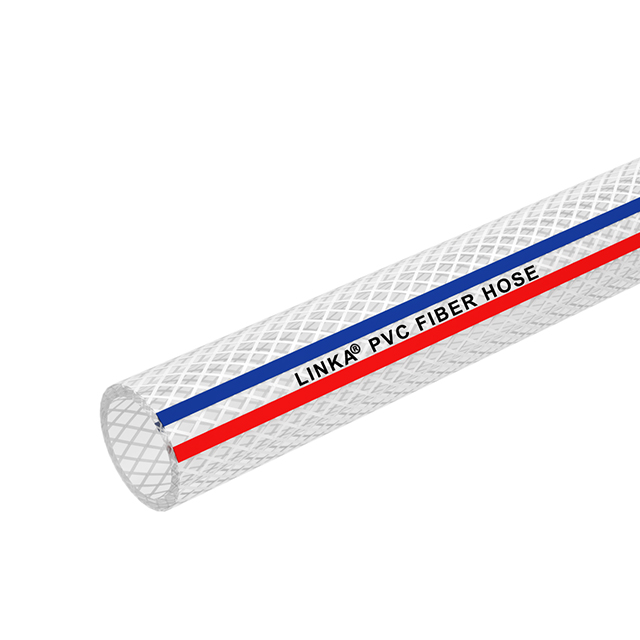
Industrial environments demand distinct structural variations to survive diverse physical forces. Manufacturers build entirely different internal structures to handle specific mechanical stresses. We classify these solutions primarily based on their unique reinforcement styles. Each style serves a very distinct, engineered purpose on the production floor. Integrating a Heavy Duty PVC Hose successfully requires understanding these hidden internal layers.
Textile braiding provides essential tensile strength for positive-pressure operations. Factories rely heavily on this specific style for pneumatic air tools and high-volume water discharge. The tightly braided polyester or nylon yarn prevents the polymer tube from expanding outward. It firmly locks the inner core into a stable, consistent diameter. This reinforcement effectively handles continuous internal outward pressure without yielding. Operators trust braided designs for compressed air lines, machinery coolant delivery, and agricultural spraying.
Vacuum operations require completely different structural support mechanisms. High-tensile steel wire or rigid plastic helix structures prevent inward collapse. This specific reinforcement acts exactly like a structural skeleton inside the wall. It excels in heavy suction scenarios, thick slurry handling, and abrasive material transfer. The rigid spiral strictly protects the inner diameter during extreme negative pressure conditions. It also provides excellent external crush resistance against heavy factory machinery or service vehicles.
Sometimes standard plastic compounds cannot handle harsh factory conditions alone. Engineers solve this material limitation by blending different polymers directly during the extrusion phase. Nitrile (NBR) blends drastically improve oil resistance for petroleum-tinged environments and machining centers. Polyurethane (PU) blends enhance interior surface durability against severe sliding abrasion. These hybrid extruded materials deliver superior longevity in punishing, high-wear applications. They effectively bridge the performance gap between basic plastics and expensive specialty rubbers.
You need a rigid, objective framework to evaluate material fitness for your facility. Assessing a specification requires checking exact environmental boundaries against published manufacturer data. Do not guess application limits or rely on outdated assumptions.
Temperature represents the single biggest operational limitation for this material class. You must monitor operating temperatures constantly to prevent catastrophic blowouts. These specific polymers excel in environments between -10°C and 65°C. However, structural performance drops significantly as the environment approaches 65°C (150°F). Working pressure ratings plummet sharply at higher thermal loads. An assembly rated for 150 PSI at ambient room temperature might only handle 50 PSI at maximum heat. Always calculate pressure limits at your absolute highest expected operating temperature using a standard derating chart.
Chemical compatibility ultimately determines long-term survival and maintenance intervals. You must verify the exact fluid composition moving through the line. A standard PVC Hose easily handles diluted acids, mild alkalis, and dry industrial granules. It transfers municipal water and agricultural chemicals safely and efficiently. However, it faces strict chemical boundaries. You cannot use it for aggressive organic solvents, active ketones, or aromatics like toluene. Concentrated aggressive chemicals will degrade the internal plasticizers rapidly, leading to immediate structural failure.
Flexibility directly impacts maneuverability and installation speed on the factory floor. Heavy-duty structural reinforcements inherently increase overall stiffness. A tighter bend radius improves handling in cramped machinery spaces or complex routing paths. However, forcing a tight bend on a stiff, rigid helix risks immediate structural damage or permanent kinking. You must match the required dynamic bend radius to the physical floor layout. Consider how operators will manually interact with the line during daily shifts.
Buyers need objective comparisons to make confident procurement decisions. We cross-evaluate popular material alternatives below to clarify distinct advantages and disadvantages. This helps engineers avoid over-specifying or under-specifying their fluid transfer lines.
Rubber easily wins regarding extreme temperature ranges and long-term weatherability. It readily withstands intense industrial heat and severe sub-zero freezing conditions. Ozone and direct sunlight rarely compromise high-grade rubber quickly. However, polyvinyl chloride wins decisively in physical weight reduction and initial procurement cost. It also provides crucial visual transparency for operational safety. Plant operators can visually monitor internal fluid flow and detect blockages instantly without disassembling the line.
Polyurethane strongly dominates in severe abrasion resistance. Heavy industrial facilities use polyurethane extensively for abrasive dust collection, wood chips, and sharp material transfer. Yet, polyvinyl remains the more economical, practical choice for general liquids and light abrasives. It balances adequate wear resistance against significantly lower manufacturing complexity.
Verdict: Choose polyvinyl for budget-conscious, moderate-temperature liquid transfer. It handles light materials perfectly when factory temperatures stay strictly within standard operational limits.
| Feature | PVC | Rubber | Polyurethane (PU) |
|---|---|---|---|
| Best For | Fluids, light materials, visual flow monitoring | Extreme temperatures, heavy outdoor weathering | Severe surface abrasion, sharp particulates |
| Temperature Range | Moderate (-10°C to 65°C) | Wide (-40°C to 100°C+) | Moderate to High |
| Flexibility & Weight | Lightweight, very easy to maneuver | Heavier, remains highly flexible in cold | Lightweight, moderate structural stiffness |
| Transparency | Clear options widely available | Completely opaque | Clear options available |
Post-installation failures often stem from poor initial risk assessment rather than manufacturing defects. Plasticizer migration represents a common, yet often ignored, industrial hazard. Over time, incompatible chemicals or extreme UV exposure draw essential plasticizers out of the material matrix. The once-flexible polymer gradually hardens, yellows, and eventually cracks under normal movement. Outdoor applications face severe UV degradation without specific protective chemical additives. You must plan for periodic maintenance and scheduled replacements in high-exposure environments.
Compliance and overall safety require strict attention to national regulatory standards. Transferring food-grade materials, potable water, or pharmaceuticals demands highly certified compounds. You must specify FDA-approved, NSF-certified, or RoHS-compliant materials for sensitive applications. Industrial plants simply cannot use standard utility lines for consumable products. Cross-contamination risks from industrial manufacturing additives are simply too high for human safety.
Fitting compatibility frequently causes unexpected leaks and costly facility downtime. Rigid helix designs require specialized spiral clamps or highly specific molded couplings. Using standard flat worm-gear clamps on a rigid, bumpy spiral leads to uneven sealing pressure. This physical mismatch creates slow pressure leaks or dangerous line blow-offs during operation. You must precisely match the metal coupling mechanism to the specific outer wall geometry to ensure a secure seal.
Procurement managers and plant engineers need structured evaluation methods to avoid purchasing errors. Use this rapid, action-oriented checklist to refine your next material specification.
Define exact dimensional requirements: Measure Inner Diameter (ID) and Outer Diameter (OD) carefully. System flow rates strictly dictate the required ID. External wall thickness dictates the final OD and corresponding fitting size.
Calculate the critical Safety Factor: Industrial applications typically require a 3:1 or 4:1 burst-to-working pressure ratio. Never operate any fluid line near its maximum burst pressure threshold.
Assess the operational environment: Determine if the line operates strictly indoors or faces harsh outdoor elements. Constant outdoor use requires specialized UV stabilization to prevent premature cracking.
Identify dynamic movement types: Static installations tolerate stiff, rigid helix structures well. Dynamic, constantly moving machinery requires highly flexible braided textile designs to prevent physical fatigue.
Confirm coupling and clamp styles: Ensure your maintenance facility stocks the correct clamps for the selected reinforcement geometry. Banding coils require different attachment methods than smooth-cover exteriors.
Selecting this specific material is never a compromise in industrial plant design. It represents a highly engineered, deliberate solution optimized for specific functional parameters. It reliably handles appropriate thermal loads and specific chemical ranges without failure. You secure excellent, long-lasting performance by strictly respecting its known physical boundaries. Never push the polymer beyond its 65°C thermal limit or expose the core to aggressive industrial solvents.
Always prioritize accurate technical specifications over generalized assumptions. Consult detailed chemical resistance charts before approving any bulk purchase order. Request physical material samples or comprehensive Technical Data Sheets (TDS) directly from manufacturers. Verifying precise technical data ensures safe, highly efficient, and consistently reliable factory operations. Take the necessary time to evaluate your environment fully before installing new lines.
A: Maximum pressure varies significantly by Inner Diameter (ID) and reinforcement type. A realistic industry average ranges up to 300 PSI for smaller braided lines at room temperature. Larger suction lines carry much lower positive pressure ratings. Always verify the specific manufacturer's pressure rating at your actual operating temperature, as heat drastically lowers pressure capacity.
A: Generally, no. Standard polymer formulations degrade rapidly when exposed to petroleum, aromatics, or aggressive solvents. The material will harden, crack, and fail. You must use specialized compounds blended with nitrile (NBR) if you need to transfer oils or petroleum-based industrial fluids safely.
A: Discoloration happens due to several environmental factors. Prolonged UV exposure from sunlight degrades the polymer chain. Chemical attacks from incompatible fluids also cause cloudiness. Additionally, plasticizer leaching over time causes yellowing and severe hardening. You should replace the line once it becomes brittle to prevent unexpected ruptures.
A: It is highly durable against external crush forces and extreme vacuum pressure, often matching rubber in structural integrity. However, it is less resilient to severe surface abrasion and extreme cold temperatures. Rubber remains superior for dragging across rough concrete or operating in sub-zero industrial environments.


