Views: 0 Author: Site Editor Publish Time: 2026-06-22 Origin: Site

Premature hose failure carries steep hidden costs. Sudden operational downtime, frequent replacement cycles, and unexpected fluid leaks severely disrupt commercial, industrial, and heavy-duty agricultural operations. Every minute spent managing a ruptured line drains operational efficiency and frustrates your workforce. While a standard PVC Hose is highly cost-effective, its real-world lifespan varies significantly across different applications.
Durability is never a static, guaranteed feature out of the box. Rather, it operates as a complex equation. It relies heavily on manufacturing quality, proper structural reinforcement, and the surrounding operational environment. Procurement teams and structural engineers must carefully navigate these underlying variables. By evaluating technical specifications and understanding material limitations, you ensure the selected product strictly aligns with your application's longevity requirements.
We will explore how pressure limits, extreme temperatures, and chemical exposure dictate performance. Understanding these core factors helps you avoid common misapplication pitfalls. You will learn exactly how to interpret specification sheets and make informed purchasing decisions for your facility.
Structural design dictates pressure limits: A Reinforced PVC Hose significantly extends operational lifespan under high-stress conditions compared to non-reinforced variants.
Temperature defines functional boundaries: PVC flexibility and burst pressure are inversely related to ambient and fluid temperatures.
UV and chemical exposure accelerate degradation: Prolonged sunlight and incompatible chemicals cause plasticizer migration, leading to brittleness.
Spec-sheet scrutiny prevents misapplication: Evaluating the working-to-burst pressure ratio and industry compliance certifications is critical for reliable procurement.
Sudden hose ruptures cause immediate disruptions across your facility. Continuous-flow environments rely heavily on uninterrupted material transfer to maintain peak efficiency. When a main line bursts, production lines halt entirely. Workers must abandon their primary tasks to diagnose the failure, clean up the resulting spill, and replace the broken line.
This operational downtime leads directly to missed output targets. Every hour of lost production impacts the entire downstream supply chain. In agricultural irrigation during peak season, sudden failures can literally dry out critical crops. In industrial cooling systems, compromised fluid transfer forces machinery to shut down to prevent catastrophic overheating. You cannot afford these unpredictable operational pauses.
Safety and compliance risks present an even greater concern for facility managers. Material failure creates severe and immediate workplace hazards. Handling pressurized air requires robust containment. If a low-quality hose fails, the resulting blowout acts like a whip, potentially injuring nearby operators. Pumping abrasive materials or mild chemicals adds another layer of severe risk.
Gradual leaks expose workers to slippery surfaces and potentially toxic fumes. Regulatory bodies closely monitor workplace safety standard violations. They heavily penalize facilities for preventable chemical spills or unsafe air containment practices. Ensuring high material integrity protects your workforce every single day. It also keeps your facility fully compliant against stringent industrial safety standards.
Material selection directly governs the lifespan of any fluid transfer system. Manufacturers construct hoses using either virgin or recycled compounds. Virgin resins provide highly predictable molecular stability during the extrusion process. They ensure consistent flexibility, wall strength, and pressure resistance throughout the entire product length.
Conversely, high ratios of recycled materials often introduce microscopic weak points. Different plastic batches rarely bond perfectly at a molecular level. These internal impurities accelerate structural decay under pressure. While recycled options might seem cheaper initially, they frequently suffer from localized thinning and premature rupture.
Hose architecture typically involves two distinct primary layers. The inner tube directly handles fluid or gas transfer. This internal core dictates chemical resistance and overall flow efficiency. A perfectly smooth inner wall minimizes fluid friction and prevents hazardous material buildup. The outer cover serves as the primary external defense mechanism. It protects the sensitive inner core from physical abrasion, accidental heavy impacts, and harsh weather conditions.
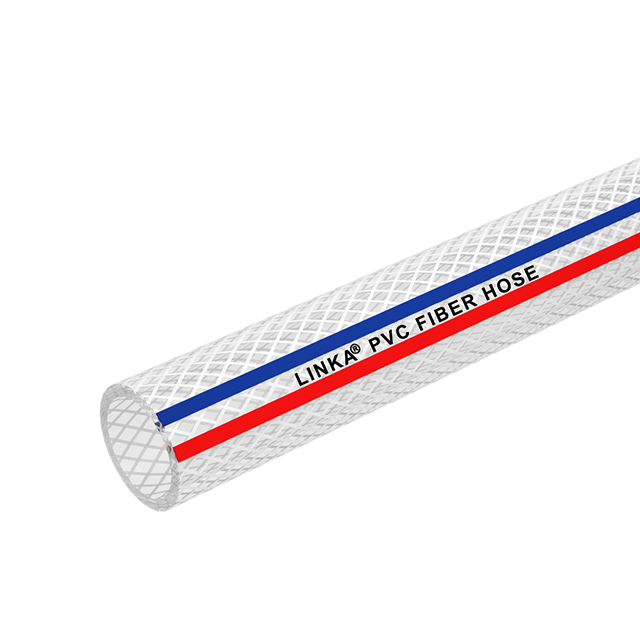
Standard tubing often fails under heavy industrial demands. This explains why a Reinforced PVC Hose remains absolutely critical for most commercial applications. Engineers integrate high-tensile polyester yarn, synthetic braids, or steel wire helixes directly between the inner and outer layers. This embedded reinforcement layer completely transforms the performance profile.
It prevents dangerous ballooning under sudden fluid pressure spikes.
It increases overall structural memory and kink resistance, addressing a major user pain point.
It exponentially increases burst pressure limits for much safer continuous operation.
It protects the inner liner from collapsing under strong vacuum suction applications.
Even the highest quality polymer compounds degrade when exposed to incompatible environments. You must accurately match the product to your specific operational stressors. Overlooking environmental variables guarantees premature failure.
Temperature represents a strict functional boundary for any plastic system. It dictates the brittle-to-soft threshold during daily operation. In cold environments, sub-zero temperatures cause plastics to stiffen dramatically. The material becomes brittle and loses essential functional flexibility. This stiffness drastically increases the risk of micro-cracking whenever operators bend or drag the line.
Conversely, hot environments present entirely different structural challenges. Elevated ambient temperatures soften the polymer matrix. Pumping hot fluids exacerbates this softening effect rapidly. This thermal shift drastically reduces the maximum working pressure. A line rated for 150 PSI at room temperature might safely handle only 50 PSI at 120°F. You must always account for temperature de-rating.
Prolonged sunlight exposure triggers an aggressive chemical process called plasticizer migration. Plasticizers give the polymer its flexible, bendable properties. UV radiation breaks down these vital chemical bonds over time. The plasticizers literally leach out of the material surface into the surrounding air.
This degradation process leads to surface chalking, where the outer cover turns powdery and discolored. Visible micro-cracking soon follows. The hose eventually loses all flexibility, becoming stiff and unmanageable. It will eventually fracture completely when pressurized or bent.
Pumping chemicals requires strict material verification. You should always consult a detailed chemical compatibility chart before installation. Polyvinyl chloride naturally resists many mild acids, alkalis, and standard agricultural fertilizers. This makes it incredibly popular in farming and light manufacturing.
However, certain aggressive solvents, complex hydrocarbons, and concentrated acids will degrade the internal liner rapidly. The material will swell, soften, and dissolve from the inside out. Heavy abrasives also wear down the inner tube through constant physical friction. Pumping sand or gravel slurries requires highly specialized, extra-thick inner liners.
You must consider physical movement during daily operation. Dynamic applications involve continuous flexing, dragging, and bending. Workers often pull these lines across rough concrete floors or sharp gravel. This relentless mechanical wear-and-tear shortens lifespan considerably.
Static applications feature fixed-line installations. Operators securely mount these lines to walls or machinery. Because they rarely move, static setups experience far less mechanical fatigue. A static installation indoors will outlast a dynamic outdoor installation by several years.
Engineers frequently compare different polymer combinations before making a final procurement selection. Understanding material trade-offs ensures optimal performance. You must weigh the distinct benefits against the known structural limitations.
Weight directly impacts daily manual operations. Polyvinyl chloride holds a distinct advantage in overall weight compared to traditional heavy rubber. It is typically 30% to 50% lighter than equivalent rubber alternatives. This lighter construction significantly reduces operator fatigue during manual handling.
Workers can maneuver long lengths much faster across large facility floors. They can coil and store the lines with minimal physical strain. This ergonomic benefit improves daily workplace efficiency and reduces repetitive strain injuries.
Flexibility remains a major deciding factor for dynamic applications. Traditional rubber definitely maintains better pliability in extreme cold climates. It bends easily even during freezing winter conditions. Standard plastics struggle in these freezing environments.
However, modern engineered plastic blends offer a highly cost-efficient alternative for moderate climates. Premium formulations maintain excellent bend radiuses across standard indoor temperature ranges. They navigate tight corners easily without crimping or restricting internal fluid flow.
You must evaluate the baseline cost-to-lifespan ratio. A high-quality PVC Hose becomes the definitive choice for moderately demanding projects. It works perfectly for handling water, mild chemicals, and compressed air indoors.
On the other hand, extreme high-heat operations might strictly require a heavier, more expensive alternative. Highly abrasive slurry applications also demand specialized rubber compounds. You should reserve expensive materials only for environments where plastics physically cannot survive.
| Feature Evaluation | Standard Engineered PVC | Traditional Heavy Rubber |
|---|---|---|
| Physical Weight | Lightweight, easy to maneuver manually | Heavy, significantly increases operator fatigue |
| Cold Weather Flexibility | Can become rigid or brittle below freezing | Maintains excellent flexibility in freezing temps |
| Chemical Resistance | Excellent for mild acids and base alkalis | Varies widely depending on the exact compound |
| Initial Capital Investment | Highly cost-effective for bulk procurement | Generally much more expensive per linear foot |
Marketing claims rarely guarantee actual field performance. Vendors often use vague buzzwords to describe durability. You must rigorously evaluate technical specification sheets to ensure real long-term reliability.
Buyers must clearly understand the critical relationship between working pressure and burst pressure. Manufacturers typically build in a standard safety factor. Look closely for a 1:3 or 1:4 ratio between these two important metrics.
A 1:4 ratio means a product rated for 100 PSI working pressure will not burst until it hits 400 PSI. This generous buffer indicates strong manufacturing integrity. It protects your system against sudden, unexpected pressure spikes. Never buy a product lacking a clearly defined burst pressure ratio.
Never rely on subjective marketing language. Demand verifiable testing documentation from the manufacturer. Look for strict adherence to recognized ISO standards for manufacturing quality control. If you handle consumable liquids, strictly verify FDA compliance.
Reliable suppliers will happily provide documented accelerated-aging lab tests. These engineering reports prove how the material responds to simulated years of UV radiation or chemical exposure. Independent laboratory certifications build genuine trust and validate performance claims.
Strict quality control defines final product reliability. Pay close attention to advertised manufacturing tolerances. Consistent wall thickness, known technically as concentricity, is a mandatory indicator of high quality. Laser micrometers monitor this during extrusion.
Uneven walls create dangerous localized weak spots. Even a slight variation in thickness guarantees a premature blowout under high fluid pressure. Proper concentricity ensures the internal reinforcement mesh sits perfectly centered within the polymer layers.
Request detailed pressure-to-temperature correlation charts to calculate proper de-rating.
Ask for physical engineering samples to manually inspect wall concentricity and flexibility.
Review independent laboratory certifications for any specific chemical resistance claims.
Check for clear batch numbering on the outer cover to ensure proper manufacturing traceability.
Durability is completely predictable when you actively align application stressors with the correct material formulation. Standard polymers provide an incredibly reliable baseline for general fluid transfer. By upgrading your facility infrastructure with a proper reinforcement strategy, you easily prevent unexpected structural failures. Understanding temperature limits, UV vulnerabilities, and chemical compatibility empowers you to make smarter procurement choices.
Before finalizing your next bulk order, conduct a comprehensive environmental audit of your facility. Document your ambient temperatures, continuous working pressures, and potential chemical exposure risks. Provide these exact metrics directly to your potential suppliers. Always request detailed specification sheets and engineering samples to validate their claims in your actual environment. Matching the right construction to your specific facility needs guarantees uninterrupted operations.
A: Lifespan ranges from 3 to over 10 years. It depends entirely on UV exposure, operating pressure, and daily storage practices. Indoor, climate-controlled static applications last significantly longer than outdoor dynamic uses dragged across rough surfaces.
A: Yes. Without specific UV-stabilizing additives, prolonged UV exposure breaks down the chemical bonds (plasticizers) in standard plastics. This degradation leads to irreversible stiffness, visible surface chalking, and eventual structural cracking under operational pressure.
A: Kinking occurs due to thin wall construction or a severe lack of structural memory. Repeated kinking at the exact same stress point creates a permanent weak spot. This weakened area will eventually rupture under operating pressure. Upgrading to a reinforced PVC hose mitigates this risk entirely.
A: Yes. Working pressure ratings are typically calculated at exactly 68°F (20°C). As ambient or fluid temperatures rise, the maximum safe working pressure decreases significantly. Always consult the manufacturer's specific temperature-pressure chart before beginning operations.


