Views: 0 Author: Site Editor Publish Time: 2026-10-30 Origin: Site

Relying on the wrong equipment is a guaranteed way to cause severe project delays in industrial surface preparation. Stand on any noisy, dust-filled job site, and you will quickly realize one thing. The blasting line is the absolute lifeline of your entire operation. Unfortunately, many procurement managers focus solely on upfront costs while ignoring critical technical factors like working pressure and material quality. This oversight inevitably leads to rapid internal degradation, costly downtime, and highly dangerous equipment failure.
This guide breaks down exactly how to select a proper sandblast hose. By understanding crucial specifications, structural engineering details, and mandatory safety rules, you can make an informed purchasing decision that protects both your crew and your bottom line.
Anatomy Dictates Lifespan: A premium assembly requires an ultra-thick inner tube, high-tensile reinforcement, and a weather-resistant outer cover.
Size Matches Efficiency: The internal diameter must precisely match your blast nozzle and piping. Mismatches cause severe pressure drops and rapid internal wear.
Safety is Absolute: Always verify the working pressure and burst pressure ratings. Built-in anti-static properties are strictly non-negotiable for operator protection.
Proactive Maintenance: Regularly checking your equipment for soft spots extends its operational lifespan and prevents explosive blowouts on the job site.
Before diving into technical specifications, it is important to understand where the surface preparation industry is heading. Recent market analyses reveal a distinct shift in procurement strategies among top-tier industrial contractors. For years, buyers treated abrasive lines as cheap, disposable commodities. Buy it, wear it out, throw it away. However, this mindset is rapidly changing.
Driven by skyrocketing labor costs and increasingly strict occupational safety regulations, forward-thinking project managers are now investing in advanced polymer blends that offer extended lifecycles. They realize that a crew standing idle due to a blown line costs far more than the initial premium paid for high-grade gear. Modern buyers are demanding verifiable technical data, such as DIN abrasion testing results, to ensure they are purchasing an asset rather than a liability.
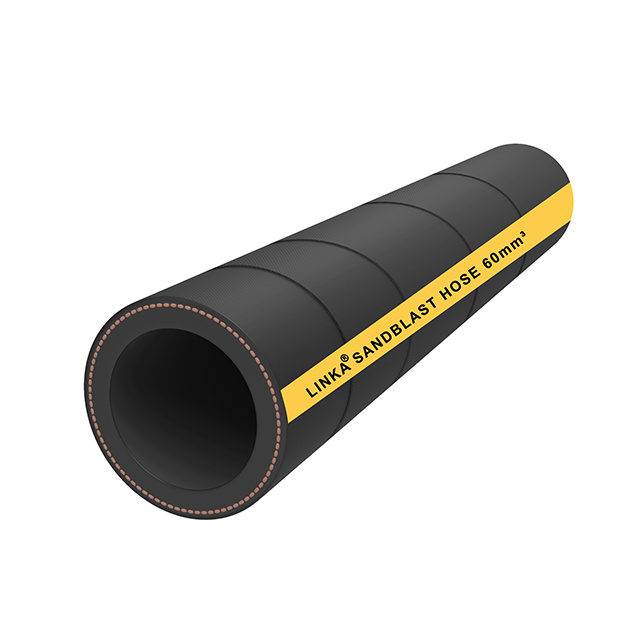
To make a truly informed purchasing decision, you must first grasp the structural engineering behind industrial pneumatic lines. Standard water or air hoses handle relatively benign fluids. In stark contrast, abrasive lines are subjected to extreme internal friction and punishing external environmental stress. Consequently, manufacturers engineer their anatomy into three distinct layers to survive these harsh conditions.
The internal core is undeniably the most critical component of the entire assembly. It must be manufactured from a specialized blend of Natural Rubber and Styrene-Butadiene Rubber. This proprietary blend is specifically designed to absorb and deflect the high-velocity impact of aggressive media like steel grit, aluminum oxide, and crushed glass. A thicker, highly resilient core absorbs the kinetic energy of the abrasive particles. This prevents them from slicing through to the structural reinforcement layers.
Surrounding the inner tube is the reinforcement layer. This provides the structural integrity necessary to contain high-pressure pneumatic forces without ballooning. This layer is usually constructed from tightly woven high-tensile textile cords.
2-Ply Reinforcement: Offers greater flexibility and lighter weight. This makes it highly suitable for smaller jobs, navigating confined spaces, or serving as a whip line at the operational end of a longer run.
4-Ply Reinforcement: Provides maximum structural strength and durability for heavy-duty industrial applications. It effectively prevents kinking, twisting, and collapsing under extreme working pressure.
Industrial job sites are notoriously unforgiving. Equipment will inevitably be dragged across jagged concrete, steel grating, and sharp rocks. Therefore, the outer layer of a rubber blast hose serves as a robust protective barrier. Composed of an abrasion-resistant and ozone-resistant synthetic polymer, this cover prevents the material from degrading or cracking when exposed to direct ultraviolet rays, extreme seasonal temperatures, or harsh industrial chemicals.
Selecting the correct specifications is often the difference between a highly efficient surface preparation operation and one plagued by sluggish pressure drops. Buyers must carefully match the technical specifications to their existing compressor output and nozzle setup.
The internal diameter dictates the volume of compressed air and abrasive media that can flow through the system. A standard engineering rule of thumb is that the internal diameter should be three to four times larger than the orifice size of your blast nozzle. If the diameter is too small, it creates a severe bottleneck. Imagine trying to force a golf ball through a garden hose. This leads to internal turbulence, excessive friction, and accelerated wear. Conversely, if it is too large, the system suffers a drop in pressure, drastically reducing the velocity and cutting effectiveness of the media.
| Nozzle Orifice Size | Recommended Minimum ID | Typical Application Scope |
|---|---|---|
| 1/4 inch | 3/4 inch to 1 inch | Light-duty cleaning and touch-ups |
| 5/16 inch | 1 inch to 1-1/4 inch | General industrial maintenance |
| 3/8 inch | 1-1/4 inch to 1-1/2 inch | Heavy-duty rust and paint removal |
| 1/2 inch | 1-1/2 inch | High-production shipyard blasting |
Understanding pressure ratings is absolutely critical for operational safety. Working pressure represents the maximum continuous pressure at which the line is designed to operate safely. For industrial applications, this typically ranges from 150 PSI to 175 PSI, which equates to roughly 10 to 12 Bar. Burst pressure is the catastrophic limit at which the structural integrity fails and the line ruptures.
The industry standard for abrasive blasting demands a strict four-to-one safety factor. This means if a product is rated for a working pressure of 150 PSI, its burst pressure must be tested to at least 600 PSI. Always verify these specific numbers on the manufacturer's technical data sheet before authorizing a purchase.
Not all rubber is created equal. Manufacturers utilize specific carbon black formulations to achieve the optimal balance of hardness and elasticity. Natural rubber offers excellent tear resistance, which is perfect for absorbing the blunt impact of abrasives. Meanwhile, synthetic rubbers are blended in to provide superior resistance to heat aging and environmental degradation. When sourcing a high abrasion resistant hose, request documentation detailing the polymer blends used. Cheap, unverified materials will degrade rapidly and lead to dangerous blowouts.
To objectively measure material durability, the industry relies on standardized testing, most notably the DIN 53516 or ISO 4649 standard. This rigorous test measures the volume loss of the rubber when subjected to a rotating abrasive drum. The result is measured in cubic millimeters. A lower volume loss equals significantly higher abrasion resistance. While a standard commercial grade might show a loss of 70 to 80 cubic millimeters, a premium high-performance product will boast an abrasion loss of less than 60 cubic millimeters.
Abrasive blasting is an inherently hazardous undertaking. Beyond the obvious risks of high-pressure air and airborne particulates, the equipment itself requires strict safety protocols to protect operators from severe injuries.
Picture an operator working inside a confined steel tank. As dry media rushes through the inner tube at high velocities, the constant friction generates a massive amount of static electricity. If left ungrounded in a dusty environment, a static spark can easily ignite airborne dust particles and trigger a catastrophic flash explosion. Furthermore, unexpected static shocks can startle operators, causing them to drop the pressurized nozzle.
To mitigate this severe risk, professional equipment must feature built-in anti-static properties. This is achieved either by incorporating a highly conductive carbon-infused compound into the inner tube or by embedding a copper static wire within the textile reinforcement layer. Both methods provide a continuous, safe path to ground.
Couplings can fail due to improper installation, worn rubber gaskets, or accidental blunt impact. If a highly pressurized line disconnects, the escaping air causes the heavy rubber line to whip violently. Implementing whip checks—strong steel cables that bridge the connection between two sections—is a mandatory safety precaution. These cables restrain the flailing line in the event of a coupling failure, buying the operator precious seconds to shut off the air supply safely.
Beyond the line itself, the integrity of your setup relies heavily on how it is connected. A premium assembly is rendered practically useless if it is improperly secured to the blasting system. The fittings used in this industry are specifically designed to handle intense vibration and aggressive internal wear.
A critical engineering distinction in this industry is that couplings must feature an external fit. Unlike standard water lines where a brass fitting is inserted inside the tube, sandblast couplings fit entirely over the outside diameter. If a metal fitting were placed inside the tube, the high-velocity media would immediately strike the metal edge. This causes rapid internal turbulence and erodes the fitting within hours. An external fit ensures a smooth, uninterrupted internal rubber surface from the blast pot straight through to the nozzle.
Even the most durable equipment has a finite operational lifespan. Waiting for a line to physically blow out before replacing it is a dangerous, amateur strategy. Implementing a strict maintenance and inspection schedule is vital for cost control and crew safety.
Because the abrasive media wears away the inner tube over time, the structure degrades from the inside out. This makes visual exterior inspections insufficient. Operators must perform the soft spot test regularly. Depressurize the system completely, lay the line flat on the ground, and walk its entire length. Every two to three feet, firmly squeeze the exterior with your hands. If you feel a section that compresses significantly easier than the rest of the line, the inner tube has worn dangerously thin. This soft spot is a high-risk area for an imminent blowout, and the section should be removed from service immediately.
As a practical field tip, the section directly behind the blast nozzle experiences the most severe wear due to constant bending and turbulence. Periodically cutting off the last 6 to 12 inches and reattaching the nozzle holder can significantly extend the overall life of your abrasive blasting hose. Additionally, physically rotating the line ensures the inner tube wears more evenly.
Navigating technical specifications can be overwhelming when you just want to get the job done. To streamline your procurement process, utilize this objective, step-by-step checklist before making a final decision:
Confirm your parameters: Identify the aggressiveness of the blasting media you will use and measure the exact orifice size of your current blast nozzle.
Determine the required length: Keep the assembly as short as practically possible. Unnecessary length increases internal friction and leads to a noticeable drop in air pressure at the nozzle.
Verify the pressure and wear ratings: Check the manufacturer’s spec sheet to ensure a strict four-to-one safety factor and look for a low DIN abrasion loss rating.
Ensure safety compliance: Confirm that the product features certified anti-static properties to prevent dangerous electrostatic discharge in confined spaces.
Source from a reputable manufacturer: Avoid unbranded, suspiciously cheap alternatives that lack transparent technical data or fail to comply with international manufacturing standards.
Choosing the right equipment requires careful evaluation of your specific operational needs. You must balance sizing, material quality, and mandatory safety features. While premium gear requires a slightly higher initial investment, it saves substantial money over a long period by reducing downtime, lowering replacement frequency, and preventing catastrophic accidents. Ready to upgrade your current sand blasting hose setup? Visit Hosebiz to find verified, high-performance equipment that matches these exact specifications for your next project.
The terms refer to the layers of high-tensile textile reinforcement woven between the inner tube and the outer cover. A 2-ply configuration offers superior flexibility and is significantly lighter, making it ideal for mobile operations or cabinet blasting. In contrast, a 4-ply configuration provides maximum structural integrity and higher burst pressure ratings. It is heavily engineered for demanding industrial applications, shipyards, and scenarios where the equipment is subjected to extreme external stress.
Lifespan is entirely dependent on operational variables. Under empirical observation, high-quality equipment used daily in a heavy industrial setting with aggressive media like steel shot may require replacement every 3 to 6 months. For intermittent use with milder media like glass beads, the same equipment can easily remain functional for 12 to 18 months. Strict adherence to maintenance schedules significantly extends this timeframe.
Absolutely not. Using standard utility lines for abrasive applications is a severe safety violation. Standard lines lack the specialized, ultra-thick inner rubber tube required to withstand the intense friction of high-velocity abrasives. The media will erode the thin inner wall within minutes, leading to a sudden, high-pressure blowout.
When dry abrasive media is propelled at high velocities, the constant internal friction generates a massive amount of static electricity. If this charge is not properly grounded, it will accumulate and discharge as a powerful shock to the operator. More critically, in enclosed environments, a static spark can easily ignite airborne dust particles, leading to a flash explosion.
You can verify anti-static properties by checking the manufacturer's technical data sheet for conductivity ratings. Physically, you can often inspect the cross-section of the cut end to look for an embedded copper static wire within the reinforcement layers. Alternatively, specialized multimeters can measure the electrical resistance from one end of the assembly to the other to confirm safe grounding continuity.
Standard premium rubber blends are typically rated to operate safely in environments ranging from -40 degrees Fahrenheit up to 185 degrees Fahrenheit. Operating outside these parameters can cause the rubber to become rigidly stiff and prone to cracking in the cold, or overly soft and susceptible to ballooning under high pressure in extreme heat.
Fluid dynamics dictate that air pressure decreases as it travels through a confined space due to internal friction. As a general rule, you can expect to lose approximately 1 to 2 PSI for every 50 feet of length. If your setup is excessively long, the pressure at the nozzle will be significantly lower than the pressure at the compressor, drastically lowering cleaning efficiency.
The equipment should be completely purged of all abrasive media and depressurized before storage. It should be coiled loosely to prevent kinking and stored in a cool, dry, and well-ventilated indoor environment. Keep the equipment away from direct sunlight and ozone-producing machinery like electric motors, as these elements accelerate the breakdown of rubber compounds.


