Views: 0 Author: Site Editor Publish Time: 2026-08-12 Origin: Site

To select Hydraulic Hose for mobile equipment, buyers should check working pressure, pressure spikes, hose size, bend radius, routing space, temperature, hydraulic fluid compatibility, abrasion exposure, fitting type and equipment movement. Mobile machines such as excavators, loaders, tractors, forklifts and skid steers need hoses that can handle pressure, vibration, flexing and harsh outdoor conditions.
A hose used on a mobile machine does not only carry hydraulic oil. It also moves with the machine, bends during operation, absorbs vibration and faces abrasion from nearby structures. If the hose is too weak, too small, too stiff or poorly routed, it may fail early and cause leakage, downtime or safety risks.
For construction, agricultural and material handling equipment, Linka’s Hydraulic Hose range can support different pressure levels, routing conditions and mobile hydraulic applications.
This hydraulic hose selection guide explains the key factors to review before choosing a hose for mobile equipment.
Mobile hydraulic hose selection should not be based only on hose size or appearance.
Key points include:
Working pressure and pressure spikes should be checked before selecting the hose.
Hose inner diameter affects flow, pressure drop and heat generation.
Bend radius is critical when the hose is routed through tight mobile equipment spaces.
Reinforcement type affects pressure capacity and impulse resistance.
The outer cover should resist abrasion, oil, weather and outdoor exposure.
Temperature range should match both hydraulic fluid and working environment.
Hydraulic fluid compatibility protects the inner tube from swelling or cracking.
Hose fittings and crimping compatibility affect leakage control.
Hose length and routing should allow movement without tension or twisting.
Buyers should provide equipment type, system pressure, hose ID, fitting thread and installation route before ordering.
In short, the right Hydraulic Hose should match the machine, pressure, movement, routing and environment.
Mobile equipment operates under changing loads and constant movement. Unlike fixed hydraulic systems, mobile machines often work outdoors, lift heavy loads, turn frequently and expose hoses to vibration, dirt, mud, sunlight, oil and mechanical contact.
The right Hydraulic Hose helps support:
stable hydraulic power transmission;
reduced leakage risk;
safer equipment operation;
longer service life;
lower downtime;
easier maintenance;
better compatibility with fittings;
reliable performance under motion;
protection against abrasion and weather.
Choosing the wrong hose may lead to premature failure. A hose that looks similar may have a different pressure rating, reinforcement structure, bend radius or fluid compatibility. These differences matter in mobile hydraulics.
Mobile hydraulic applications are more demanding because the hose is often installed near moving arms, steering systems, lifting mechanisms or compact machine frames.
Common mobile equipment conditions include:
repeated bending;
high-pressure impulse;
vibration;
outdoor exposure;
mud and dust;
contact with metal edges;
tight routing spaces;
temperature changes;
frequent attachment changes;
limited maintenance access.
A hydraulic hose for mobile equipment should be selected with these conditions in mind. The hose must move with the equipment without being stretched, twisted, crushed or rubbed during operation.
The following table summarizes the main selection factors.
| Factor | Why It Matters |
|---|---|
| Working pressure | Hose must handle normal system pressure safely |
| Pressure spikes | Mobile equipment often creates impulse pressure |
| Hose inner diameter | Affects flow, pressure drop and heat generation |
| Bend radius | Prevents kinking and reinforcement fatigue |
| Routing space | Determines flexibility and outer diameter needs |
| Reinforcement type | Affects pressure capacity and impulse resistance |
| Outer cover | Protects against abrasion, weather and oil exposure |
| Temperature range | Prevents cracking, hardening or degradation |
| Fluid compatibility | Protects inner tube from swelling or failure |
| Fitting compatibility | Prevents leaks and assembly failure |
A suitable hose is usually the result of checking all these factors together.
Pressure rating is one of the first factors to check. The selected hose must meet or exceed the hydraulic system’s working pressure. However, mobile equipment may also create pressure spikes during lifting, steering, braking, digging or impact work.
For example, excavators and loaders may experience sudden pressure changes when the machine starts, stops, lifts or works with attachments. If the hose is selected only by normal working pressure and pressure spikes are ignored, the hose may fatigue earlier than expected.
Buyers should confirm:
normal system pressure;
peak pressure or impulse condition;
pressure frequency;
machine load type;
attachment use;
safety margin requirement.
The hydraulic hose pressure rating should match both regular pressure and real working conditions.
Hydraulic hose size selection affects flow and system efficiency. If the hose inner diameter is too small, fluid flow may be restricted. This may increase pressure drop, heat generation and energy loss. If the hose is too large, installation may become more difficult and routing may require extra space.
Inner diameter should be selected according to:
required flow rate;
system pressure;
machine function;
hose length;
pump output;
acceptable pressure drop;
available routing space.
For mobile equipment, hose size should balance hydraulic performance and installation flexibility. A compact machine may need a hose that supports flow while still fitting into limited space.
Hydraulic hose bend radius is critical for mobile equipment. If a hose is bent tighter than its recommended bend radius, the reinforcement may become stressed. This can lead to kinking, cracking, leakage or early failure.
Bend radius matters when the hose is installed near:
booms;
arms;
cylinders;
steering joints;
lifting masts;
attachment points;
compact machine frames;
rotating or moving parts.
A hose should have enough length and routing space to move naturally. It should not be pulled tight when the equipment reaches its full motion range. It should also avoid rubbing against sharp edges or hot surfaces.
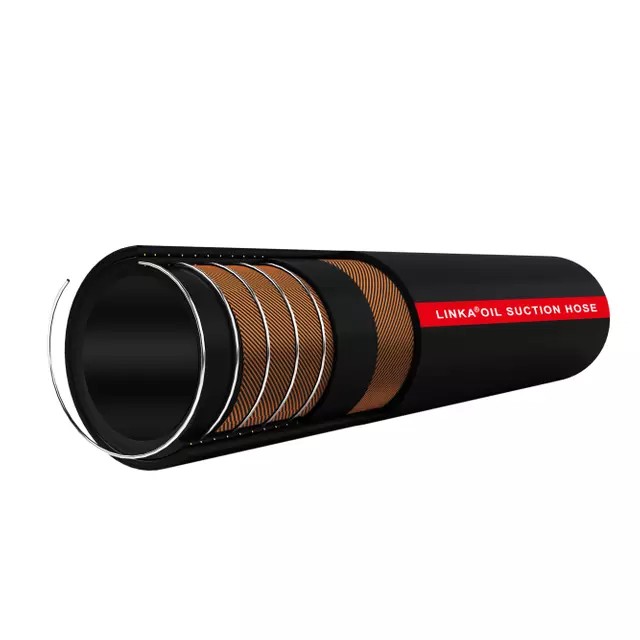
Hydraulic hoses use reinforcement to handle pressure and impulse. Common reinforcement types include wire braid and spiral wire structures. The right choice depends on pressure level, flexibility requirement and application severity.
| Hose Type | Suitable For | Main Advantage |
|---|---|---|
| 1-wire braided hose | Medium-pressure mobile hydraulic circuits | Flexibility and cost efficiency |
| 2-wire braided hose | Higher-pressure equipment circuits | Balance of pressure and flexibility |
| Compact hose | Tight routing spaces | Smaller outside diameter and easier installation |
| 4-spiral hose | Heavy-duty high-pressure systems | Strong impulse and pressure resistance |
| Multi-spiral hose | Severe mobile hydraulic systems | High pressure and heavy-duty performance |
For many mobile hydraulic systems, braided hose may be suitable when flexibility and medium-to-high pressure performance are required. For severe high-pressure applications, spiral hoses may be more appropriate.
Braided hose and spiral hose are both used in hydraulic systems, but they serve different working conditions.
Braided hose is often chosen for applications that need flexibility, easier routing and moderate to high pressure resistance. It is commonly used in many mobile hydraulic circuits.
Spiral hose is often selected for heavy-duty applications with higher pressure, stronger impulse and severe load cycles. It may be used on construction machinery, large excavators, breakers, cranes or other equipment with demanding hydraulic loads.
For tight routing spaces and compact mobile machines, a compact hose design may help reduce installation difficulty. Linka’s High Pressure R19 Hydraulic Hose can be considered when buyers need compact routing, flexibility and high-pressure hydraulic performance.
The final choice should depend on pressure rating, bend radius, installation space and equipment movement.
Mobile equipment often works in rough environments. The hose cover may contact metal frames, soil, stones, construction debris, crop residue, oil or outdoor weather. A weak cover may wear quickly and expose reinforcement.
Outer cover selection should consider:
abrasion exposure;
oil contact;
sunlight;
ozone;
rain and mud;
dust;
mechanical rubbing;
outdoor storage;
cleaning method.
If the hose is installed in a high-contact area, protective sleeves, clamps or improved routing may be needed. Hose cover damage should not be ignored because it can lead to reinforcement corrosion and leakage.
Temperature affects both the rubber hose and the hydraulic fluid. Mobile equipment may operate in hot construction sites, cold agricultural fields or seasonal outdoor environments. The selected hose should match both the fluid temperature and the ambient temperature.
Temperature mismatch may cause:
cover cracking;
inner tube hardening;
fluid leakage;
reduced flexibility;
faster aging;
seal or fitting problems.
Buyers should consider the maximum and minimum operating temperature, especially for equipment used outdoors or in regions with large seasonal changes.
Hydraulic hoses must be compatible with the fluid used in the machine. Different hydraulic oils or special fluids may affect the inner tube material differently. If compatibility is poor, the inner tube may swell, crack or degrade.
Buyers should confirm:
hydraulic oil type;
special fluid use;
operating temperature;
fluid contamination risk;
maintenance schedule;
OEM requirement.
Fluid compatibility is especially important for replacement hoses. A hose that fits physically may still fail if the inner tube material is not suitable for the fluid.
A Hydraulic Hose is usually used as part of a hose assembly. The hose, fitting and crimping process must be compatible. A good hose body cannot perform properly if the fitting thread, sealing surface, crimp dimension or assembly length is incorrect.
Buyers should confirm:
fitting type;
thread standard;
sealing method;
fitting angle;
hose length;
crimping requirement;
application location;
machine connection point.
Hydraulic hose fittings should be selected according to both the hose type and equipment connection. Mismatched fittings can cause leakage or assembly failure.
Equipment Type → System Pressure → Flow Requirement → Hose Size → Bend Radius → Reinforcement Type → Cover Resistance → Fitting Compatibility → Final Hose Selection
This process helps buyers move from machine conditions to a practical hose choice.
Different mobile machines have different hose challenges.
| Equipment Type | Common Hose Concern | Selection Focus |
|---|---|---|
| Excavator | High pressure, boom movement and abrasion | Pressure rating, impulse resistance and cover durability |
| Loader | Repeated lifting and steering movement | Flexibility, bend radius and fitting angle |
| Tractor | Outdoor exposure and attachment changes | Weather resistance and fitting compatibility |
| Harvester | Dust, vibration and seasonal heavy use | Abrasion resistance and inspection access |
| Forklift | Compact routing and repeated mast movement | Small bend radius and flexibility |
| Skid steer | Tight routing and high vibration | Compact hose design and protective cover |
| Crane | Load variation and pressure spikes | Spiral reinforcement and pressure safety margin |
This table is only a selection reference. The final hose should always be selected according to the actual system pressure, hose size, route and fittings.
Hydraulic hose failure often starts with selection or installation mistakes.
| Mistake | Possible Result |
|---|---|
| Choosing hose only by outside appearance | Wrong pressure or reinforcement level |
| Ignoring pressure spikes | Hose fatigue or burst risk |
| Selecting too small an inner diameter | Flow restriction, heat and pressure loss |
| Ignoring bend radius | Kinking and early failure |
| Using hose with weak outer cover | Abrasion damage and leakage |
| Ignoring fluid compatibility | Inner tube swelling or cracking |
| Mismatching hose and fittings | Leakage or assembly failure |
| Routing hose too tightly | Tension, rubbing and reduced service life |
| Ignoring machine movement | Hose may stretch or twist during operation |
| No inspection plan | Wear may be found only after failure |
Avoiding these mistakes can improve hose life and reduce mobile equipment downtime.
Before ordering hydraulic hose for mobile equipment, buyers should collect accurate technical information.
| Information to Provide | Why It Matters |
|---|---|
| Equipment type | Helps match application and movement pattern |
| Hydraulic system pressure | Determines pressure rating |
| Pressure spikes or impulse condition | Determines reinforcement level |
| Hydraulic fluid type | Confirms inner tube compatibility |
| Hose size or flow requirement | Helps select inner diameter |
| Routing path | Helps judge bend radius and hose length |
| Working temperature | Determines material suitability |
| Outdoor exposure | Determines cover resistance |
| Fitting type and thread | Ensures connection compatibility |
| Hose length | Prevents tension or excessive slack |
| Application location | Helps select cover and protection |
| Replacement or OEM use | Affects hose standard and assembly requirement |
This checklist helps the supplier recommend a more suitable hose assembly.
Even a correctly selected hose may fail early if the routing is poor. Mobile equipment hoses should be installed with enough length for movement, but not so much that the hose rubs, twists or catches on nearby parts.
Good routing practices include:
avoiding sharp bends;
respecting the minimum bend radius;
preventing hose twist;
keeping hoses away from hot surfaces;
avoiding rubbing against metal edges;
using clamps where needed;
allowing movement at boom or steering points;
protecting hoses in high-wear areas;
checking hose movement through the full equipment range.
Routing should be checked while the equipment moves, not only when it is parked.
Linka provides hydraulic hoses for different pressure levels, standards and mobile hydraulic applications. For mobile equipment, hose selection should be based on real working conditions rather than only model names.
Linka can help evaluate:
mobile equipment type;
working pressure;
pressure spikes;
hydraulic fluid;
hose inner diameter;
bend radius;
routing space;
reinforcement type;
outer cover resistance;
operating temperature;
fitting type;
hose length;
assembly requirement;
replacement or bulk ordering needs.
A suitable Hydraulic Hose can help mobile equipment work more reliably in construction, agriculture, material handling and heavy-duty hydraulic applications.
Selecting Hydraulic Hose for mobile equipment requires more than checking hose size. Buyers should review working pressure, pressure spikes, hose inner diameter, bend radius, routing space, reinforcement type, cover resistance, temperature range, hydraulic fluid compatibility, fittings and crimping requirements.
Mobile machines such as excavators, loaders, tractors, forklifts, skid steers and cranes operate with movement, vibration, pressure impulse and outdoor exposure. The hose must match these working conditions to reduce leakage risk and early failure.
A good hydraulic hose selection process starts with equipment type and system pressure, then checks flow, size, bend radius, reinforcement, cover, fittings and installation route.
Need help selecting a hose for excavators, loaders, tractors, forklifts or other mobile machines? Contact Linka for hydraulic hose selection support based on your equipment type, pressure rating, hose size, bend radius, fluid type, fittings and installation route.
To select Hydraulic Hose for mobile equipment, check working pressure, pressure spikes, hose size, bend radius, routing space, reinforcement type, temperature range, fluid compatibility and fitting requirements.
Pressure rating shows whether the hose can safely handle the hydraulic system’s working pressure. Mobile equipment may also create pressure spikes, so impulse conditions should be considered.
Hydraulic hose size should match flow demand, system pressure, hose length and routing space. A hose that is too small may cause pressure drop, heat and flow restriction.
Bend radius matters because bending a hose too tightly can cause kinking, reinforcement fatigue, cracking or early leakage. It is especially important in compact mobile equipment.
Hydraulic hose for excavator applications should be selected according to system pressure, pressure spikes, boom movement, abrasion exposure, bend radius and fitting compatibility.
Hydraulic hose for agricultural machinery should consider outdoor exposure, hydraulic fluid, attachment changes, pressure rating, flexibility and fitting type.
Braided hose often provides flexibility for medium and high-pressure circuits. Spiral hose is usually selected for heavier-duty, higher-pressure and stronger impulse applications.
Hydraulic hose fittings connect the hose to the equipment. Incorrect fitting type, thread, angle or crimping can cause leakage or assembly failure.
Poor routing can cause twisting, tension, rubbing or excessive bending. Correct routing helps protect the hose and extend service life.
Yes. Linka can help recommend Hydraulic Hose based on equipment type, system pressure, hose size, bend radius, fluid type, fittings, installation route and working environment.


