Views: 0 Author: Site Editor Publish Time: 2026-06-22 Origin: Site

A standard or Industrial PVC Hose offers an impressive strength-to-weight ratio and excellent chemical resistance. These components naturally form the backbone of many demanding fluid transfer operations. However, premature equipment failure rarely stems from manufacturing defects. It is almost always linked to improper maintenance, handling, or storage. Unscheduled downtime, compromised fluid transfer, and severe safety hazards frequently occur. Maintenance protocols often rely on simple guesswork rather than applied material science. Operators regularly overlook the gradual degradation of internal polymers. This oversight directly leads to costly replacements and systemic operational inefficiencies.
We aim to provide a rigorous, evidence-based framework for inspecting, cleaning, and storing your equipment. You will learn how to maximize the functional lifespan of a PVC Hose while ensuring strict compliance with operational safety standards. This guide effectively eliminates the guesswork from daily maintenance routines.
Proactive maintenance extends the functional life of a PVC hose, directly reducing procurement overhead and operational downtime.
Routine visual and tactile inspections are required to identify plasticizer migration, UV degradation, and micro-abrasions before catastrophic failure.
Cleaning protocols must align with strict chemical compatibility guidelines to avoid stripping the hose's structural integrity.
Storage environments must control for temperature extremes, UV exposure, and mechanical stress (kinking).
Replacing an industrial PVC hose is more cost-effective than risking systemic contamination or pressure bursts from a degraded unit.
Neglecting basic maintenance routines introduces severe hidden costs across any facility. Poorly maintained equipment directly causes costly cross-contamination, particularly in food-grade transfer lines. Particulates accumulate inside neglected channels over time. This internal buildup restricts flow rates and causes significant pressure drops. Pumps must work harder to push fluids through restricted pathways. This added mechanical strain accelerates equipment wear and inflates energy consumption. Furthermore, compromised structural integrity eventually leads to catastrophic bursts. A sudden line failure halts operations, endangers nearby personnel, and demands expensive environmental cleanup.
You must understand the material realities of the polymers involved. Polyvinyl chloride is naturally rigid. Manufacturers blend it with chemical plasticizers to achieve essential flexibility. These plasticizer molecules sit between polymer chains. They allow the material to bend without snapping. Exposure to incompatible chemicals, extreme heat, or prolonged UV radiation accelerates plasticizer leaching. As these vital compounds migrate out of the polymer matrix, you experience rapid embrittlement. The material turns hard, brittle, and prone to sudden cracking under pressure.
A successful maintenance program tackles these chemical realities head-on. It standardizes daily cleaning procedures across your entire operation. It establishes clear thresholds for end-of-life replacement. You ultimately reduce operational overhead and prevent unexpected failures. Systematized maintenance shifts your facility from a reactive repair model to a proactive prevention strategy.
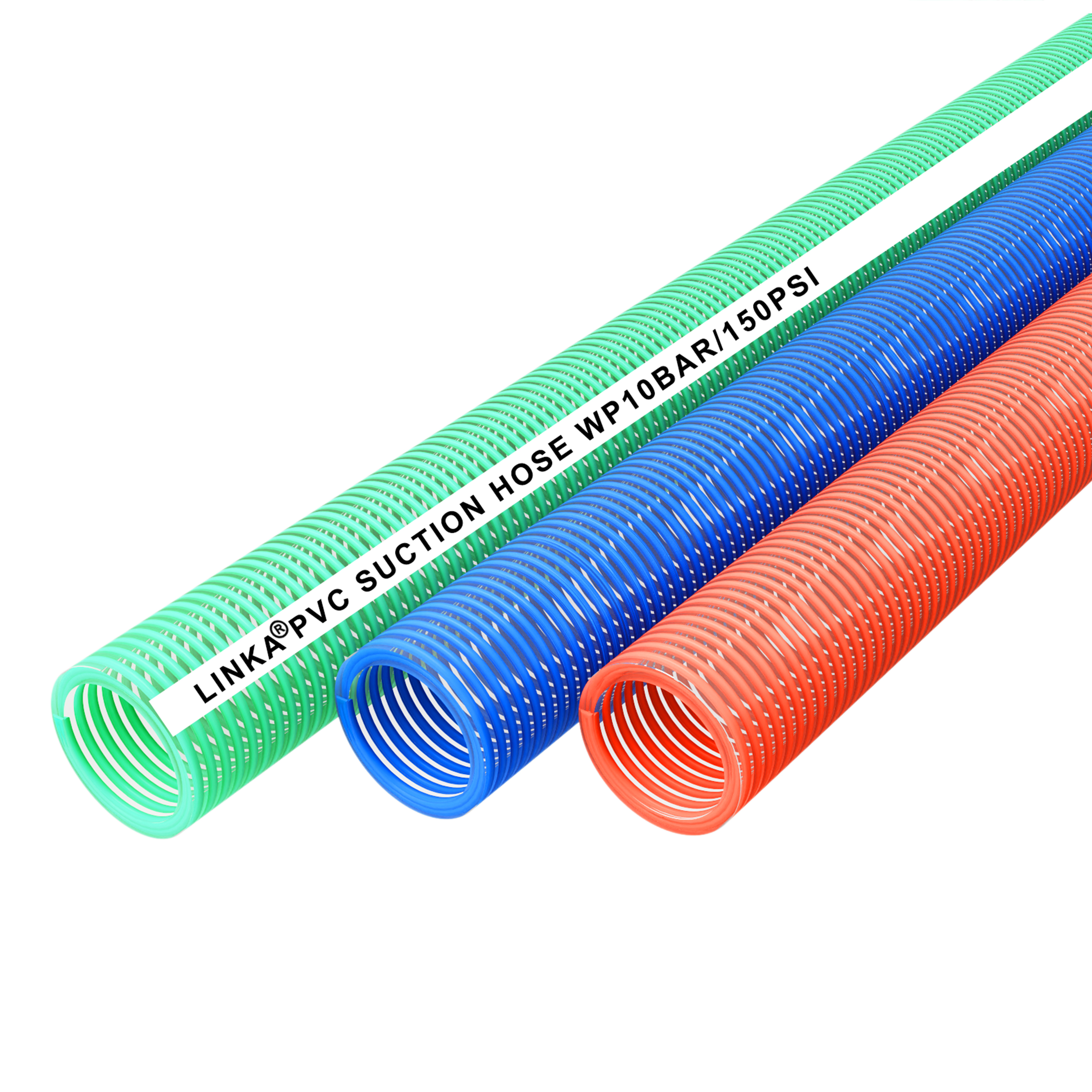
Cleaning methods must adapt to the specific structural design of your equipment. An Industrial PVC Hose typically features either a smooth bore or a corrugated interior. You handle them differently to achieve optimal sanitation.
A smooth-bore hose supports laminar fluid flow. This makes the interior relatively easy to flush. Water and mild detergents move through the channel without encountering physical resistance. Conversely, a spiral or corrugated design requires a much more targeted approach. The internal ridges create natural valleys. Debris, biological matter, and chemical residues easily trap themselves within these textured spaces. Routine flushing often fails to dislodge stubborn buildup inside corrugated sections.
Follow this standard internal flushing procedure for optimal results:
Drain Residuals: Elevate one end to gravity-drain any remaining operational fluids completely.
Pre-Rinse: Flush the interior using clean, lukewarm water to remove loose, unattached debris.
Apply Detergent: Circulate a mild, non-abrasive detergent solution. Ensure the temperature remains below the manufacturer's maximum heat threshold.
Agitate: For corrugated designs, use a soft-bristled, flexible brush. Push it gently through the channel to dislodge trapped particulates.
Final Flush: Run continuous clean water until no soap bubbles or visible debris exit the line.
Air Dry: Suspend the unit vertically in a well-ventilated area to dry completely before storage.
Do not ignore the outer jacket. Facility environments expose the exterior to dirt, abrasive dust, machine oils, and industrial grime. These contaminants slowly degrade the external polymer layer over time. We recommend wiping down the exterior manually. Use a soft cloth dampened in a mild soapy solution. Removing surface oils prevents the jacket from turning spongy or sticky. It also makes visual damage inspections much easier to perform accurately.
Harsh cleaning chemicals destroy polymer structures rapidly. You must exercise extreme caution when selecting sanitizing agents. Do not use aggressive solvents like acetone, methyl ethyl ketone (MEK), or highly concentrated acids and bases. These substances dissolve the polymer matrix on contact. They cause immediate plasticizer leaching and irreversible embrittlement.
Always reference a specialized chemical resistance chart before introducing any new sanitizer. Industrial safety standards demand strict verification of compatibility.
| Cleaning Agent / Chemical Category | Compatibility Rating | Expected Material Reaction |
|---|---|---|
| Mild Dish Detergents / Soap | Excellent | Safe for frequent interior and exterior use. No degradation. |
| Highly Diluted Bleach (Sanitizing Ratio) | Good (Requires Flush) | Safe for short contact times. Must rinse thoroughly. |
| Acetone / MEK / Thinners | Severe Danger | Dissolves polymer chains. Causes rapid, permanent failure. |
| Concentrated Sulfuric Acid | Severe Danger | Burns and chemically alters the plasticizer matrix. |
| Petroleum-Based Degreasers | Poor to Fair | Causes swelling and stickiness over prolonged exposure. |
Proper storage dictates the ultimate lifespan of your fluid transfer equipment. You must strictly control the environmental conditions where these tools rest between shifts. Neglecting storage parameters accelerates chemical degradation faster than heavy daily usage.
Every PVC Hose possesses specific temperature tolerances. Storing equipment in freezing winter conditions causes the polymer to become highly rigid and brittle. Unrolling a frozen line frequently causes immediate micro-cracking. Conversely, storing equipment in excessive heat softens the material dangerously. High ambient temperatures warp the structural shape. Extreme heat also causes the layers to delaminate or separate. Maintain a climate-controlled storage environment ideally between 50°F and 70°F.
Direct sunlight acts as a silent destroyer of synthetic polymers. Ultraviolet radiation attacks the chemical bonds holding the material together. This phenomenon is known as photo-degradation. The first visual symptoms include cloudiness or a faded exterior color. Over time, UV exposure causes deep surface cracking. Ozone generated by nearby electrical motors produces similar destructive effects. We strongly recommend storing your equipment in dark, dry, and adequately ventilated environments. Keep them away from skylights, open bay doors, and heavy electrical machinery.
Mechanical stress during downtime ruins structural integrity. You must utilize proper physical handling techniques.
Prevent Kinks: Instruct your team on natural-lay coiling techniques. Twisting the line against its natural curve creates kinks. A kink forms a permanent weak point in the polymer matrix.
Drain Fluids: Always drain residual fluids prior to storage. Trapped moisture promotes internal mold growth. Trapped chemicals stagnate and eat away at the interior wall.
Use Proper Supports: Never hang a coiled assembly on a single thin nail or peg. This concentrates the entire weight onto one localized point, crushing the layers. We recommend using dedicated hose reels or wide wall-mounted saddles. These distribute the weight evenly across a broader surface area.
You cannot prevent failures without systematic observation. Establish a rigid frequency for inspections. High-severity applications require daily pre-use checks. Less demanding environments might only require thorough weekly or monthly audits. Consistency remains the most important factor.
A comprehensive inspection relies on both sight and touch. Relying on visual cues alone misses early warning signs of chemical breakdown.
What to look for: Examine the entire length visually. Look for distinct discoloration or unnatural cloudiness in clear materials. Inspect the outer jacket for deep surface scratches, gouges, or exposed reinforcement braiding. Any visible braiding means the protective layer has failed.
What to feel for: Run your hands along the exterior. Feel for uncharacteristic stiffness in sections that should remain flexible. Notice any soft or bulging spots. These indicate weakened internal walls ready to burst. Identify any sticky or gummy textures on the jacket. Stickiness strongly suggests severe chemical degradation and plasticizer loss.
Never ignore the connection points. Leaks and stress fractures most commonly occur exactly where the rigid metal fitting meets the flexible polymer. Inspect the crimps and bands for corrosion or slippage. Ensure the insertion depth remains consistent. If you notice the polymer pulling away from the coupling, remove the assembly from active service immediately.
Critical industrial applications require more than visual checks. Periodic hydrostatic pressure testing verifies operational safety. This involves filling the assembly with water and pressurizing it to its rated working pressure in a controlled environment. Pressure testing confirms the unit still safely handles high-stress loads. Industry safety guidelines often dictate the frequency of these hydrostatic tests based on the transferred medium.
Operators frequently attempt to salvage severely damaged equipment. This practice introduces massive safety liabilities. You need a clear, skeptical-friendly framework to evaluate end-of-life replacement.
Material science dictates a harsh reality: you cannot "un-brittle" a degraded polymer. Once the plasticizers leach out, the chemical reaction is permanent. Applying heat might temporarily soften a rigid section, but the structural strength remains permanently compromised. Attempts to splice or patch high-pressure lines often lead to violent failures at the repair joint.
Remove the equipment from service immediately if you observe any of the following conditions:
Permanent Kinks: The presence of severe kinks or crushed sections that do not rebound to a circular shape.
Structural Delamination: Visible deep cracks, surface bubbling, or separation between the inner tube and outer jacket.
Extreme Rigidity: The material has become completely stiff and actively resists normal bending radii.
Compromised Fittings: The couplings are heavily corroded, permanently seized, or showing signs of slippage from the shank.
Sometimes equipment fails prematurely despite flawless maintenance routines. If you constantly discard units ahead of their expected lifespan, reevaluate your purchasing strategy. Standard polyvinyl chloride might simply be the wrong material for your specific operational parameters. You might need to upgrade. Consider transitioning to a specialized Industrial PVC Hose designed with high-tensile wire reinforcement. Alternatively, you may require a different polymer entirely to handle extreme temperatures or highly aggressive chemical solvents.
Maintaining your fluid transfer equipment demands deliberate action rather than passive observation. It requires controlled cleaning methods, strict storage parameters, and uncompromising inspection standards. By controlling temperature, preventing UV exposure, and eliminating incompatible harsh chemicals, you dramatically extend functional longevity. You also prevent catastrophic bursts that endanger personnel.
Take immediate action today. Audit your current facility storage areas. Ensure they are dark, dry, and equipped with proper wall saddles. Standardize your facility's cleaning chemicals against established compatibility charts. Finally, consult directly with a reputable manufacturer. Verify your current equipment specifications actually match the real-world chemical and thermal demands of your daily operations.
A: Yes, but only in highly diluted solutions following standard sanitizing ratios. You must flush it thoroughly with clean water immediately afterward. Prolonged exposure to high concentrations of bleach accelerates plasticizer extraction and degrades the internal material rapidly.
A: You cannot safely repair a severe kink. Once the structural matrix is compromised by crushing, that specific section becomes a permanent weak point. For pressurized industrial applications, the safest and only recommended action is total replacement.
A: Cloudiness typically acts as an early symptom of prolonged UV exposure, slow chemical degradation, or high-temperature moisture absorption. It visually indicates the polymer chains are beginning to break down. You should monitor the cloudy sections closely for increasing stiffness and embrittlement.
A: Use a low-pressure water flush combined with a soft-bristled, flexible tube brush. Never use sharp metallic drain snakes or rigid rods. Sharp metal easily punctures the thinner flexible walls located between the rigid spirals, destroying the unit instantly.


