Views: 0 Author: Site Editor Publish Time: 2026-08-06 Origin: Site

Operating in winter environments introduces severe mechanical challenges for fluid and air transfer systems. When temperatures drop overnight, standard hoses become rigid. They create immediate trip hazards, slow down morning operations, and make it nearly impossible to coil or wrap up equipment at the start of a shift. Operators face a constant tension between needing a durable, high-pressure line and requiring a pliable conduit that you can maneuver in sub-zero conditions without causing micro-cracking in the outer jacket or structural delamination.
A Smooth Air Water Hose serves as an engineered solution to this exact problem. By utilizing specific polymer blends and advanced extrusion techniques, these hoses maintain their structural integrity while remaining pliable. This technical evaluation objectively examines how specific jacket materials, cold-weather additives, core constructions, and temperature ratings determine whether a hose maintains its functional flexibility in freezing weather.
Material Science is the Deciding Factor: Not all smooth hoses are equal; EPDM rubber and specific hybrid polymers maintain flexibility down to -40°F (-40°C), whereas standard PVC becomes dangerously brittle below 32°F (0°C).
Working Temperature vs. Functional Pliability: A hose rated to survive cold temperatures does not necessarily remain easy to bend or coil. Bend radius retention is the critical metric for winter usability.
Condensation Risks Multiply in the Cold: Warm compressed air traveling through a freezing smooth surface air hose creates internal condensation, requiring specific drainage and material considerations to prevent internal ice blockages.
Surface Texture Impacts Drag: A smooth exterior reduces friction and snagging on frozen ground or concrete, making it a superior workshop utility hose compared to ribbed or wrapped alternatives during winter.
Modified PVC Exists but Has Limits: While specialized low-temperature PVC formulations exist, they still struggle to match the sub-zero flexibility of premium hybrids or EPDM.
Polymer behavior changes drastically as ambient temperatures drop. Every synthetic material possesses a specific glass transition temperature. This is the exact thermal threshold where flexible, amorphous polymers transition into a hard, brittle, glass-like state. Standard plastics and economical rubbers used in basic hoses have a relatively high glass transition temperature. They begin to harden right around the freezing mark of 32°F (0°C). When you attempt to uncoil or drag a hose that has dropped below this threshold, the material can no longer stretch or yield.
The mechanical stress of bending a frozen hose focuses entirely on the outer jacket. Because the polymer chains are locked in place, the stress causes micro-fissures to propagate through the cover. Over repeated freeze-thaw cycles, these microscopic cracks deepen. They expose the internal textile or wire reinforcement to moisture. Eventually, this leads to core delamination and catastrophic blowout under working pressure. Field crews often see this when a cheap hose is left outside over the weekend and shatters the moment someone steps on it Monday morning.
Fluid transfer lines left on a job site overnight rarely drain completely. Residual water pooling inside the tube presents a severe mechanical threat. As water freezes, it expands by approximately nine percent. This exerts extreme volumetric pressure against the internal walls of the hose. If the hose material is rigid from the cold, this outward radial pressure will permanently deform or rupture the inner tube. You will notice bulges or weak spots once the line thaws.
A properly engineered flexible water hose utilizes elastomeric compounds designed to absorb this expansion. High-grade rubbers and specialized hybrids possess enough residual elasticity at sub-zero temperatures to expand slightly alongside the forming ice. Once the ice thaws, the material recovers its original internal diameter without suffering structural fatigue. It maintains the critical adhesion between the inner tube and the reinforcement layer.
The anatomy of a cold-weather hose determines its survival. Construction typically involves three distinct layers. The inner tube provides the primary barrier against fluid or air permeation. It must resist the specific chemical makeup of the media, such as compressor oils. The reinforcement layer, usually braided high-tensile synthetic textile, provides the necessary pressure rating and prevents elongation under load. If the reinforcement shifts, the hose fails.
The smooth outer cover provides abrasion and weather resistance. During the manufacturing process, a smooth cover is applied via continuous extrusion. This extrusion process forces the outer polymer tightly through a die. It creates a dense, uniform layer that bonds intimately with the reinforcement and inner tube. This tight bonding prevents moisture ingress. It ensures that cold-weather plasticizers and anti-ozonant additives remain evenly distributed throughout the jacket. Wrapped-finish hoses often suffer from uneven curing and weak points along the wrap seams, making the extruded smooth finish superior for winter durability.
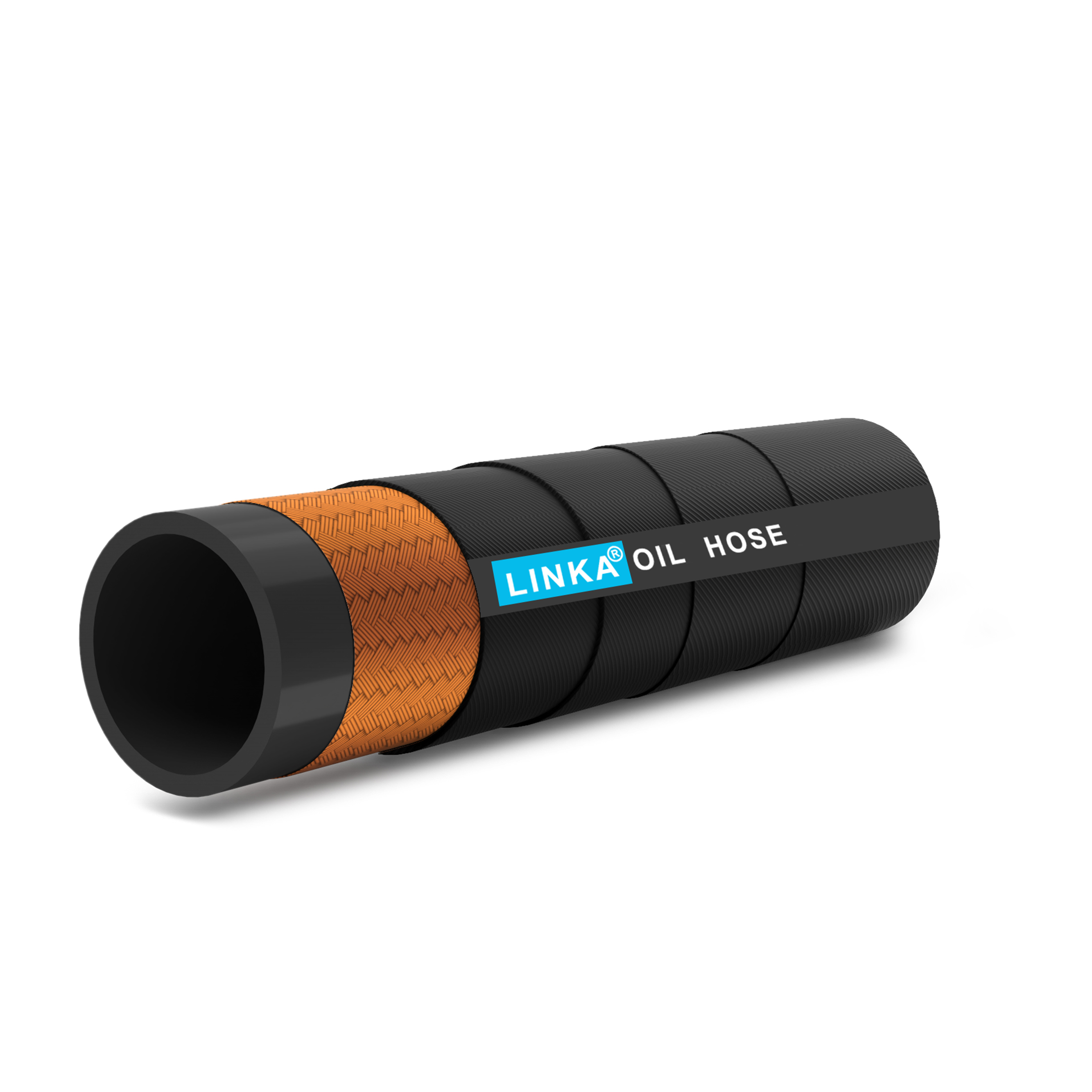
Ethylene Propylene Diene Monomer stands as the benchmark for extreme cold weather performance. EPDM is a synthetic rubber characterized by its highly saturated polymer backbone. This grants it exceptional resistance to ozone, UV radiation, and thermal degradation. More importantly, EPDM retains its elastomeric properties and functional flexibility down to -40°F (-40°C). It resists cracking and remains easy to coil even after prolonged exposure to freezing temperatures. Construction crews rely on it for heavy-duty outdoor applications.
However, EPDM degrades rapidly when exposed to petroleum-based oils. For pneumatic systems utilizing lubricated air compressors, Nitrile rubber blends are required. Nitrile provides the necessary oil resistance while still offering respectable cold-weather flexibility. Standard Nitrile typically stiffens at slightly higher temperatures than EPDM, usually around -20°F. Premium cold-temp Nitrile formulations are available for environments demanding both extreme cold pliability and heavy oil resistance.
Modern fluid power engineering has introduced premium hybrid materials that bridge the gap between heavy traditional rubber and stiff plastics. These engineered blends typically combine PVC with synthetic rubbers or utilize advanced thermoplastic elastomers. The goal is to lower the glass transition temperature while maintaining a lightweight profile. You get the best characteristics of multiple materials without the severe drawbacks of basic plastics.
These hybrids offer a highly functional smooth surface air hose solution for moderate to extreme winter climates. They withstand temperatures down to -40°F (-40°C) without shattering. The primary trade-off is highly favorable. Operators get a hose that is significantly lighter than pure EPDM. This reduces physical fatigue during long shifts while entirely mitigating the dangerous stiffness associated with traditional PVC lines.
Polyurethane is widely recognized for its extreme abrasion resistance and ability to remain soft and pliable in freezing conditions. Ether-based polyurethane excels in cold, wet environments because it resists water-induced degradation and maintains flexibility well below freezing. Roofers and framers often prefer it because it drags easily over rough shingles without wearing through the jacket.
Despite these advantages, polyurethane suffers from a distinct mechanical limitation known as coil memory. During manufacturing and packaging, the hose is tightly coiled. In freezing temperatures, polyurethane formulations stubbornly retain this coiled shape. When you attempt to lay the hose flat across a winter job site, it acts like a giant spring. It creates severe trip hazards and tangles easily. While it won't crack in the cold, its handling characteristics can severely impede workflow.
Standard Polyvinyl Chloride is an economical choice for summer applications but becomes an operational liability outdoors in winter. Without modification, PVC loses its functional flexibility at exactly 32°F (0°C). It becomes rigid, impossible to coil, and highly susceptible to impact damage. Dropping a frozen standard PVC hose on concrete can cause it to shatter like glass. You should never use standard PVC for winter air lines.
To combat this, manufacturers produce low-temp modified PVC hoses. These utilize specialized chemical plasticizers. These additives are inserted between the polymer chains to increase free volume and allow the chains to slide past one another. This extends the operating range down to approximately 5°F (-15°C). However, these plasticizers migrate out of the material over time, especially under UV exposure. The hose gradually loses its cold-weather rating. Even when new, modified PVC falls short of the extreme sub-zero performance offered by EPDM and hybrid polymers.
| Material Type | Cold Weather Flexibility Limit | Primary Advantages | Primary Limitations |
|---|---|---|---|
| EPDM Rubber | -40°F (-40°C) | Excellent ozone/UV resistance; superior sub-zero flexibility. | Heavy; degrades rapidly if exposed to petroleum oils. |
| Hybrid Polymer (TPE/PVC-NBR) | -40°F (-40°C) | Lighter than rubber; zero coil memory; good oil resistance. | Lower maximum temperature rating than pure rubber. |
| Polyurethane (PU) | -30°F (-34°C) | Extreme abrasion resistance; remains very soft in cold. | High coil memory creates trip hazards; difficult to lay flat. |
| Low-Temp PVC | 5°F (-15°C) | Economical; lightweight; smooth finish. | Plasticizer migration over time; shatters in extreme cold. |
Evaluating a hose strictly by its manufacturer temperature rating often leads to field failures. You must differentiate between a survival rating and a functional rating. A survival rating indicates the lowest temperature at which the hose can hold its maximum working pressure without bursting or shattering. However, a hose surviving at -20°F might be as rigid as a steel pipe. This renders it useless for manual tasks where you need to move around a job site.
The true metric for winter usability is functional bend radius retention. The bend radius is the minimum distance a hose can be bent without kinking or damaging the reinforcement. In cold weather, inferior materials require a much larger bend radius to prevent kinking. High-quality cold-weather hoses maintain a tight bend radius even at sub-zero temperatures. This allows operators to navigate tight corners and coil the hose tightly at the end of the day. Always verify the dynamic bend radius specifications on the manufacturer data sheet.
Pneumatic applications in winter present a unique thermodynamic challenge. Air compressors generate significant heat. When this warm, compressed air enters a freezing hose, the rapid temperature drop causes the moisture suspended in the air to instantly condense. This moisture precipitates along the inner walls of the hose and rapidly freezes. It restricts airflow and eventually causes total ice blockages that shut down pneumatic tools.
The internal surface finish plays a critical role here. A perfectly smooth, non-porous inner tube prevents ice from adhering strongly to the walls. The sheer force of the compressed air can often dislodge thin ice layers before they build up. Conversely, degraded or porous inner walls provide anchor points for ice formation. To mitigate this risk entirely, operations must utilize inline desiccant dryers, moisture separators, or anti-freeze injectors at the compressor output before the air enters the hose.
Winter job sites are harsh environments characterized by frozen mud, jagged ice, and abrasive concrete. The exterior texture of the hose directly dictates the physical effort required to maneuver it. Ribbed or heavily textured hoses create high friction. They snag on ice ridges and accumulate freezing mud within their grooves. This adds significant weight and makes the hose difficult to drag across a site.
A smooth jacket drastically lowers the drag coefficient. It glides easily over frozen terrain and resists the accumulation of snow and ice. This smooth finish also distributes abrasive wear evenly across the surface area, rather than concentrating wear on the peaks of ribs or wrap seams. This extends the service life of the cover and reduces operator fatigue during long outdoor shifts. You spend less time fighting the equipment and more time working.
Inside unheated workshops, garages, or hangars, the ambient temperature frequently drops below freezing. A workshop utility hose must remain highly maneuverable to navigate around machinery, vehicles, and personnel. If the hose stiffens, it acts as a lever. It can knock over lightweight equipment or pull pneumatic tools off workbenches when you walk away.
Storage is equally critical. At the end of a shift, operators must coil the hose onto reels or wall hooks. Stiff hoses resist coiling. They force operators to wrestle with the equipment, which wastes time and often results in the hose being left in a tangled pile on the floor. Selecting a hybrid or EPDM hose guarantees that the material will lay flat during use and coil uniformly during cleanup, regardless of the indoor temperature.
In specialized workshops, such as automotive detailing bays, aviation hangars, or food processing facilities, the condition of the floor is paramount. Dragging heavy, stiff hoses across epoxy-coated or polished concrete floors can leave permanent scuffs, scratches, or black carbon streaks. This creates extra cleanup work and damages expensive floor coatings.
Utilizing a non marking rubber hose solves this issue. These hoses are formulated without the carbon black fillers typically used for UV resistance in outdoor hoses. Instead, they use alternative reinforcing fillers that do not transfer color upon impact or friction. Combined with a smooth outer jacket, a non-marking hose glides over sensitive surfaces without leaving traces. It maintains facility aesthetics while delivering the necessary cold-weather flexibility for unheated indoor environments.
Inspect existing hoses for micro-cracking, stiffness, or cover degradation and remove standard PVC hoses from outdoor winter service immediately.
Replace rigid lines with engineered hybrid polymer blends or EPDM rubber hoses rated for at least -40°F to ensure functional bend radius retention.
Equip all air compressors with inline desiccant dryers or moisture separators to prevent warm air condensation from freezing inside the pneumatic lines.
Store hoses on properly sized reels rather than hanging them on narrow hooks to prevent concentrated mechanical stress on cold materials.
A: No. The freezing rate of the internal media is determined by the ambient temperature, flow rate, and the thermal conductivity of the polymer, not the exterior texture. A smooth jacket actually prevents external ice and snow accumulation, which can further drop the temperature of the hose.
A: Premium EPDM rubber and advanced hybrid polymer hoses can maintain functional flexibility and handle working pressures in temperatures as low as -40°F (-40°C). Standard PVC hoses typically fail or become unusable at 32°F (0°C).
A: Prevent cracking by selecting hoses made from cold-rated materials like EPDM or hybrid blends. Avoid bending or dropping frozen standard PVC hoses. Ensure you are not exceeding the manufacturer minimum bend radius when the hose is cold.
A: Yes, provided it is manufactured from EPDM or a cold-weather hybrid polymer. You must drain all water from the line before freezing temperatures set in to prevent internal ice expansion from rupturing the inner tube.
A: Polyurethane has a high coil memory. While it remains soft and won't crack in freezing temperatures, the polymer structure strongly retains the shape it was packaged in. Cold temperatures lock this shape in place, making it difficult to lay flat.


